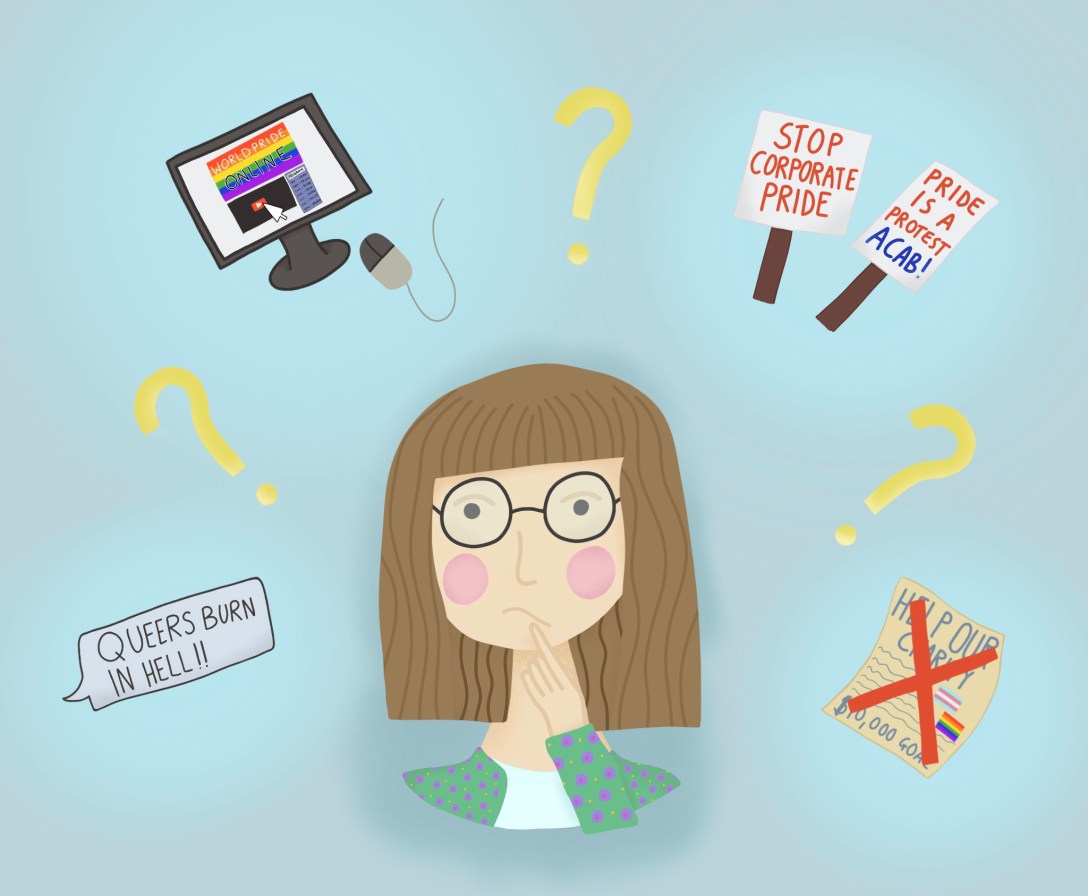
For this exercise, I had to choose an article from a newspaper or magazine and create an illustration to go alongside it. It took some effort finding an article I wanted to do this with, as currently the COVID-19 pandemic is dominating the news, and it’s a rather miserable topic to be reading about. I decided to go with an article titled What will Pride mean this year?. I read over it several times, following the instructions of the exercise and highlighting the key words, getting a feel for the article and what it was trying to communicate.
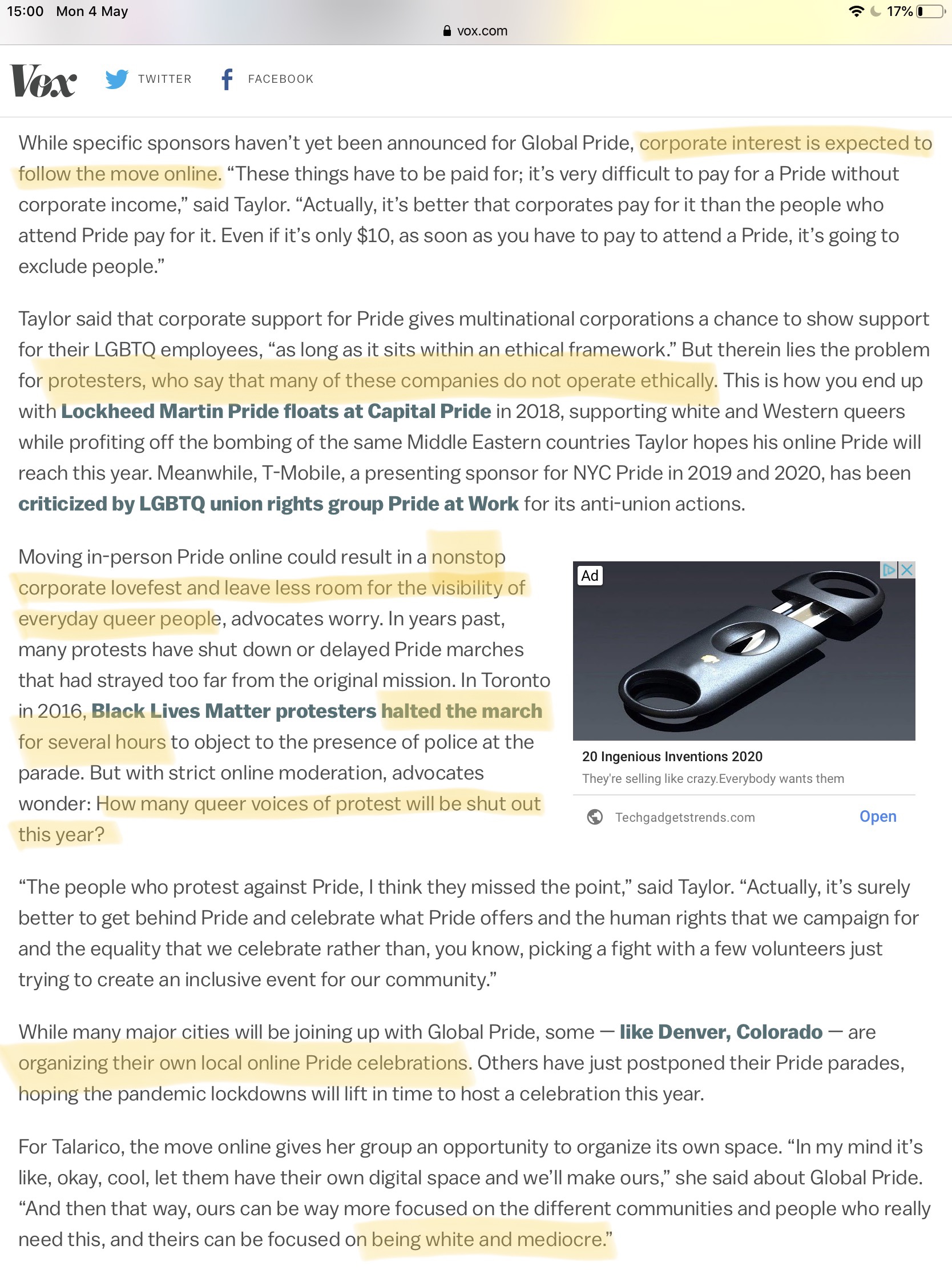
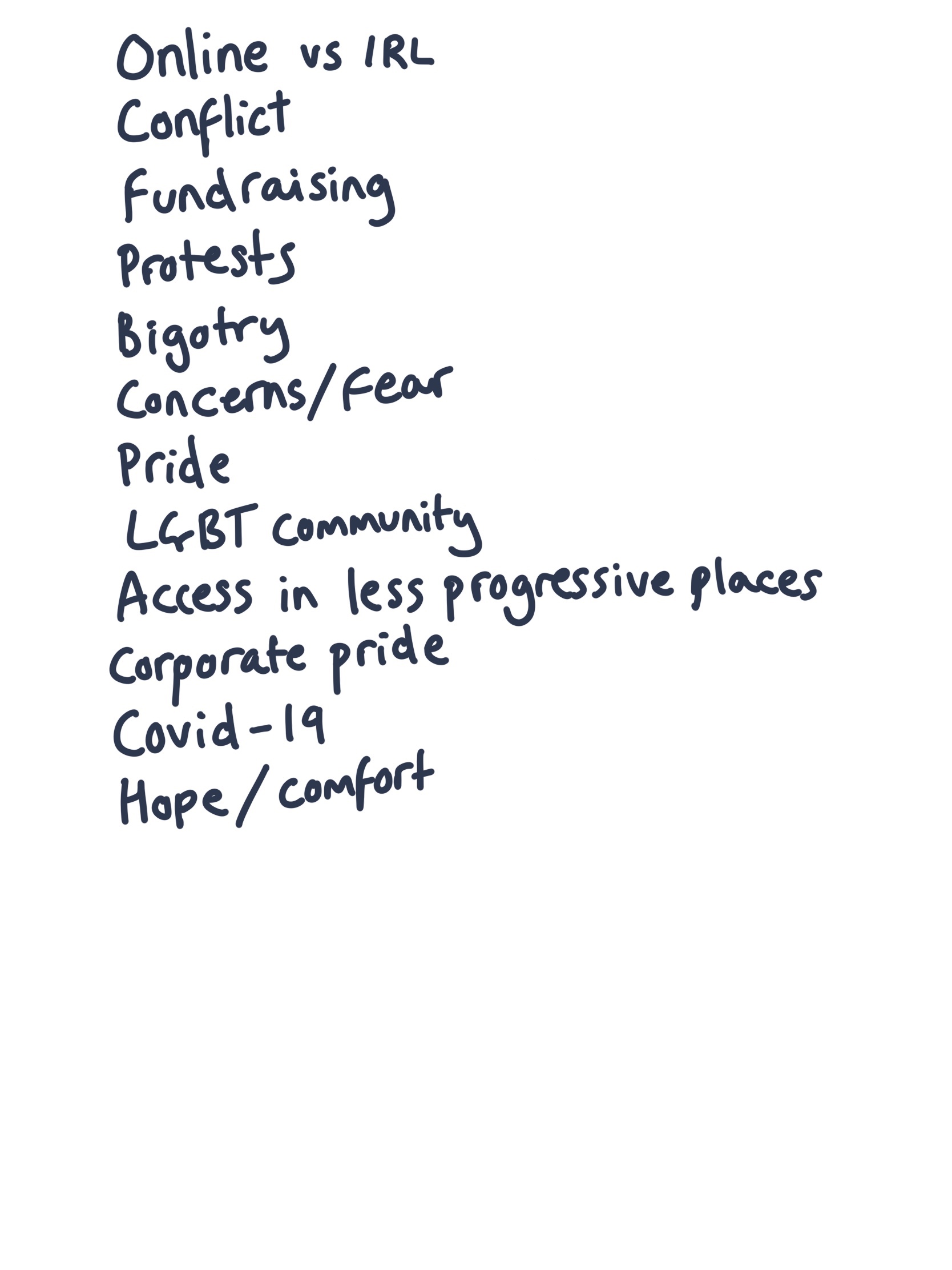
I then jotted down the key points I took away from the article, and what I felt summarised the text. The core themes were that Pride would exist online rather than in real life spaces, that there was fear and concern – around homophobic and transphobic abuse online and around how to support smaller communities – and that the purpose of Pride may be lost, either to protestors, or to the thing protestors are protesting.
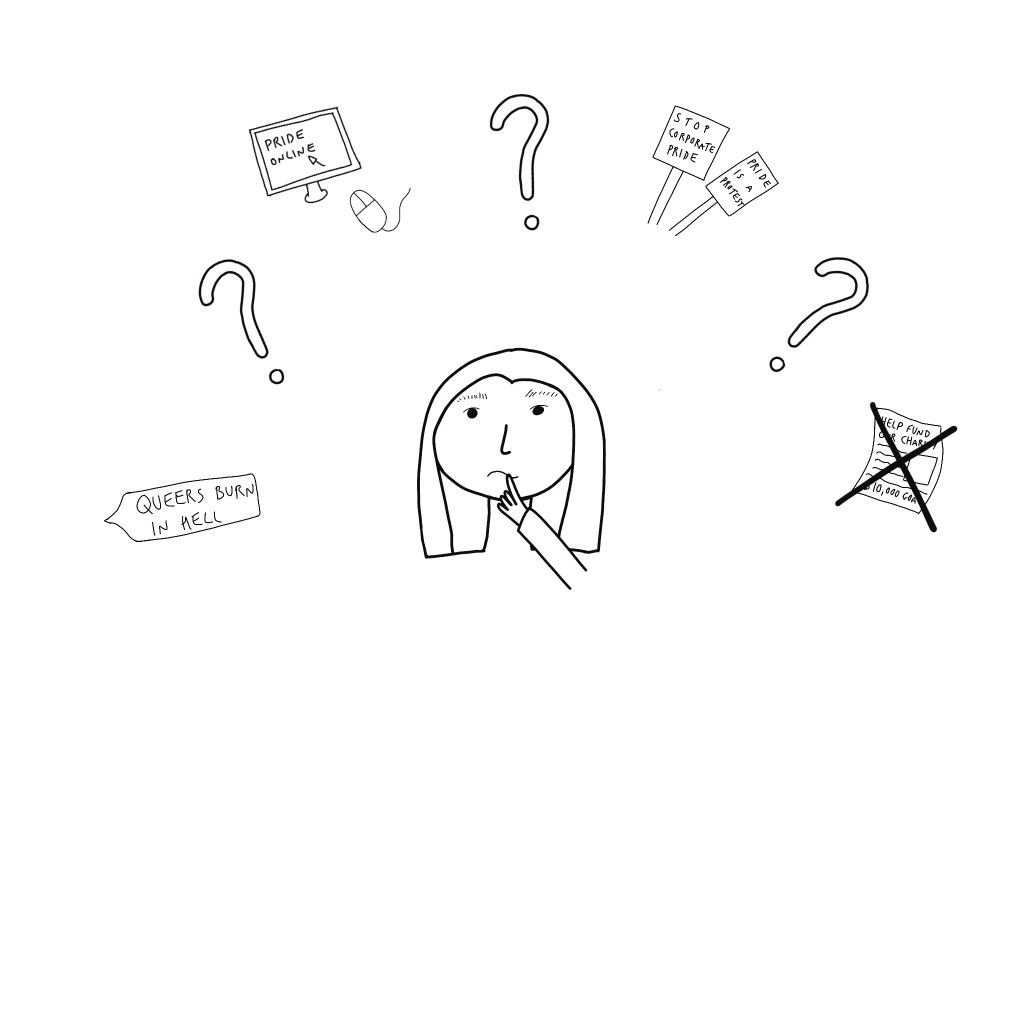
I sketched out 3 initial ideas for an illustration. The first shows a regular Pride parade in the street, and someone sat at home watching Pride on their laptop. I used a jagged line to separate the two as I felt it showed the striking difference. The second has a confused and worried person surrounded by question marks and various ‘fears’; online harassment, Pride online, fundraisers lacking traction, and protestors. The third simply shows a laptop with a Pride online website open. It has adverts over most the page from anti-LGBT corporations, homophobic and transphobic abuse in a chatbox, and a very tiny barely readable ‘donate to LGBT charities’ link, showing the priority given to corporations rather than community resources.
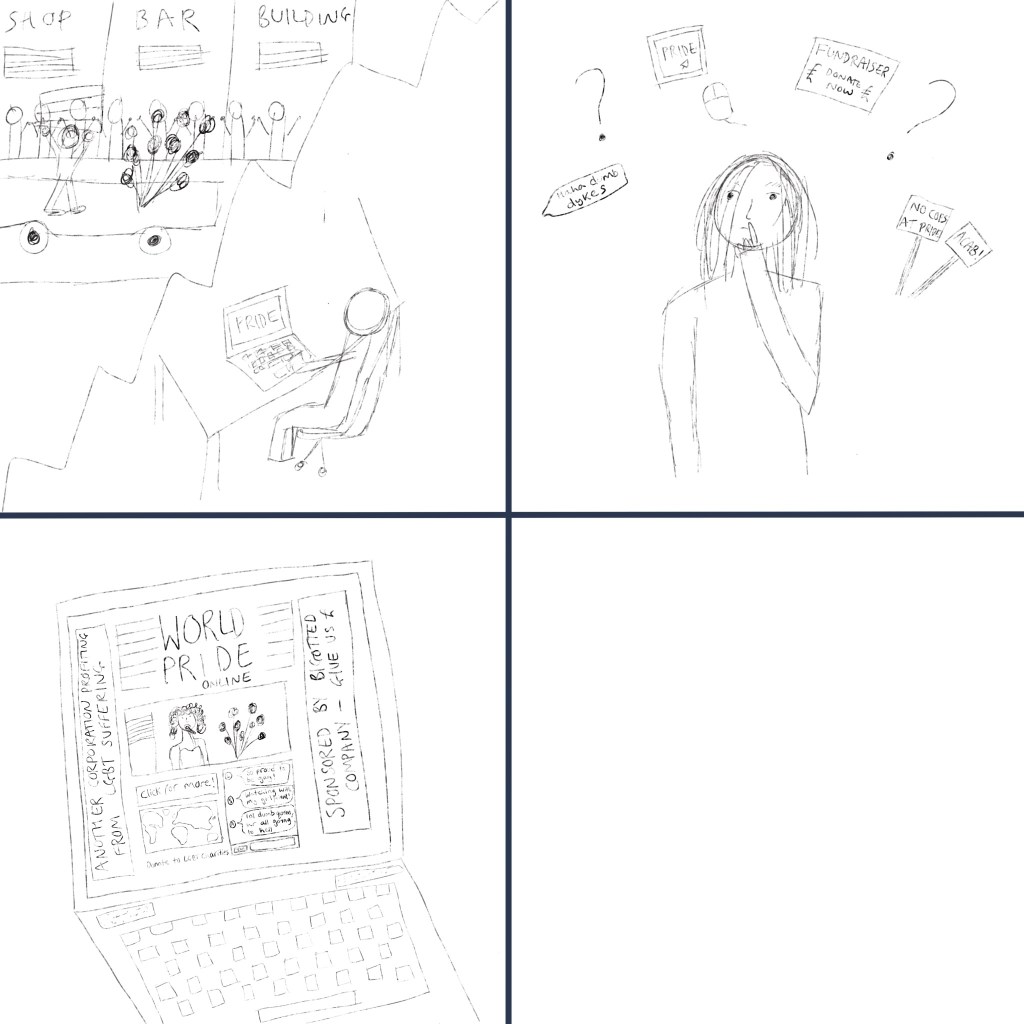
I really liked my third idea, I felt it was clever and showed the potential for what Pride online could look like. However, I felt my second idea communicated the underlying worry, concern, and general sense of unknowingness that the article was discussing. The headline begins with a question, ‘What’, and that isn’t answered in the text. We don’t know, and that’s a key point. Whilst I would’ve liked to develop the third idea further, I decided to develop my second instead.
I began by roughly drawing out the elements I wanted to include and positioning them around the person in the center. Then, I worked on each element individually at a large scale before sizing it down to fit. I wanted to ensure it was detailed, but not too detailed, as it wouldn’t be visible at a smaller size, so that was tricky. Once I positioned the elements, I changed the background to a blue colour that complemented the yellow of the question marks.
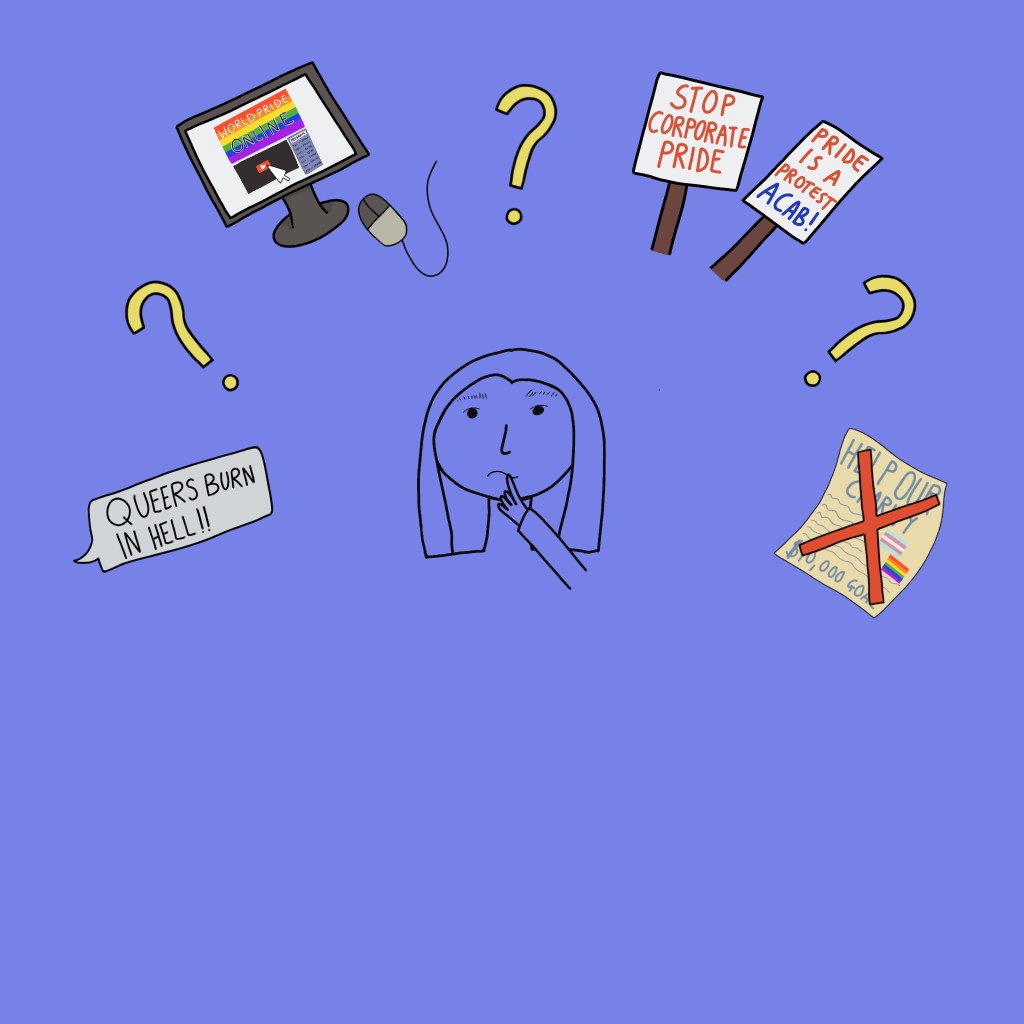
Quickly however, I realised this blue was just too much. It was harsh, and the colours in general weren’t complementing eachother. I changed it again, to a softer blue, which was easier to look at. I then set to work on the person in the center of my illustration. I took a completely different approach to this, with minimal outlines and soft shading and textures. I loved the outcome, and after viewing it with the other elements, decided I wanted to edit everything to match.
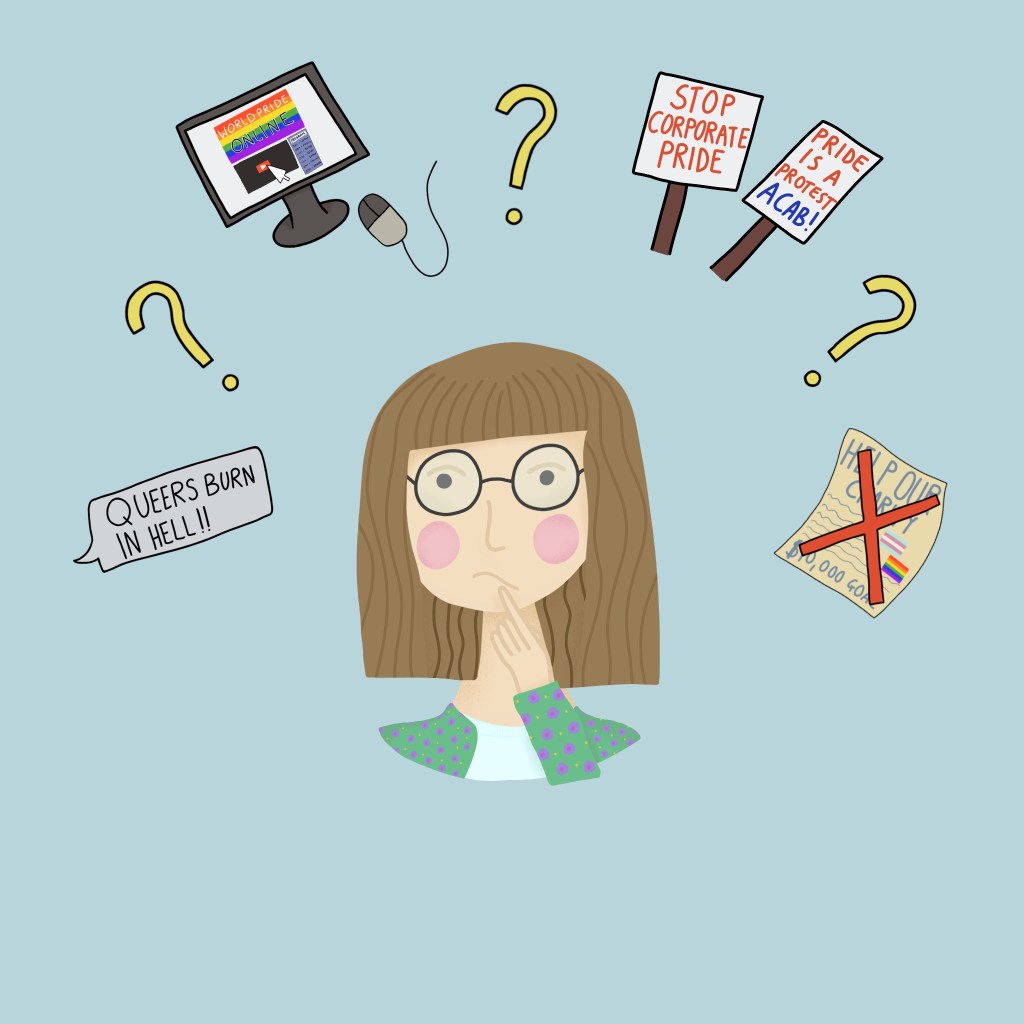
I also moved the elements slightly, and made the question marks larger. Then, to finish up, I added some background shading and highlighting. I’m quite proud of this piece, I wasn’t sure where I was going to end up when I began, and I was worried about placement of the various elements. I feel like I could potentially add more, like some indication of COVID-19, or maybe a more obvious nod to corporations profiting off of Pride. I didn’t want to overwhelm the piece with too many elements however, and felt simple was best.
The dead space at the bottom of the piece is somewhat of a conflict to me, too. I tried cropping it out to make a more rectangular image, as that’s most often used in articles, and I don’t know if it looks better. I keep going back and forth over it.
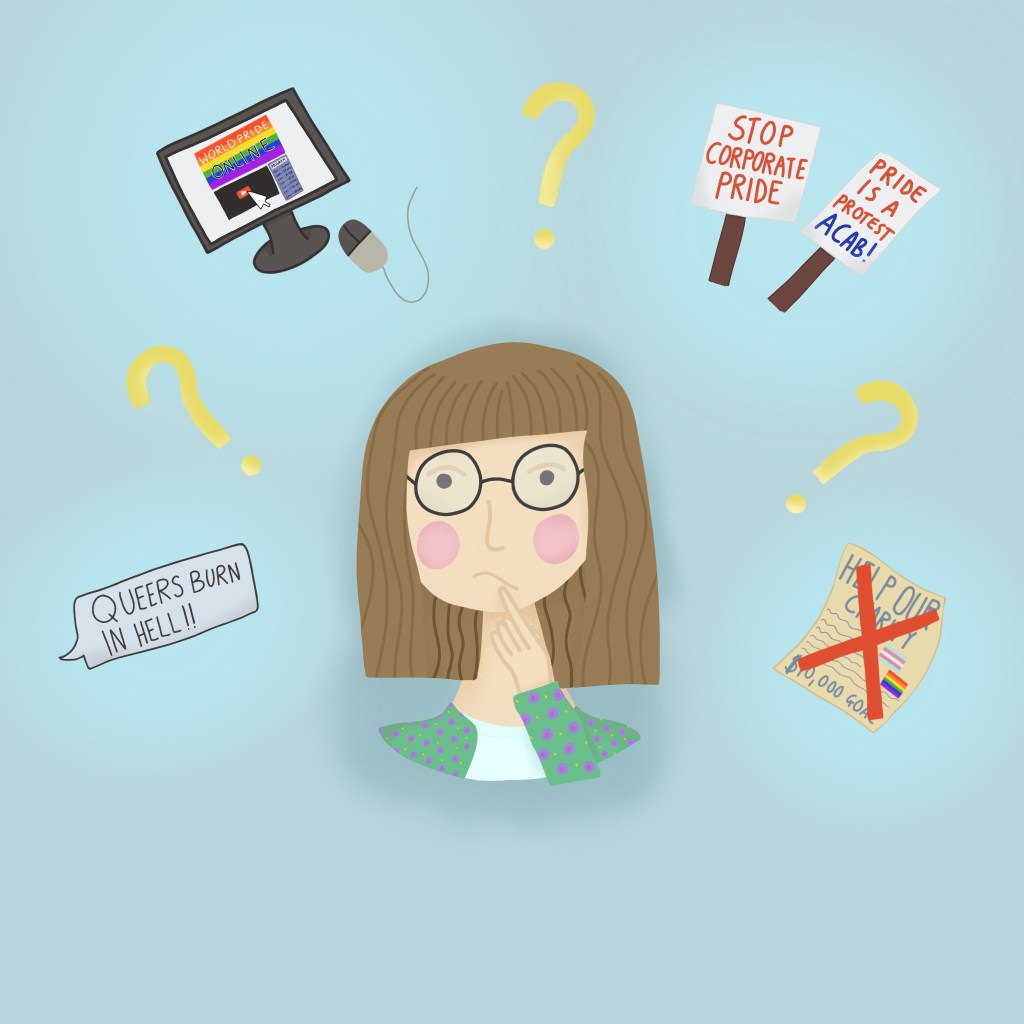
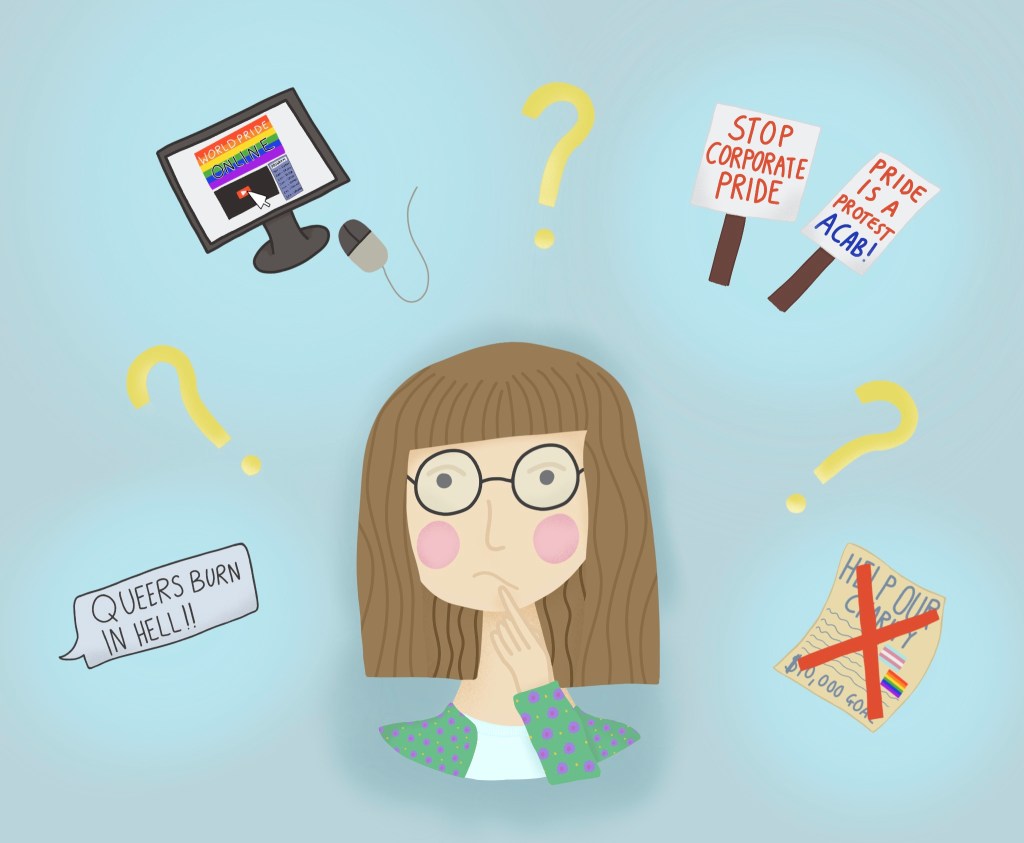
I feel like this piece communicates the message of the article well, and suits the audience. The readers of the article are most likely going to be members of the LGBT community who recognise the imagery from their own experiences. The themes of fear, concern, and uncertainty feel clear in the illustration. There’s definitely areas I could improve, as mentioned above, and maybe in future I will develop and explore my other ideas.
It was really exciting reading the article and starting to develop ideas. Being able to take text and carry the message through to an illustration, and actually see it come together, was a lot of fun.
 Learning Log