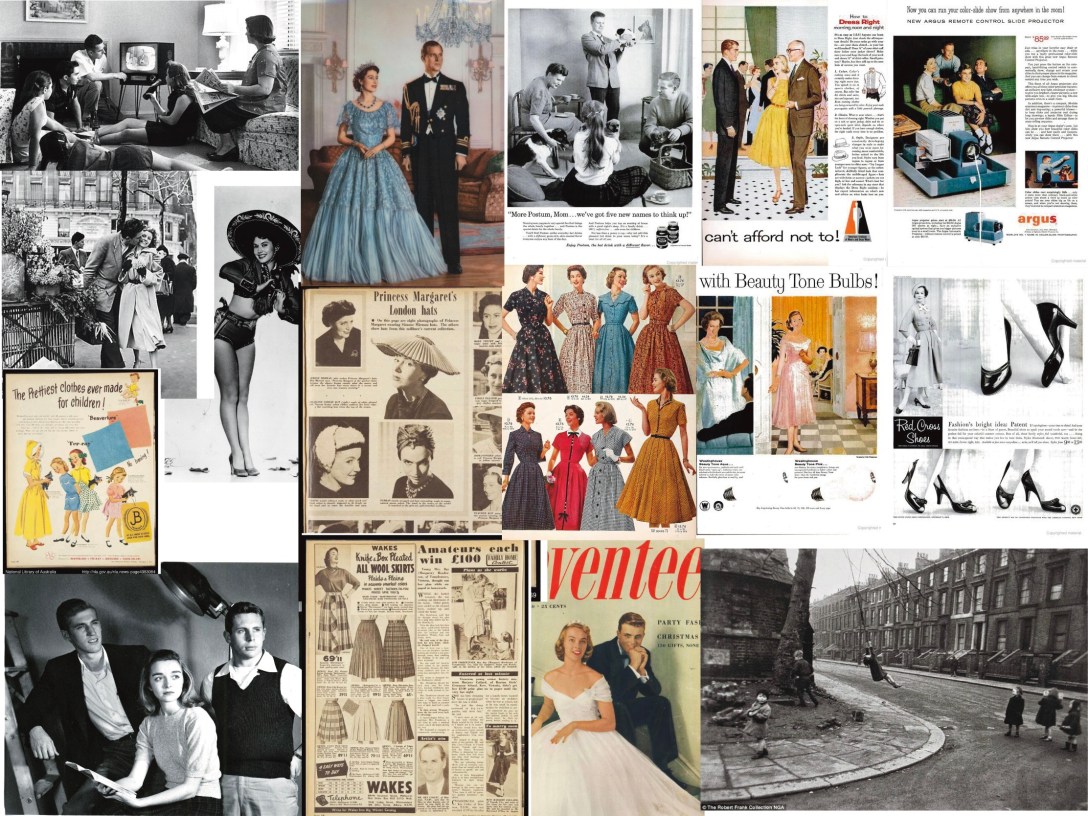
The first step in this exercise was to collect as much reference as I could find for the 1950s period, and catalogue it into 8 categories. Usually, for a task like this, I would visit libraries and archiving centres local to me, however due to COVID-19 I am unable to do this. My inability to leave the house left me with only the internet to collect reference from.
However, I did not want to just google ‘1950s’ and save every image I found. A lot of the imagery online for the 1950s is modern takes on the time period, rather than directly from the period itself. Whilst this isn’t necessarily bad for research, reference images from 2020 are not the same as images from 1950. I chose to begin by exploring archiving websites, mostly magazine archives, and fill in the gaps from there.
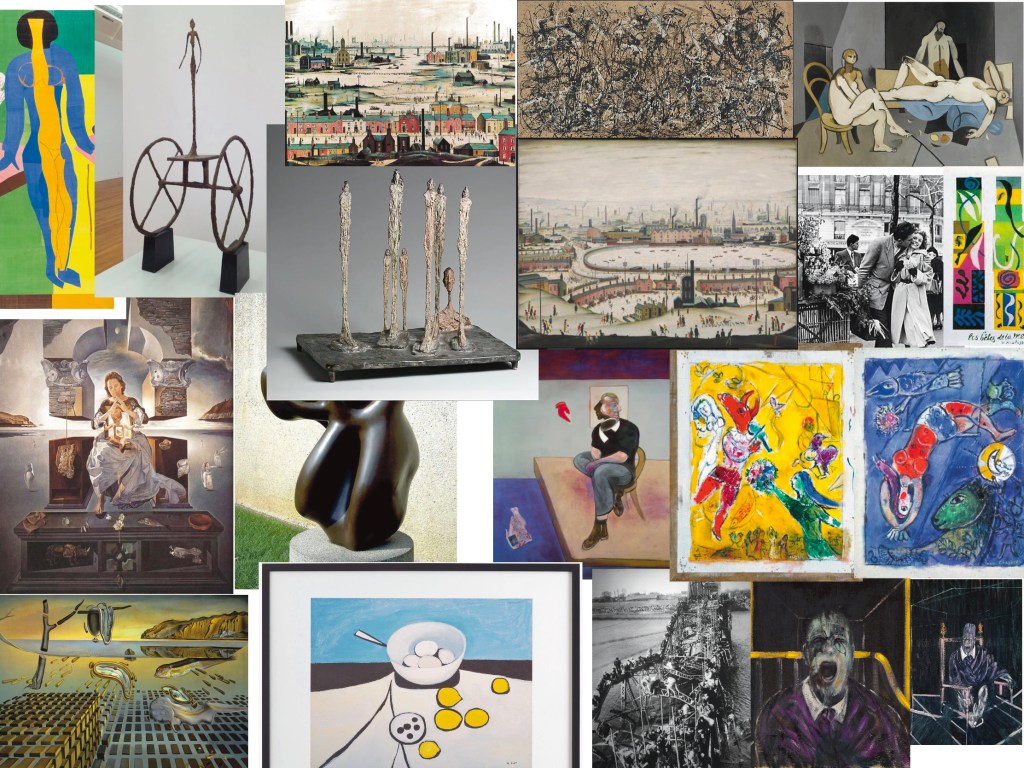
I collected around 100 different images, and then organised them. Some images crossed over into multiple categories, so I included them multiple times. I then decided to display the images in a rough collage so I had a wider reference I could just glance at to get ideas from. If I wanted to draw from a specific image, I could then look at it closer.
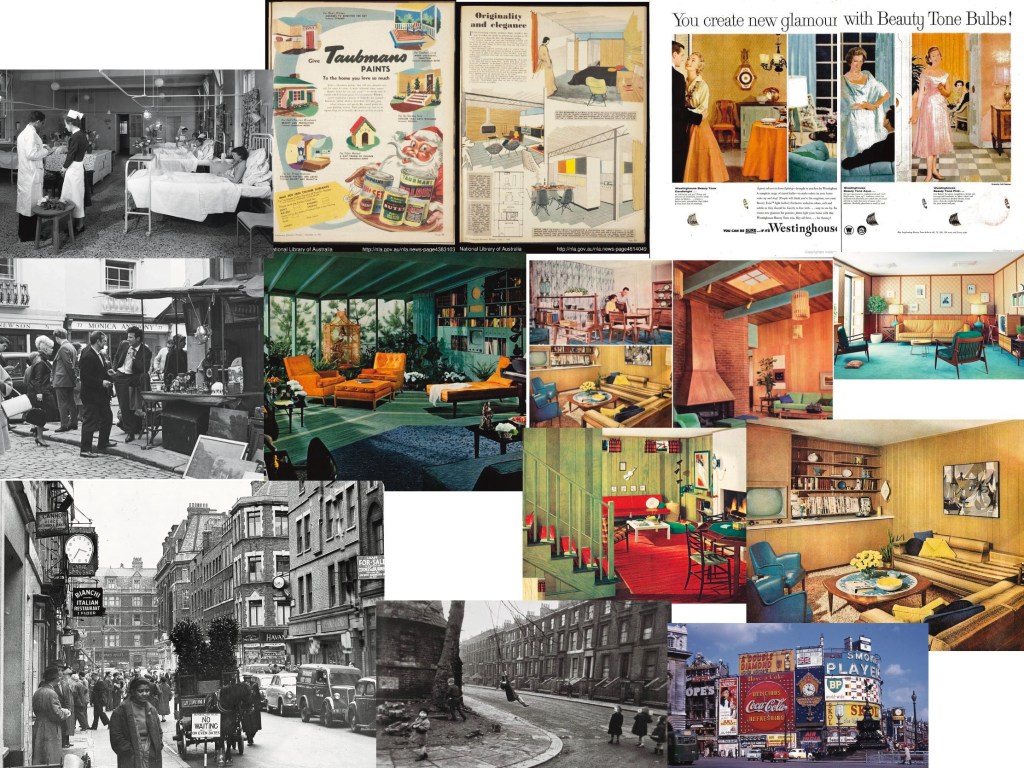
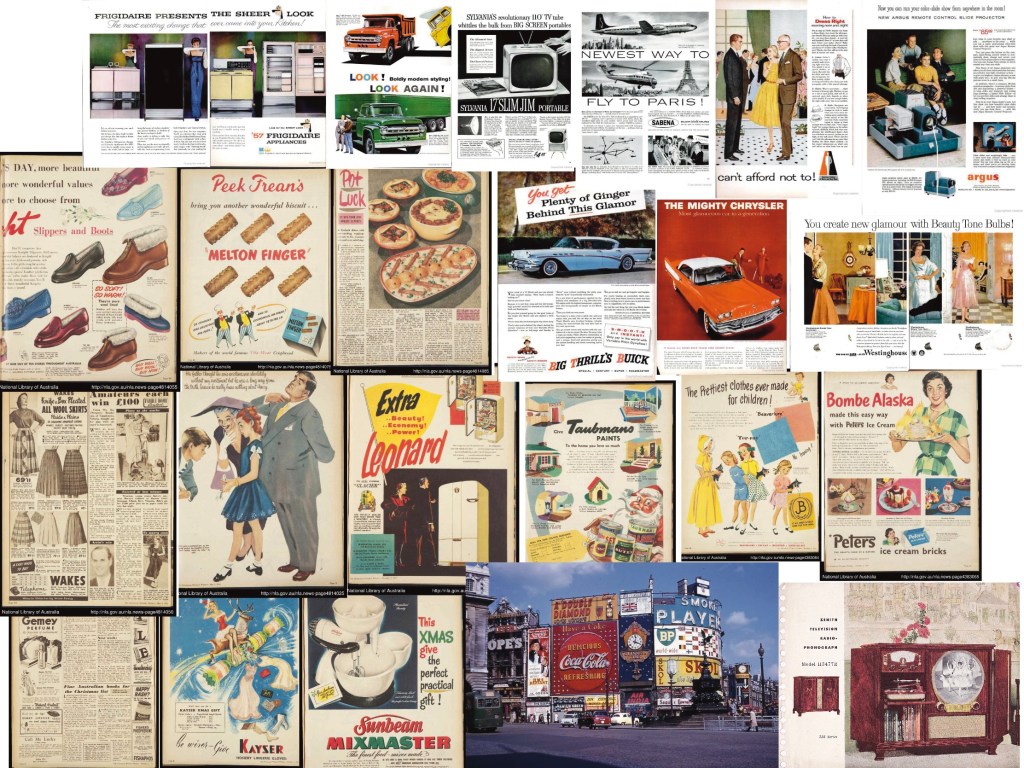
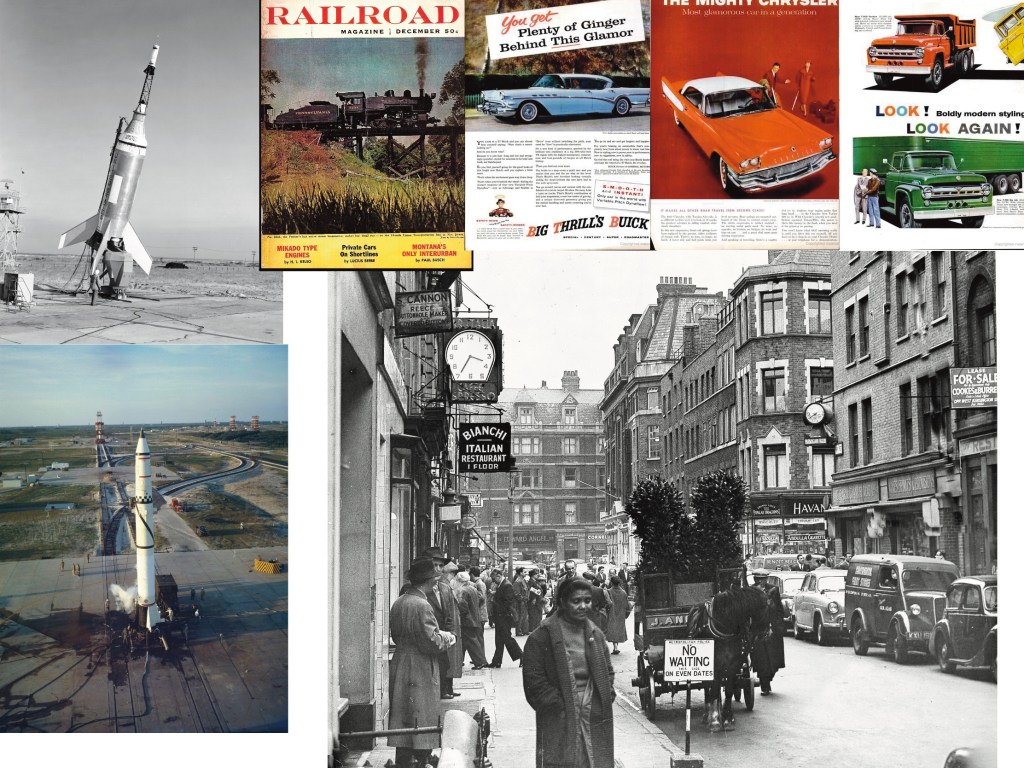
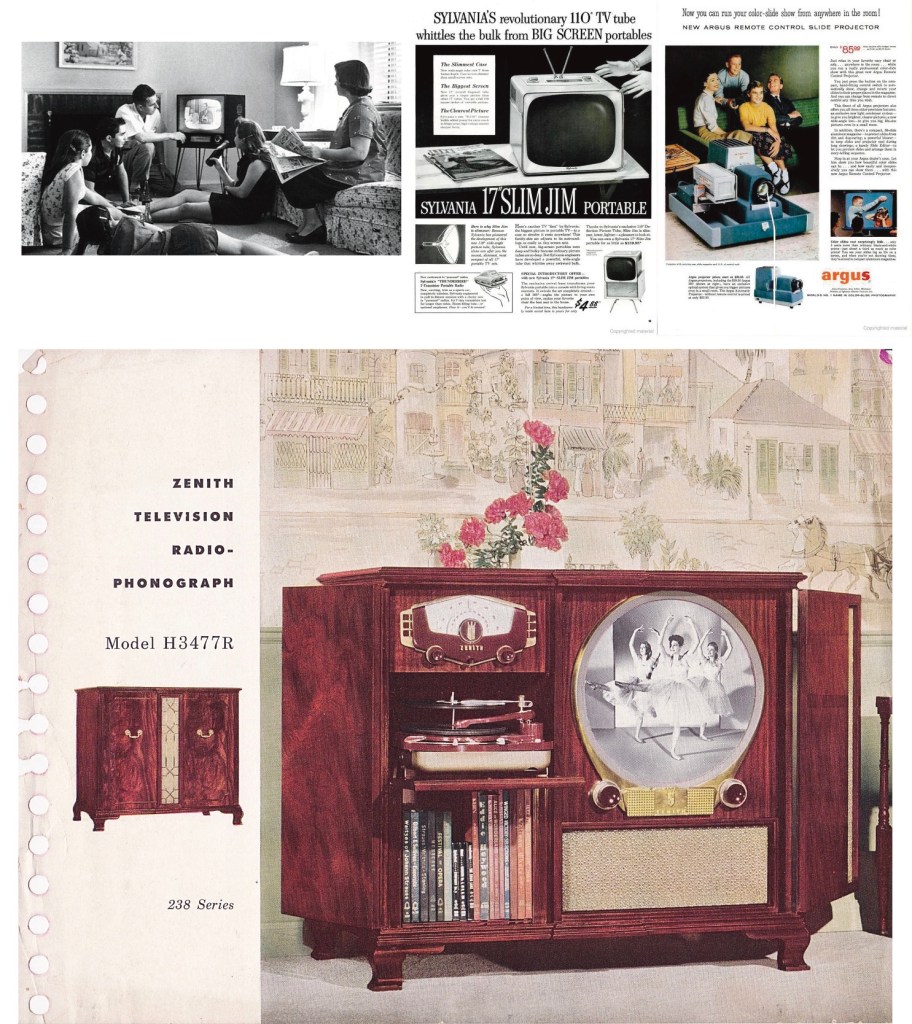
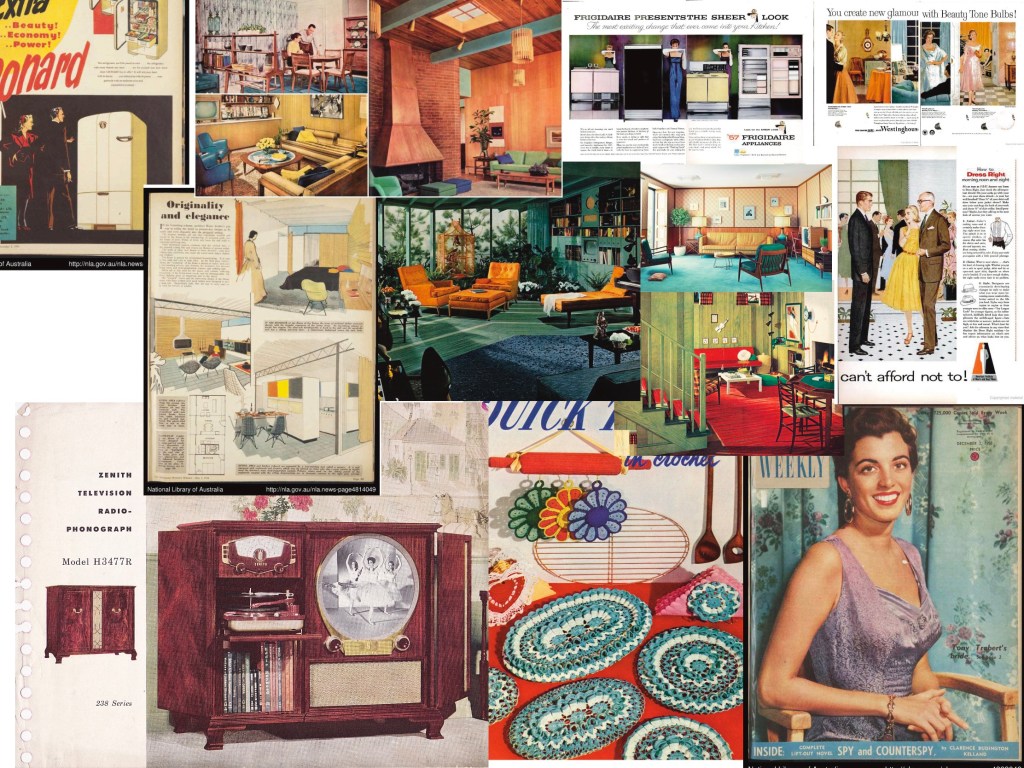
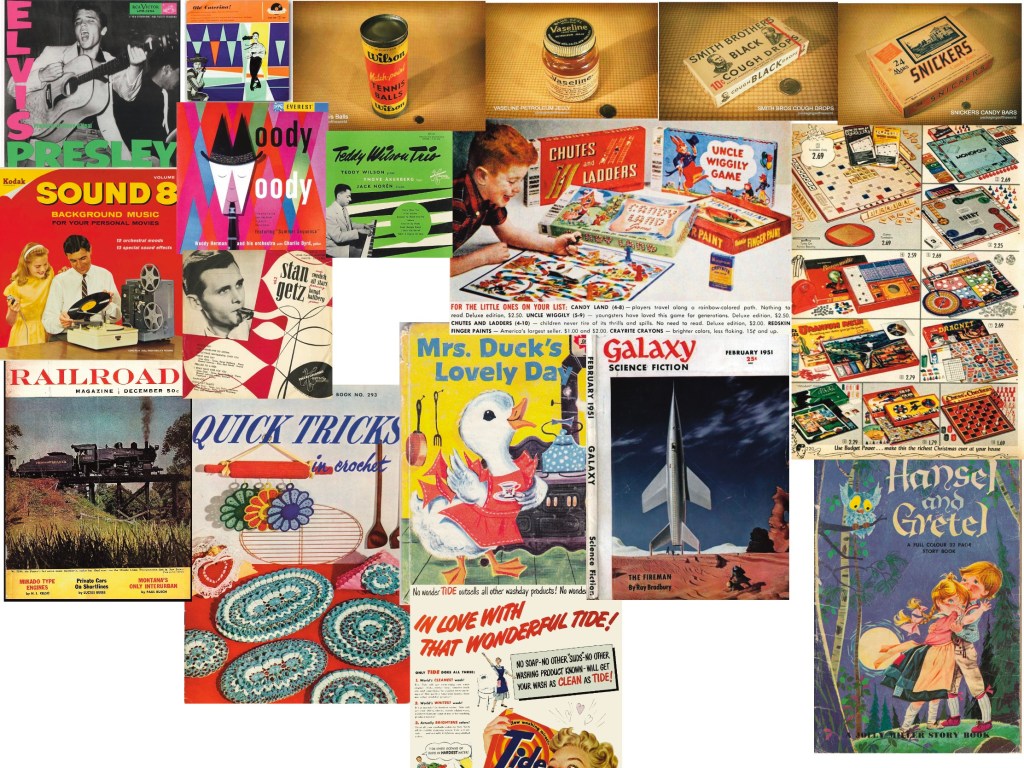
There were some areas that were lacking in resources, like TV and film and transport, which I think is explained by the resources I used. I did try to fill these gaps, however struggled to find places online that had these images. If I were to do this again, I would hopefully be able to visit a library, and maybe look at a book on the history of film.
A review of the 1950s
The 1950s was all about the future. A world war had just ended, devastating societies, and people felt like a revival was needed; turning away from the old, traditional ways of life, and looking into the new, happy, war-free future. The development of spacecraft was accelerating and science fiction was gaining more and more traction, leaving every day people wondering: what is the future, and how can we get there?
This can be seen in all aspects of life in the 50s. From professional artists, to home decor, to the hobbies and interests of children. People were rejecting the things they had always known, and aspiring to create permanent change. Abstract expressionism, surrealism, pop-art, and avant-garde spread through the creative world like wildfire. ‘What if this looked completely different?’ seemed to be the question on everyone’s mind. Exaggerated shapes, patterns, and colours dominated interior design. The boundaries of pre-war expectations – being uniform, orderly, and toned-down – were being explored. People were trying to see how far they could take it. This then lead on to the wild and liberated visual characteristics of the 1960s.
Traditionalism was not entirely lost, however, with a new Queen captivating the world. Despite this, even she seemed to break the rules and do things a little bit differently. Nonetheless, the appeal of royalty and glamour remained unchanged. Hollywood was high on this trend. Lights, glitter, and glam characterised the scenes of the time. Technology was significantly advanced by the war, and having home technology and electronics was becoming popularised. With this, TVs slowly became a household staple for many – and picture houses were opening in every local town. The film industry was growing rapidly. Actors and actresses were now setting cultural expectations for fashion and design. Copying what you see in the movies was new and it wasn’t long before brands started catching on.
With the background of the cold war and the fight against communism, capitalism was pushing to assert dominance. Disposable income was a new and luxurious thing to most, having spent the war in poverty, and people were looking to invest in their lifestyles. They could now afford to buy into the glamorous and rich culture they saw portrayed. Advertisements were now able to be shown in more ways than ever before, and the culture around them was revolutionised. The graphics were more intrusive and manipulative, trying to prey on those willing to throw away money in exchange for status.
These adverts became integrated in every-day life. Magazines were full of adverts, mainly addressing women, who had a new role post war. Billboards, posters, and street advertisements continued, and TV adverts began to develop. The same exaggeration of colour, pattern, and even context, was used in these adverts, but delicately balanced with the ideals of glamour, royalty, and fame.
In modern day, adverts being this integrated into our life has become normality. The invasive nature and eye catching colours have not been lost. People continue to question and push the boundaries of fashion, interior design, and fine art. Modern art is somewhat of a buzzword and debated rather heavily. In contrast, within wider society, there is more of a visual appeal to minimalism and simplicity. There’s a great deal of talk around buying less and shedding the things we don’t need. The goal for many is to own less. Less clothing, less objects in the home, less visual clutter. The consumerist culture that began in the 50s still very much exists, however with visual culture, it is as if we have cycled back to those pre-war expectations of uniformity. Cultural phenomena run in cycles, so this doesn’t come as a surprise.
Perhaps, following this cycle, we will have a similar revival in visual culture, where we once again reject all our current ideals, and create entirely new ones. Art and culture will always move forward, even if the inspiration is looking back. With technology further permeating our lives and homes, we will see further advancement in our visual interests and abilities to create.
 Learning Log