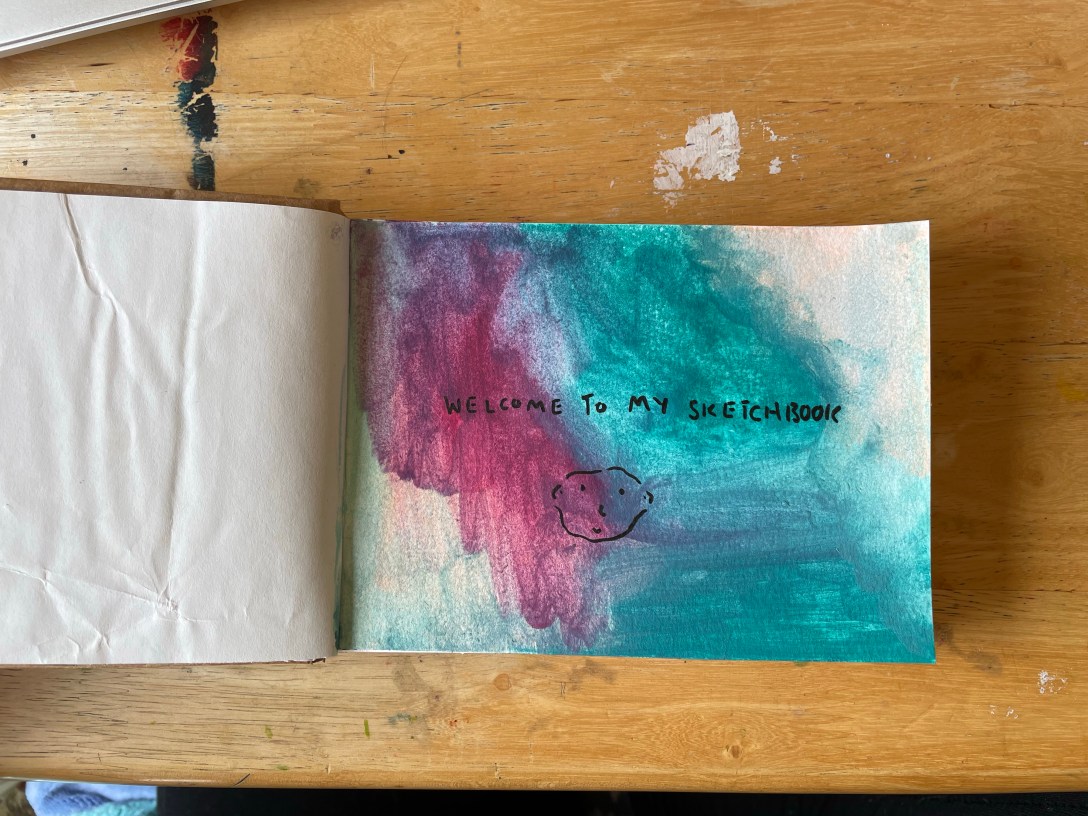
In my previous unit, I reflected on and responded to feedback in a more internal way, taking forward any advice and applying it where necessary, reading any recommended books, and considering my own feelings on how I could improve. My tutor has requested that I respond in my learning log to her feedback for this unit, and as each part of the unit has an in-depth introduction, I think it would be appropriate to combine the two going forward. I also appreciate that this gives me a space to formally reflect on my learning so far and collate my thoughts for the next part.
My feedback for part 1 was overall very positive. It’s great to know that I’m on the right track and doing the right things! I received a lot of encouragement to build on using my sketchbook as a place that is mine, and that can be whatever I want or need it to be, a dynamic that I am slowly developing.
I felt there was a lot of emphasis in my feedback on using my sketchbook in a more sequential order. For example, my tutor suggested leaving empty pages as part of the narrative if I needed to skip them to find a more appropriate page to work on. She also recommended I try to record my responses in the moment, stating, ‘if you have a collection of things in boxes to return to will you always remember exactly the emotion etc felt at the time of collecting the previous week?’. Whilst I agree there is usefulness in using a sketchbook in a sequential order – the more ‘rules’ I apply to my sketchbook, the less I am going to want to use it, and the more unhealthy my attachment to it will become. I become very preoccupied with following rules and structure, and if I have a lot of them in place, it hinders my creativity.
I enjoy dotting back and forth in my sketchbook where necessary and don’t want to feel bound to working in a linear progression. Not only that, but I have OCD, and one of the manifestations of this has been obsessing over wanting to remember everything, keep everything, recall everything, and ensure it is all accessible at all times. It would be very unhealthy for me to start trying to ensure I was documenting exactly how I feel in the moment, and a part of recovery for me has been realising that yes, I can actually remember my emotions and thoughts a week later.
My relationship with my sketchbook and the manner in which I use it is always going to be influenced by my mental and physical health, as I’m sure it is for anyone. Because I am not mentally or physically healthy, nor neurotypical, I most likely will not be using my sketchbook in a typical way, nor will I feel comfortable using it in other ways. This isn’t out of an unwillingness to learn, experiment, or grow, but out of a necessity to protect my mental and physical health. There is, for example, a section in the introduction to part 2 which discusses using every snippet of spare time to draw. However, this would be actively dangerous for me. I don’t have ‘spare’ time – all of my days are extremely calculated to ensure I don’t become unwell. What to an ablebodied person is a free moment waiting for the bus is a moment I am grateful to be conserving energy, so I have more later.
On the topic of being neurodivergent – my tutor pointed out that another way to interpret Exercise 1.3 would be to discover intentional hiding and obscuring of content as a part of the narrative within a piece – something I missed as I was focused on the literal interpretation of the exercise. This is definitely something I would be interested in exploring further, especially as my tutor said, ‘Consider how to create mystery and intrigue, by allowing the reader to discover you.’
My tutor gave me some specific action points based on the unit’s learning outcomes, which is extremely useful for me. These are:
- Try not to overthink or over-plan what I am putting in my sketchbook
- Try experimenting with many different ways of approaching an idea – trying it over and over again in many different ways
- Ensure the artists I research have credibility if I choose to pick less well-known artists
- Consider making a sketchbook out of random bits of ‘waste’ paper (newspapers, magazines, cut-offs from print shops, whatever I can get my hands on)
- Consider working on loose sheets of assorted types and then binding them together
- Attempt to find old books in charity shops to use – considering how the original meaning of the book impacts my usage of it
- Ensure I start building a bibliography using Harvard referencing
Going ahead into part 2, I will definitely be cutting back on overthinking and trying to just let my creativity lead me. I hope this leads naturally into the second point of trying different ways of approaching the same thing. I already ensure any artists I research are professionals, and I take anything they say or do with a grain of salt. At this point in my studies, I’m mostly trying to build my own idea of how I approach my practice, so I pick and choose what works for me anyway. However, this would apply to even the most famous artists – I am not them and whilst I might give their advice a try, it won’t necessarily work for me.
I am really excited about bookmaking and enjoying the process of doing it. I like that it’s a little side hobby and addition to my studies. I don’t intend to get totally caught up in it and make it my sole focus – it’s just nice to have it. I love the idea of collecting varying kinds of waste material and making them into a book! It isn’t appropriate for part 2, but it is definitely something I’m considering a project on. The same goes for finding a book to work in – I want to do it, but it isn’t quite appropriate yet. As for referencing – I did not reference habitually throughout Key Steps in Illustration, and I am now at the assessment period and having to go through the selected learning logs and add formal references. I consciously did this as I found referencing was a barrier to getting work done. However, I will re-evaluate how this has worked after submitting for assessment and may change my approach for this unit.
My understanding of part 2 is that I should have a more exploratory and playful relationship with my sketchbook by the end of it. The introduction explains how throughout I will be introduced to experimental mark-making concepts alongside how to work with the ‘mistakes’ I make. I am super excited about this as it’s exactly where my focus in art currently lies and is what I enjoy doing the most. The assignment aims to teach me how to add narrative into my pieces, another thing I am looking forward to getting to grips with. I am very intrigued by the concept of ‘accidental’ mark-making, and I look forward to learning more about how this occurs and how it can be used. I struggle to see how any mark can be accidental, as even randomised markmaking is intentional.
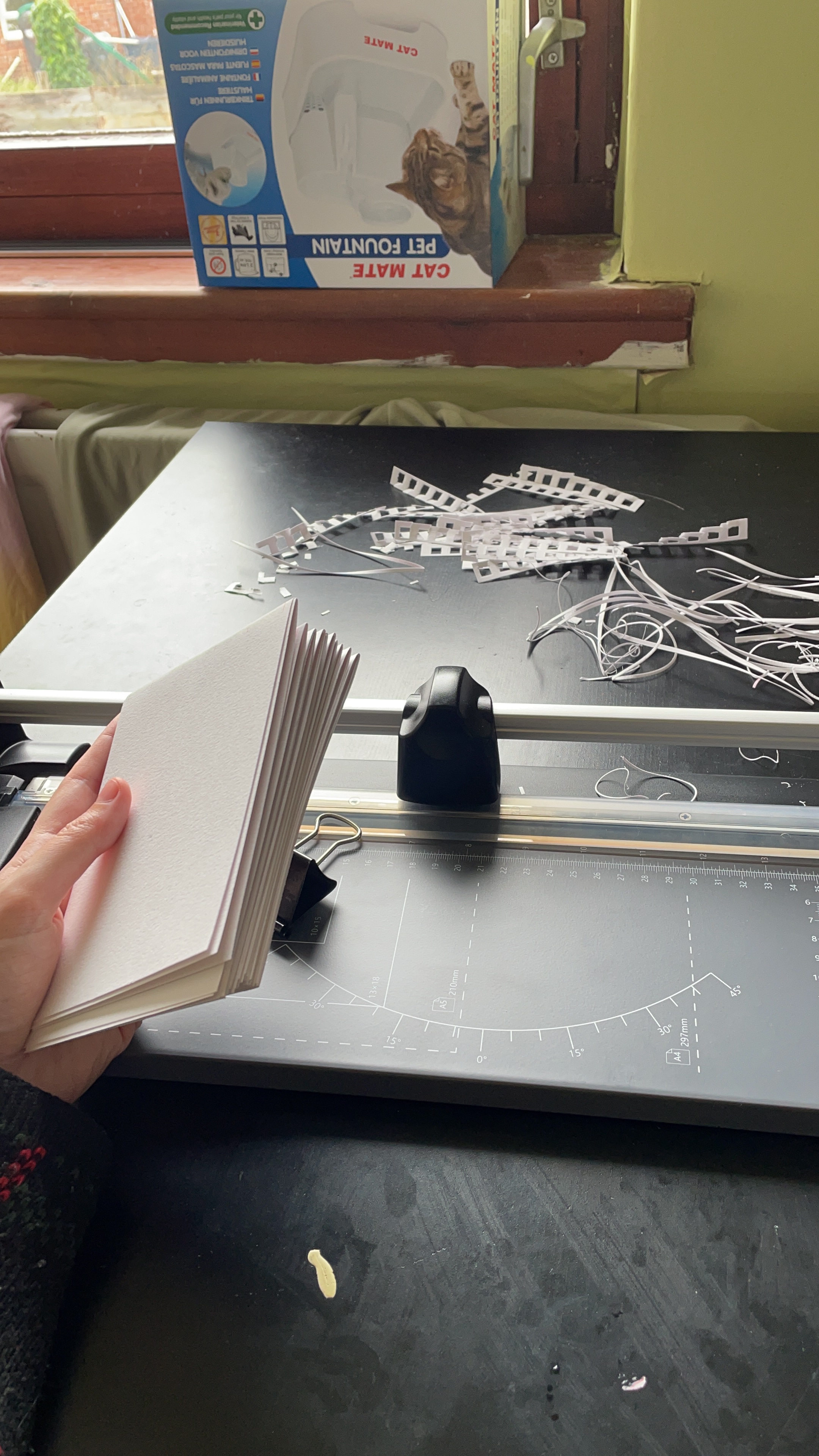
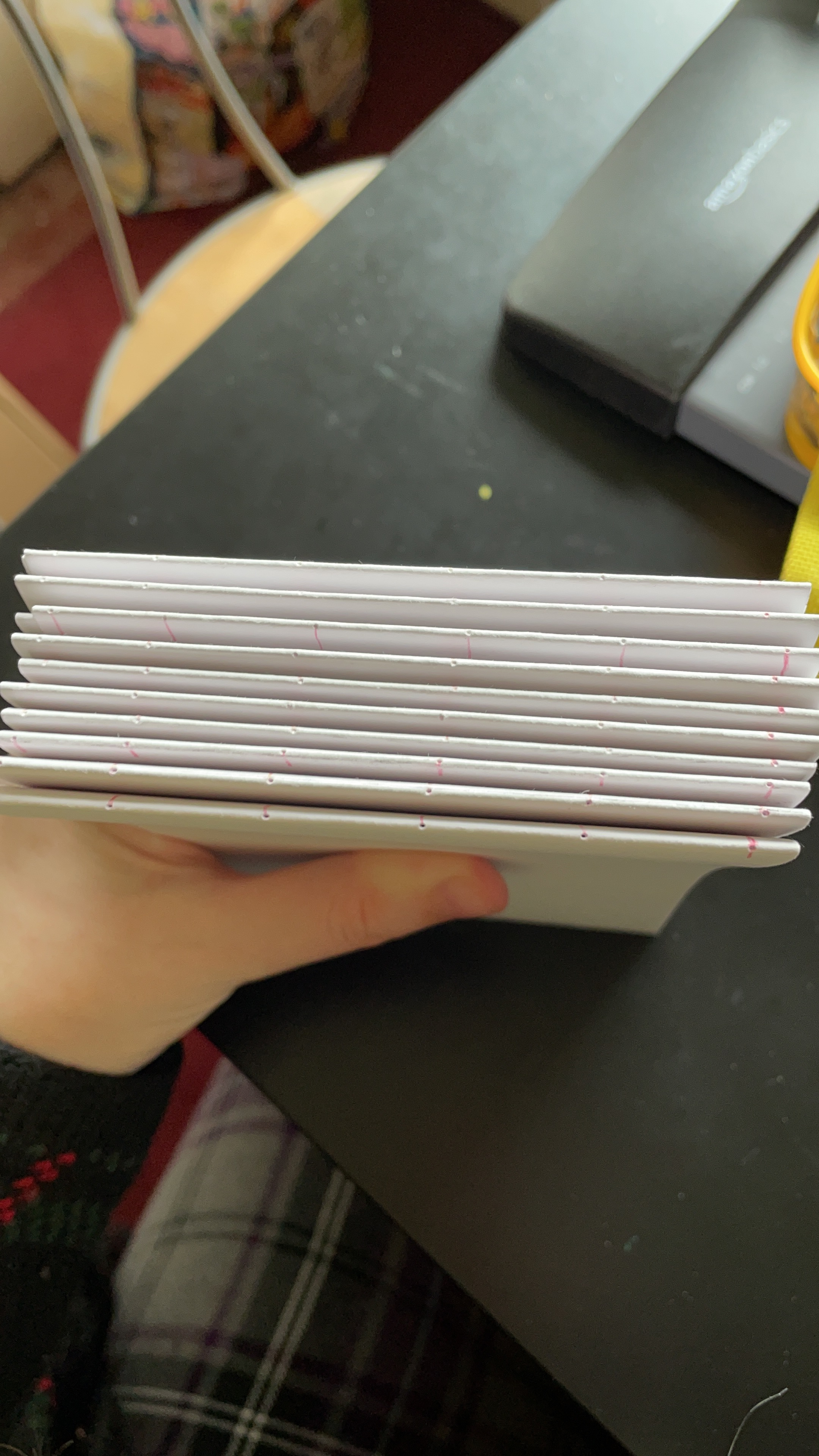
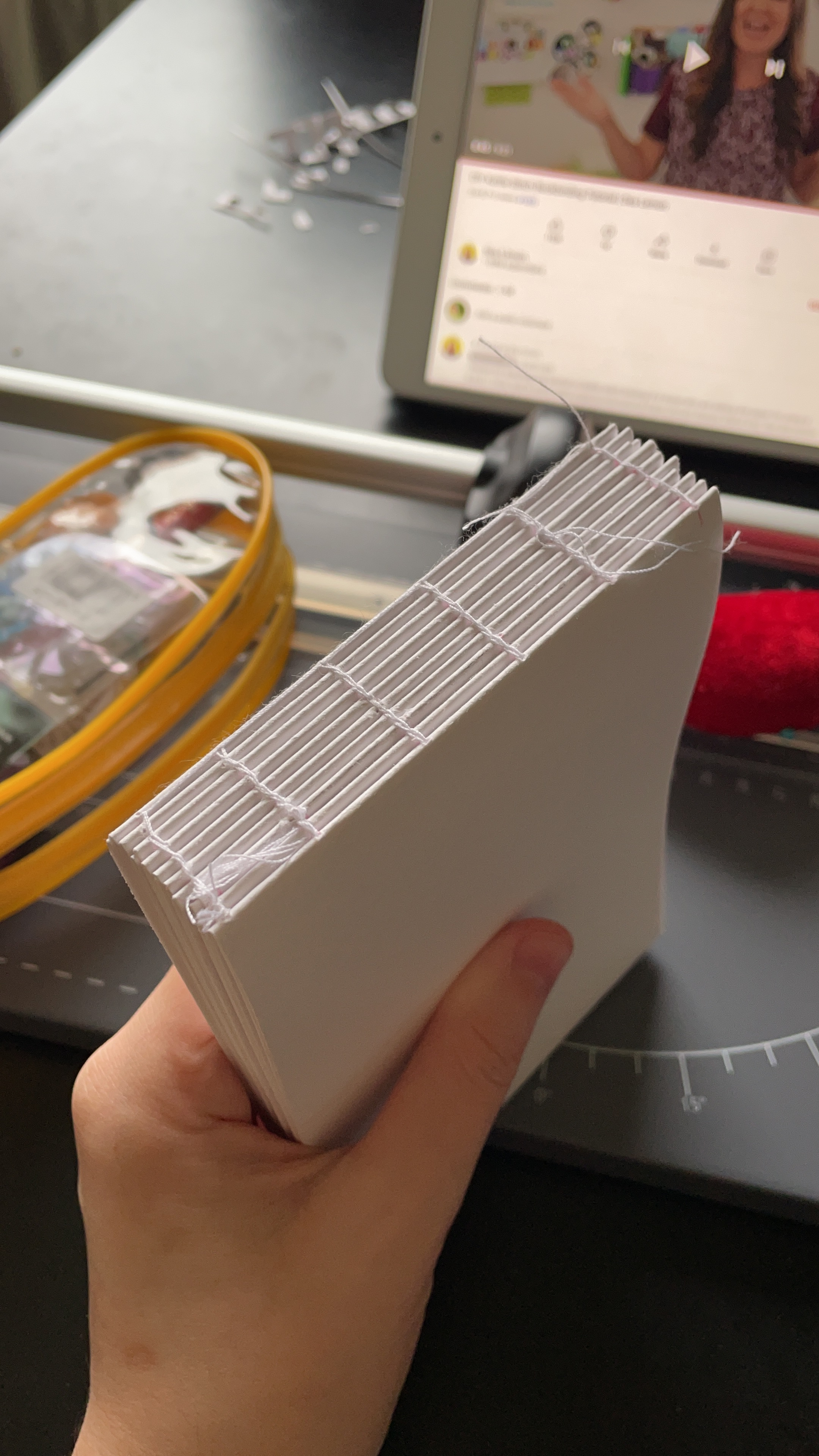
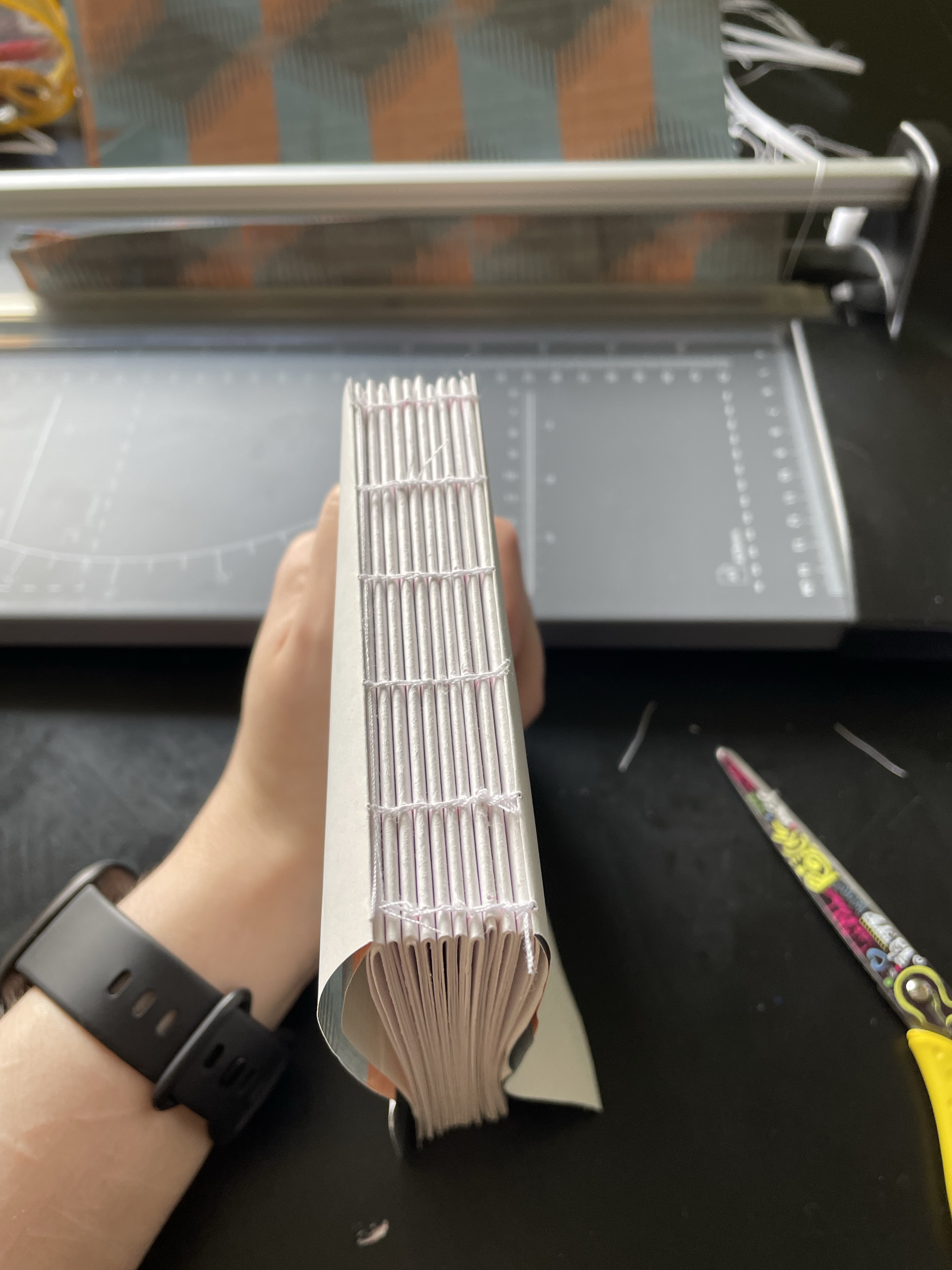
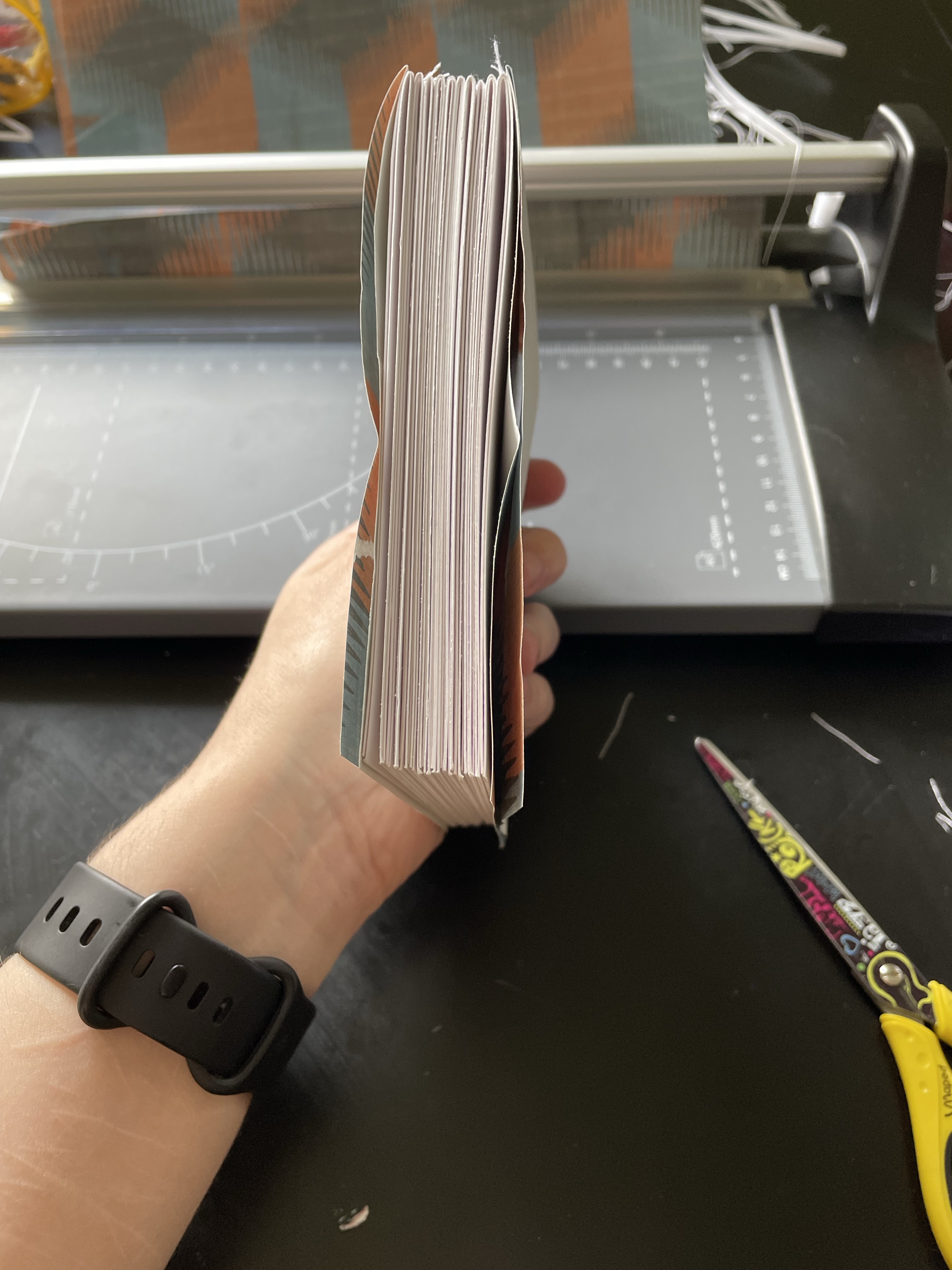
Due to the nature of the exercises in part 2, it is recommended that the sketchbook you choose contains paper that is suitable for a wide range of materials. I decided to make my own sketchbook once again using Daler-Rowney mixed media paper. For no real reason, I was drawn to an atypical size for my book – cutting the A4 sheets in half horizontally and folding these pages in half to create signatures. This book was much easier to make due to its straightforwardness. It still is not perfect, but it’s a big improvement from the last. The cover is a bit more plain than the last one, too, but I hope to decorate it at some point if the inspiration strikes. I’m really happy with this sketchbook and excited to work through it!
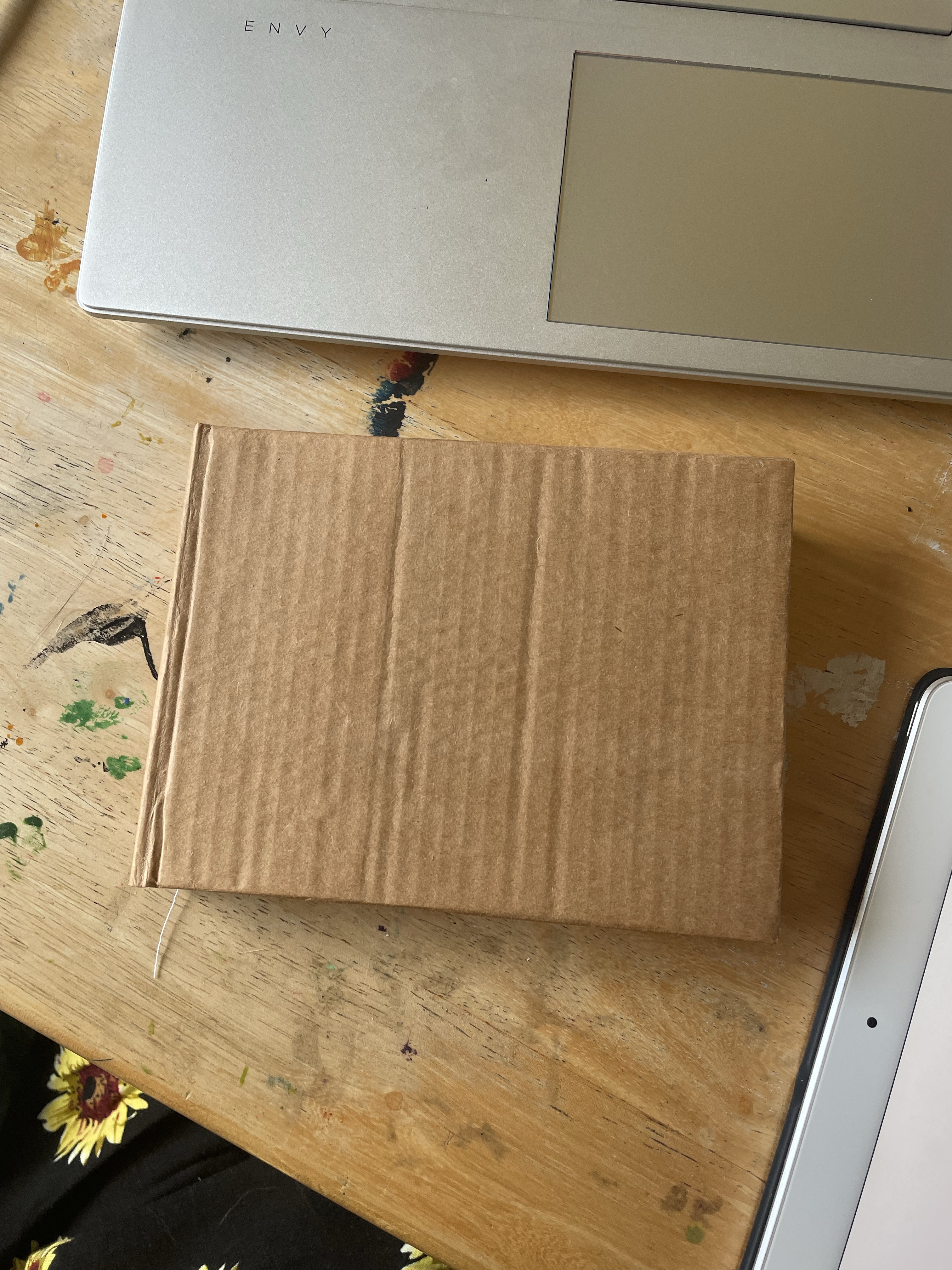
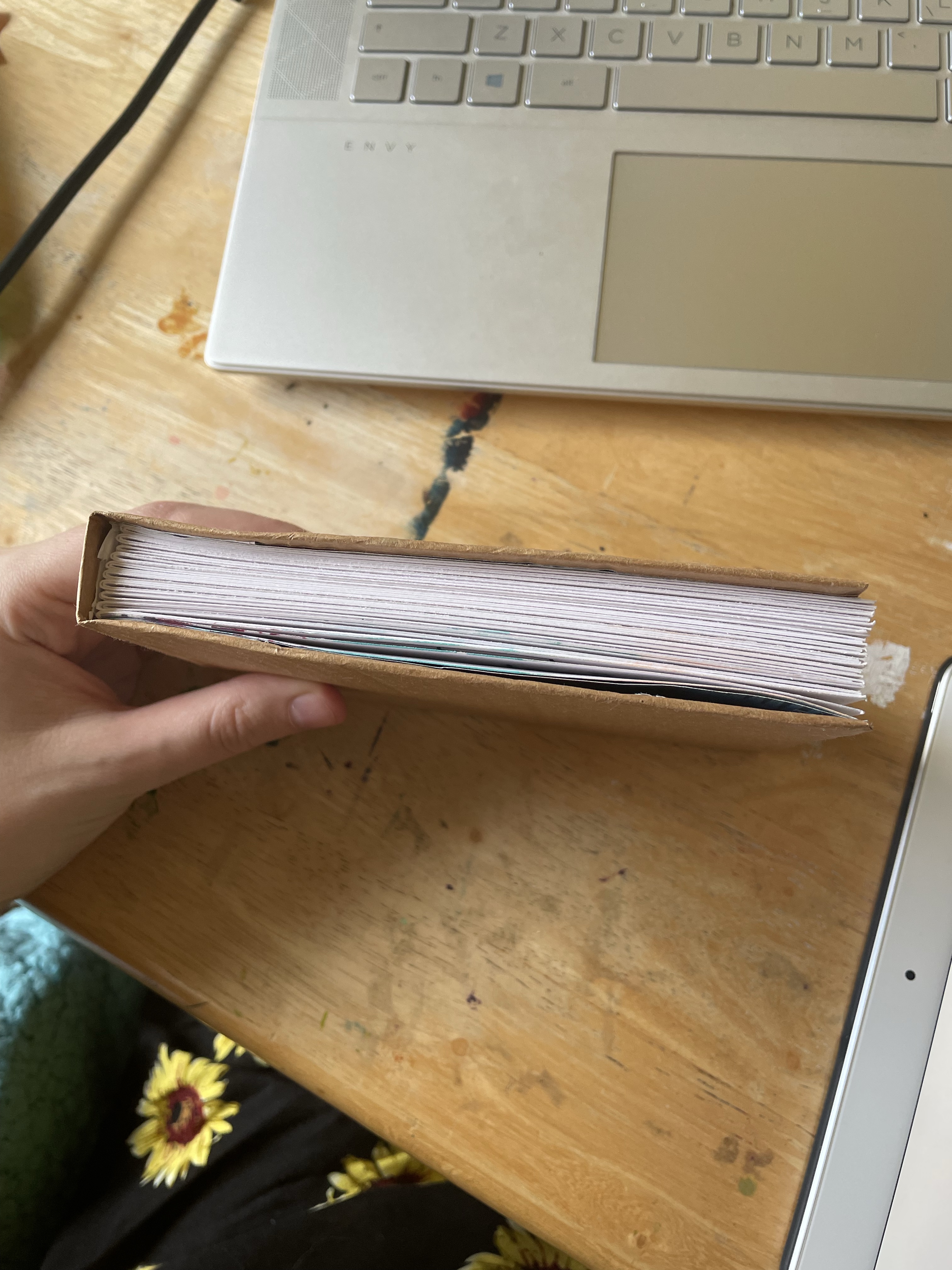
I feel like I’ve already made a great deal of progress in my relationship with my sketchbook. I took a week off from all artwork as I had other things going on that required my focus and I deeply missed drawing every day. It already has become a solidified part of my day-to-day life, and I can’t imagine not using a sketchbook all the time now. I’m also really enjoying the way my art style is growing and developing and the rapid speed with which it is doing so – a year of focused illustrations and learning the technical side of things has lead to an explosion of wonderful creativity and navigation of my personal brand. I can’t wait to see where part 2 takes me and how I feel when starting part 3.
 Learning Log