
For this research task, I was asked to look at the work of Veronica Lawlor and to consider her approaches to reportage illustration. In the unit guide, Jo Davies explains that Lawlor is most well known for her drawings of the 9/11 terrorist attack and notes that she is the only illustrator who stopped to document the event. She goes on to describe how Lawlor uses real-world situations as her inspiration, stating that ‘for her, the world is a studio ‘. Davies then discusses Lawlor’s ‘proper’ studio work, explaining how her on-site sketches are used as a reference – brought together with many other forms of reference – to create illustrations that convince the viewer that the event in the image was a real event that took place.
Davies discusses how Lawlor’s work is an example of illustrations simply being a description of what can be seen in any place or time. The drawing of real-life events as they are unfolding contributes to our understanding of the event. I was particularly fascinated by the idea and, thinking back to my days as a history student, how often we reference the arts to understand major historical events. As Davies says, reportage illustration is a form of visual documentary. We can look back as far as the Stone Age and gain a great deal of insight into how people lived, worked, and even felt – just by examining the art they made.
On the one hand, I feel like ascribing meaning to every piece of art in existence is a pointless and pretentious goal. I know that the majority of the art I make is meaningless and just expresses whatever I wanted to do in that moment. However, there are subtilities in these pieces of art that maybe I can’t even see – how the shape of a line might translate a sense of fear or freedom. Even in looking through Lawlor’s work further, I could see how she and others around her were feeling in the moments she was capturing. I suppose she doesn’t intentionally seek to draw the things she does – she just seeks to draw what’s in front of her.
The way we incorporate art into our understanding of history is amazing. Reportage illustration is an obvious example of art capturing history, but I feel like all art tells us something about the era and events taking place at that time. I am very curious to see what is said about the art that is relevant and created right now, in, say, 20 or 30 years. How will we look back and examine our habits and interests? Will we see the strain of the COVID pandemic in how art has been created? What about the pressures of late-stage capitalism and the rise of fascism in media?

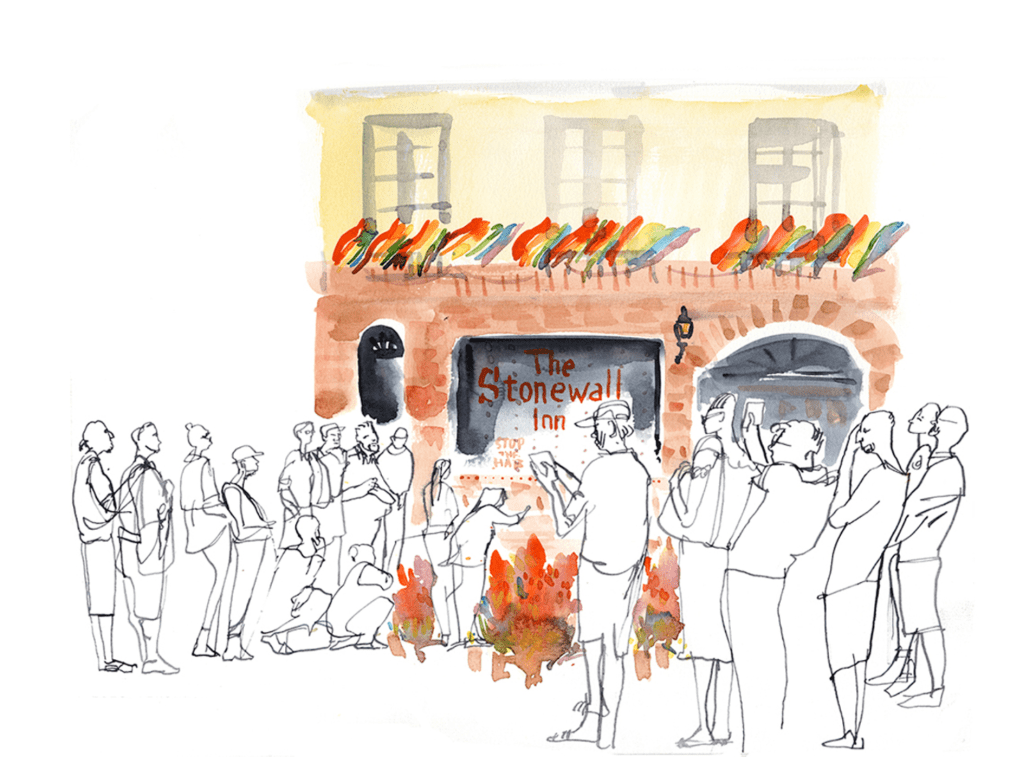
Lawlor’s work has not only captured the 9/11 attack but has also captured the many moments of political unrest in the USA throughout the last 20 years. Seeing her sketches of events that I was politically and emotionally invested in moved me somewhat. I felt grateful seeing that someone had so accurately portrayed the anger, passion, and fierce desire for justice that I and so many others feel. Knowing that these pieces of art will outlive her (and me) is somewhat comforting. It brings me hope that maybe in the future, historians will look back at these moments and be sure to not make the same mistakes. Though, if that were the case, maybe we wouldn’t live in the world we do today.
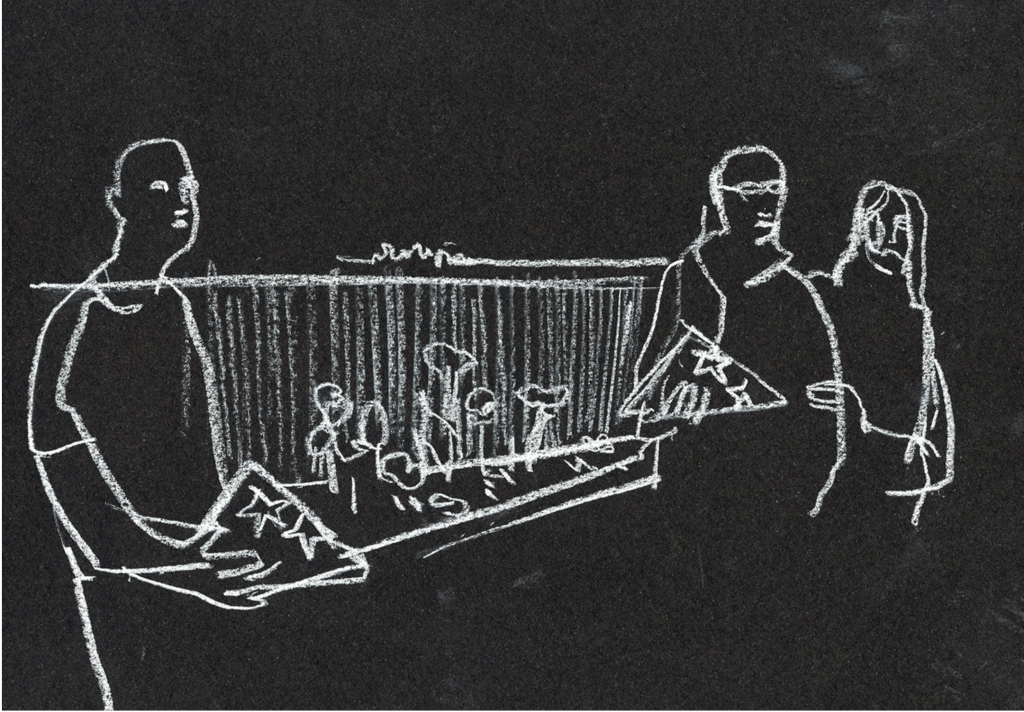
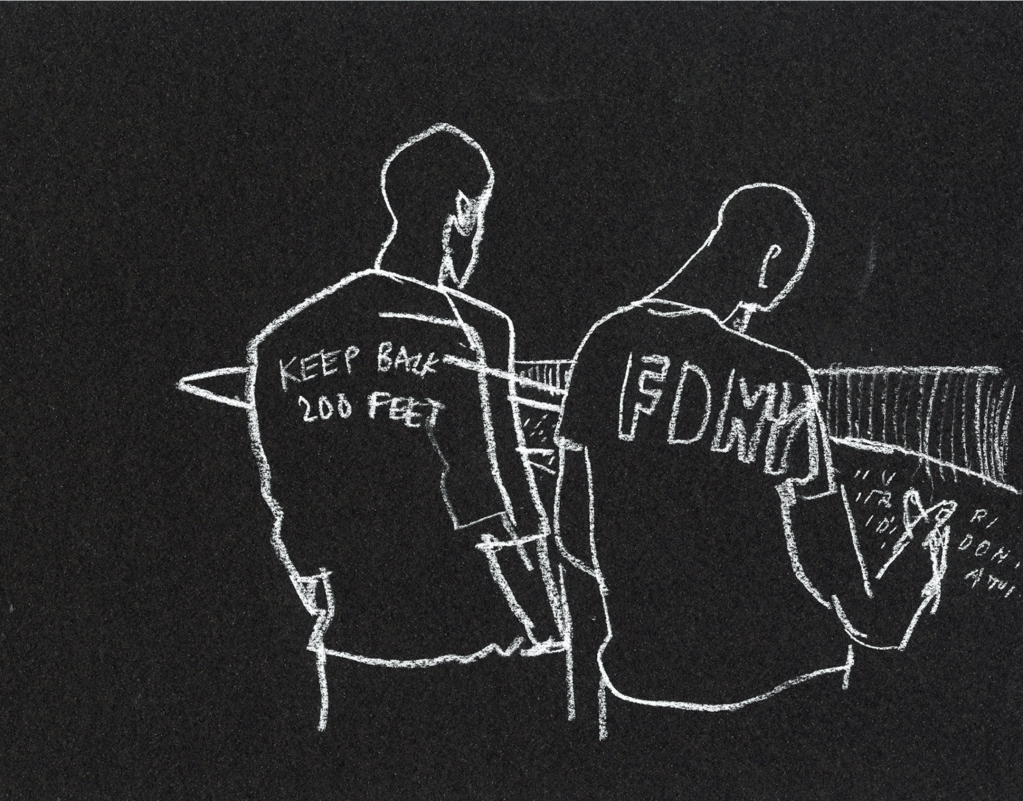
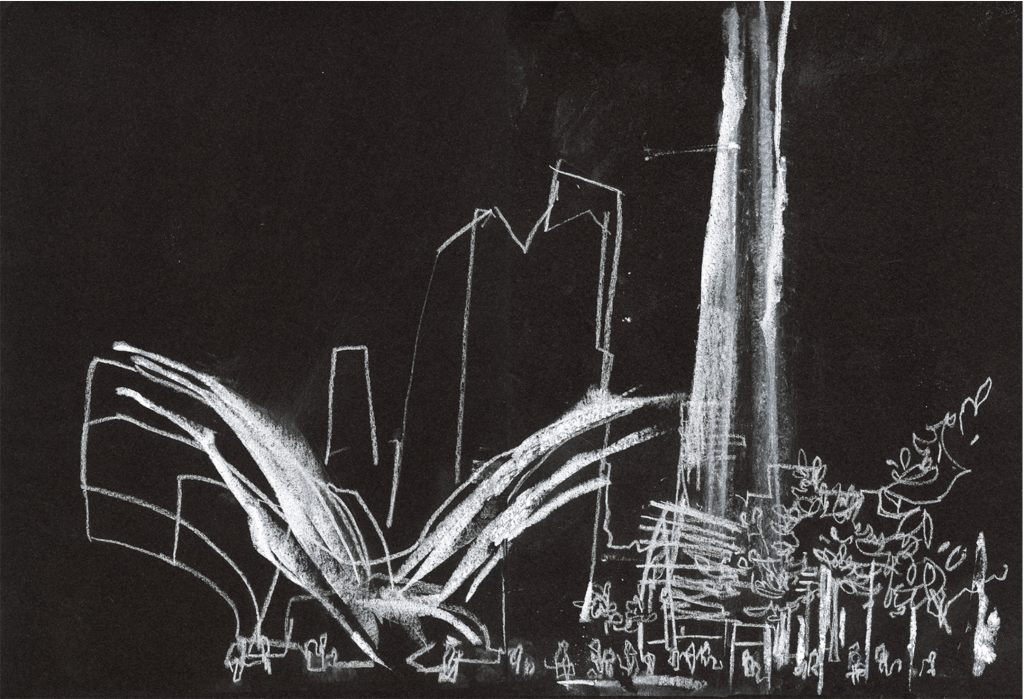
On 11th September 2021, Lawlor revisited the Twin Towers site and sketched the scenes of crowds gathered to pay their respects 20 years since the attack. Any artist could have done this, but Lawlor’s history with the 9/11 attack gave these sketches a whole new level of meaning. She survived the attack, lived through another 20 years, and now is here to remember the experience in the same way she lived it. These sketches are loose, dynamic, and gestural, capturing shapes and the general sense of the place rather than accurately recording details. They very much communicate a sense of freedom and relaxation.
As I looked at the anniversary sketches before the original 9/11 work, I assumed this was just Lawlor’s approach to reportage illustration. However, I was amazed to see the difference in how she captured the 9/11 attack. Both sets of sketches are on-site rapid sketches attempting to capture as much as possible in as little time. The original 9/11 sketches, though, communicate a huge sense of urgency, fear, and chaos. The linework is jagged, rushed, and cluttered. There’s a focus on details, and it feels like Lawlor was unsure of what to document next. They feel tense and overwhelming as sketches when compared to the anniversary work.

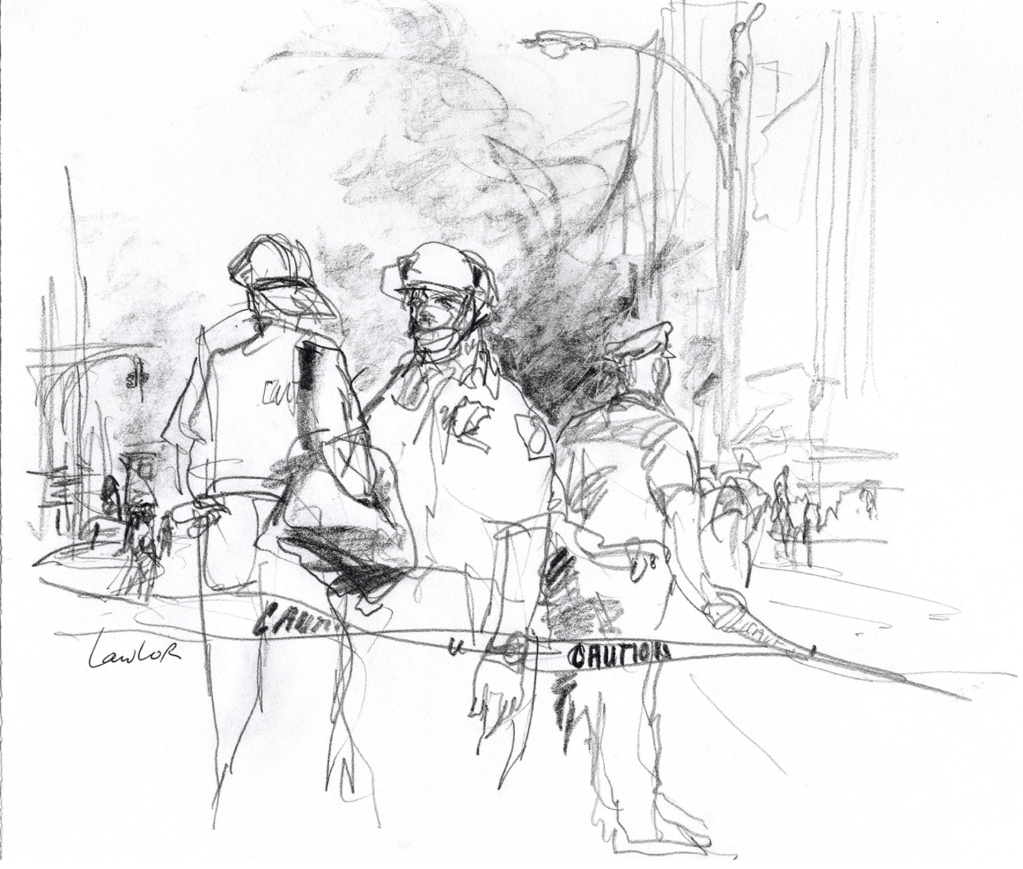
This absolutely amazed me. I doubt Lawlor was attempting to communicate fear and chaos whilst sketching on 9/11, and the same goes for the feeling of calm in her anniversary sketches – she was likely just trying to draw what she could see without too much thought. The feeling in the world around her, though, is documented along with the actual people and places that were there. It gives me a whole new perspective on on-site drawing, especially of major events. I can really see the worth of this as a way of documenting emotion and the progression of the social and political climates in the world.
Alongside traditional reportage illustration, Lawlor has ventured into many other areas of the art world, including animation, portraiture, children’s illustration, and fashion illustration. She also uses reportage illustration techniques to document her travel experiences. It was comforting to see this. As an artist, I feel constantly torn between varying industries and mediums. I feel a lot of pressure to pick one and settle into it, to make a name for myself within one specific industry. Answering the question ‘what sort of art do you do?’ is so tough for me as I don’t have one thing. Seeing an artist like Lawlor – who is so well known for her reportage work – branch out into many different industries reminds me that I, too, can have variation in my work.
Her travel documentation has a totally different vibe to it. It’s much more careful, controlled, and accurate. This is likely due to her ability to slow down and appreciate all that she can see a little more when travelling. When compared to her on-site illustrations from intense or violent events, the travel illustrations appear beautiful in an emotional way rather than a technical way. I can imagine it’s difficult facing these events repeatedly, so seeing a snippet of Lawlor’s escape to distant lands or unfamiliar places is wonderful.
Prior to researching Lawlor’s sketches, I felt quite ambivalent towards the concept of reportage illustration. Now, however, I have a huge appreciation for it. It isn’t a form of illustration I myself am interested in exploring or participating in, but I have loved examining Lawlor’s work and would like to see more of the same. Her work, as well as the concept of reportage illustration, has inspired me to sketch more of what I see and what I enjoy looking at, knowing that I’m contributing in some way to its memory. This thought helps me feel like my work has a purpose, which inspires me to keep creating.
All images within this post have been used for educational purposes under the fair use copyright act. Original images can be found here. Featured image is a sketch drawn during the ‘Today I Am a Muslim’ rally to show support for muslims in the USA after President Trump’s travel ban.
 Learning Log