
The goal of this exercise was to revisit the work produced through the unit and to consider new approaches, then to establish ‘collections’ of work. I was asked to print off images that I felt a connection to and combine selected elements, figuring out ways I could use the work again in the future. I then was asked to look at all of the images together and create connections between them in order to form collections of work. There was no ‘right’ or ‘wrong’ way to approach this, as long as the collections meant something to me.
Throughout this unit, I have been adding all of my work to a folder on my iPad so that it can easily be located and revisited. I went through this album and created a new album for this exercise, adding anything that jumped out to me or that I felt strongly about to that. I chose anything that made me feel happy, captured what I felt was my style, or that I want to do more of. I then put all of the images into Procreate so I could easily print them.
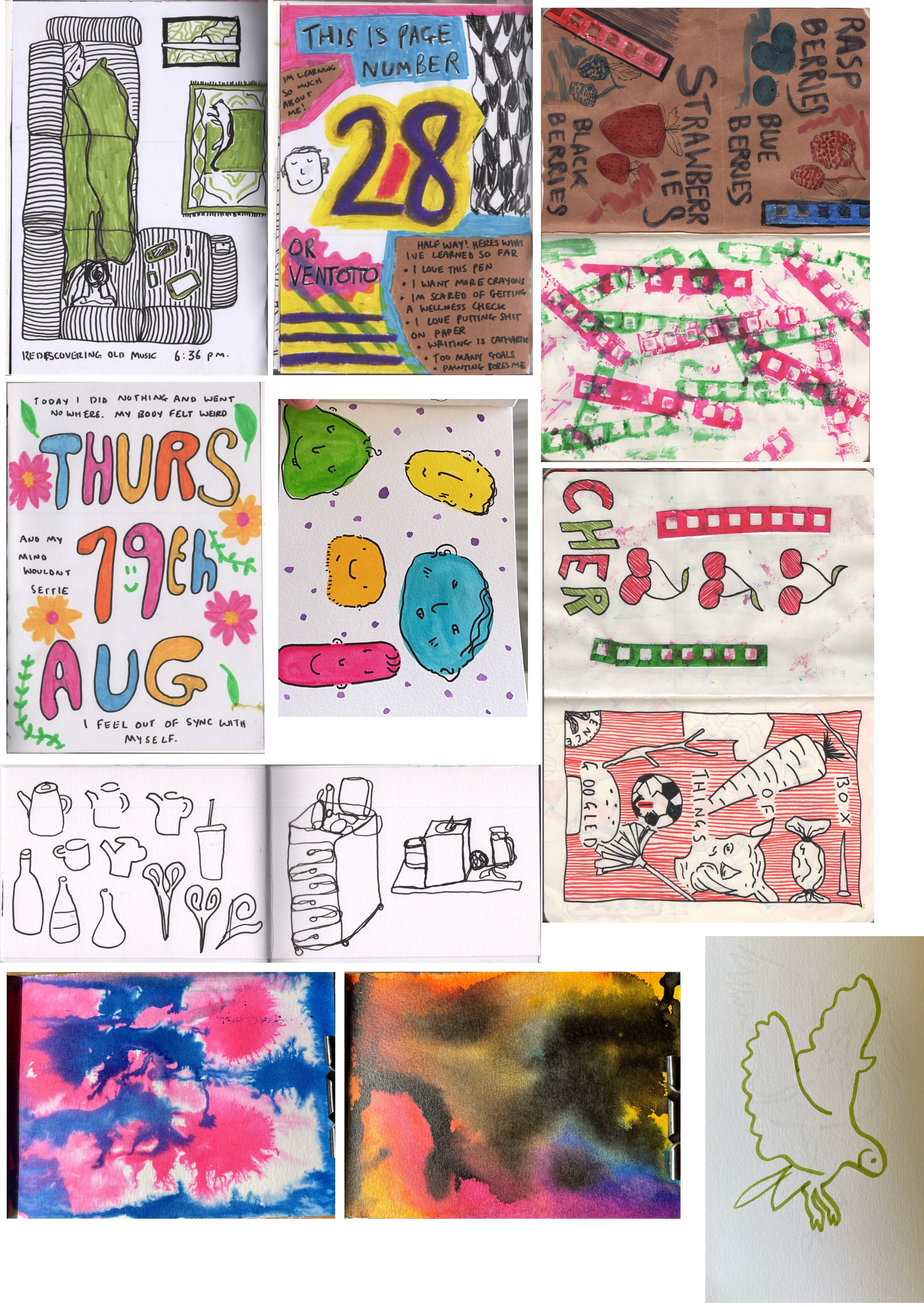
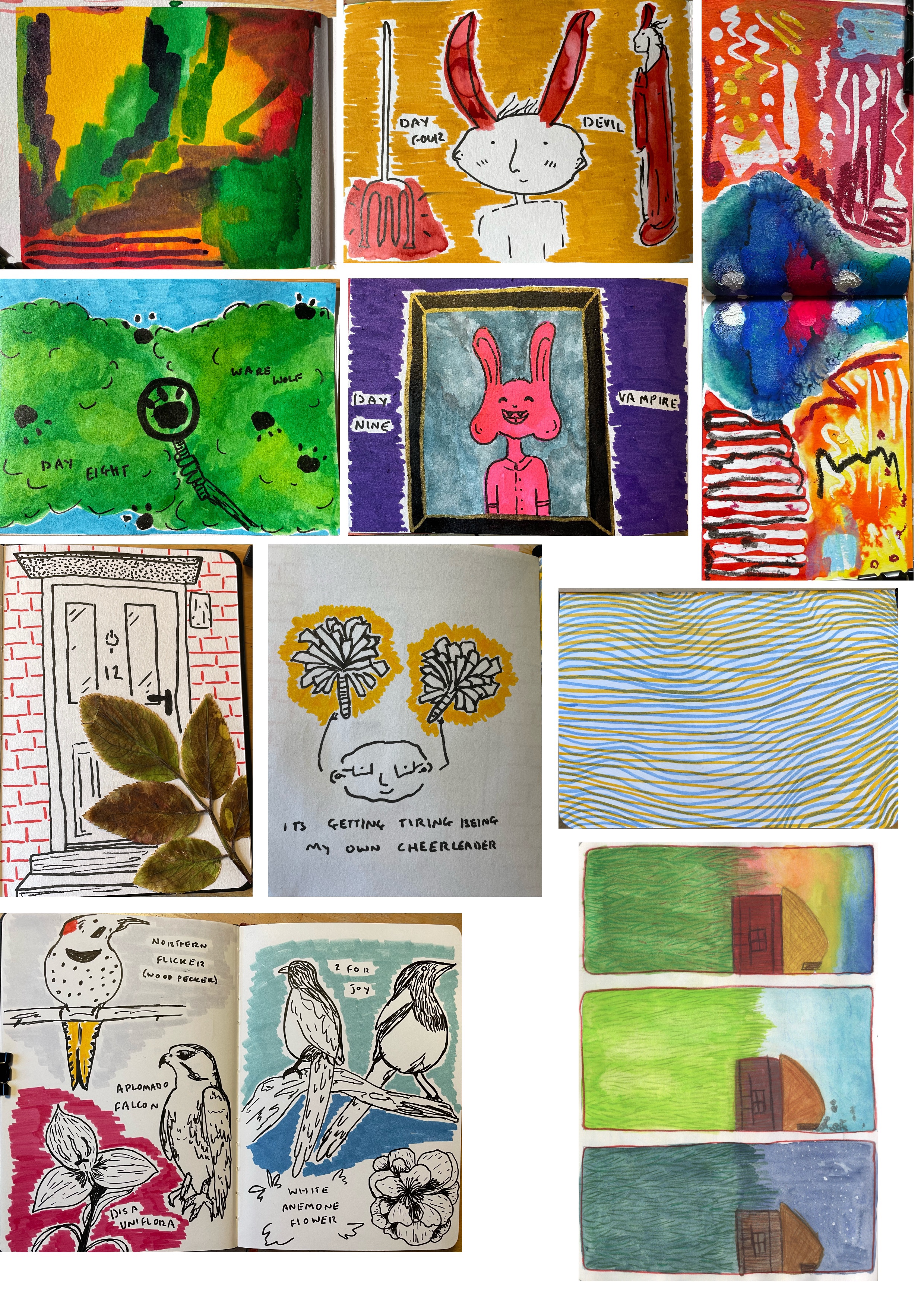
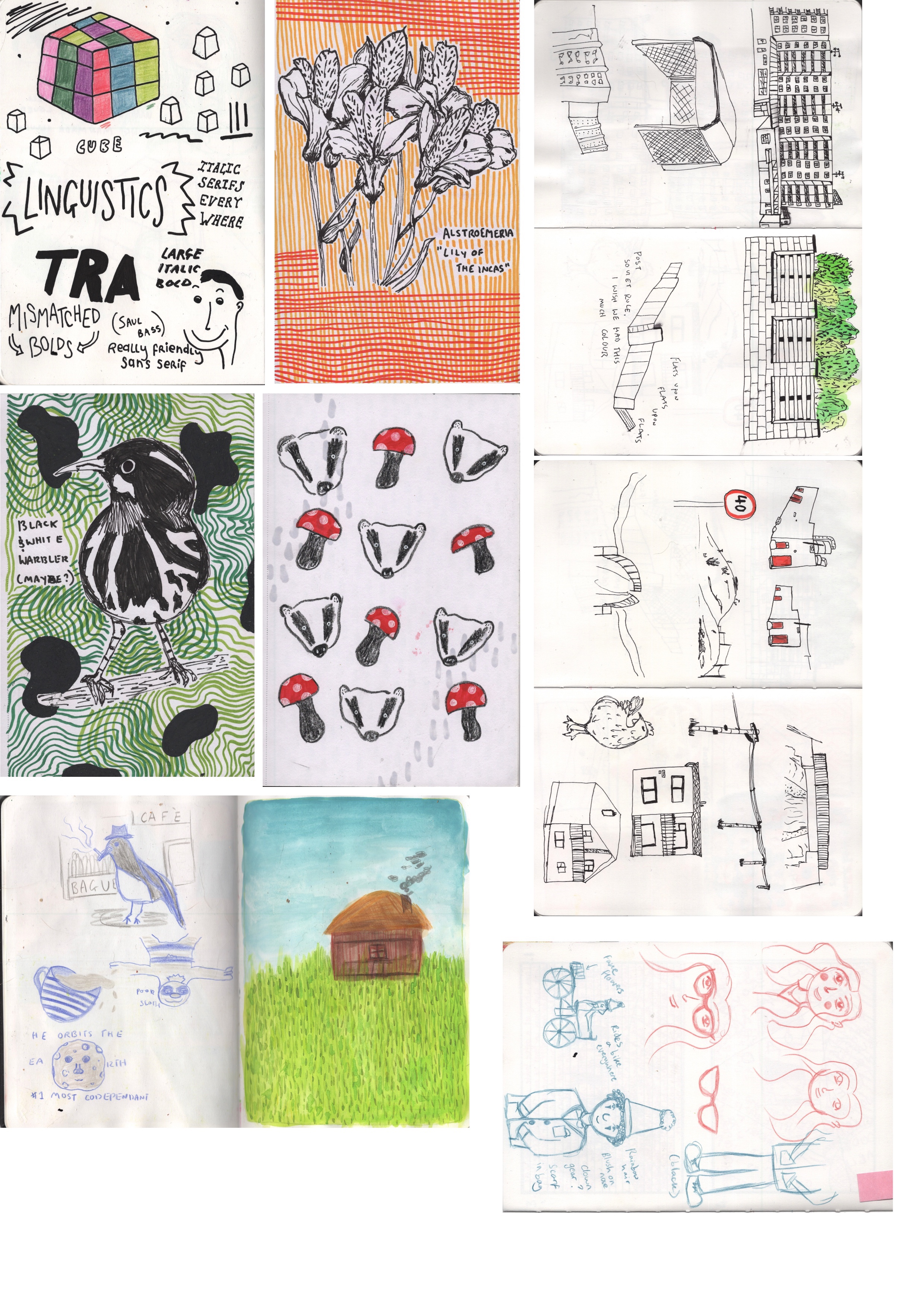
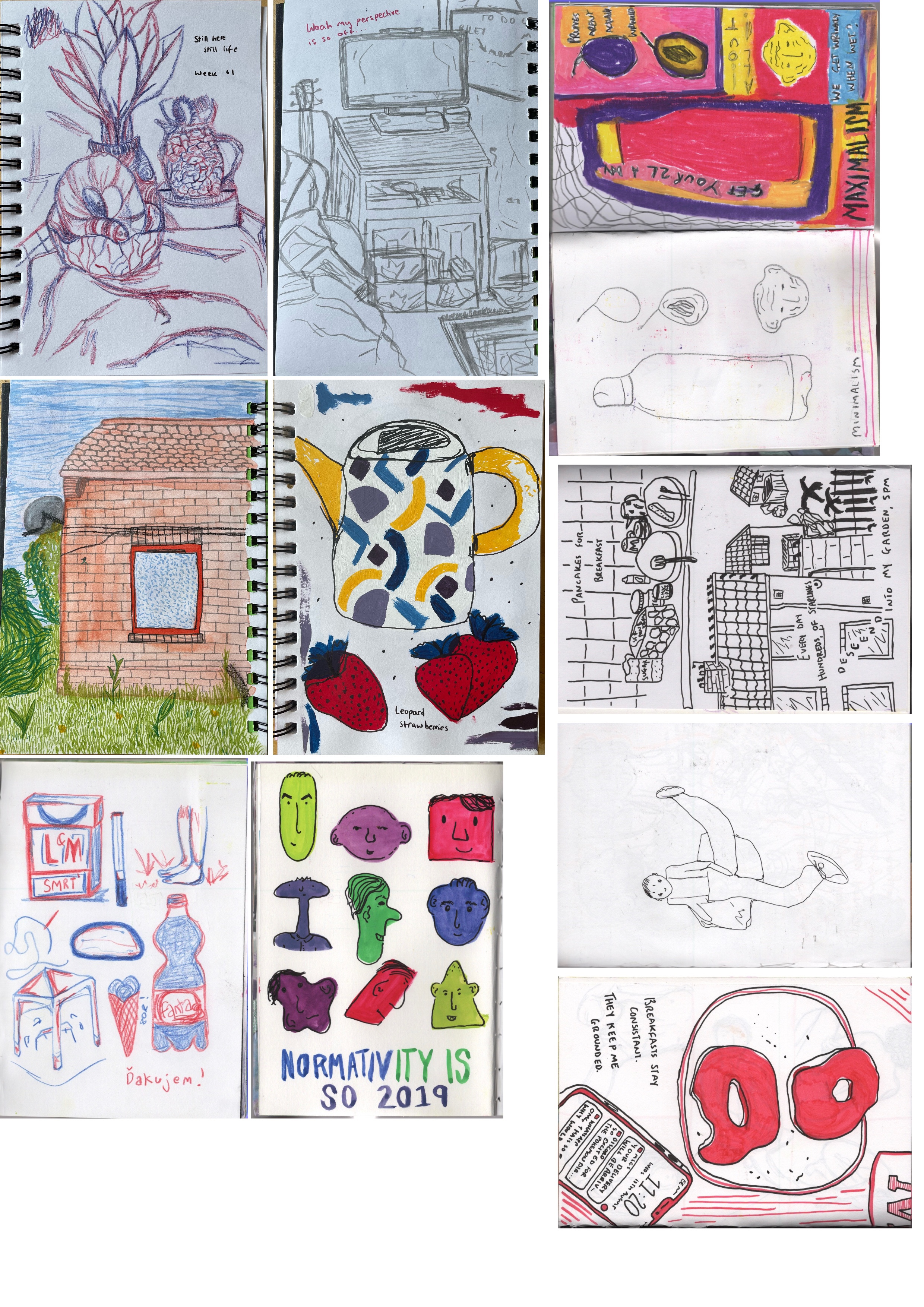
Seeing all of my ‘best’ work laid out like this is quite moving. I have quite a negative perception of this unit and of my experiences, but actually, this is exactly where I want to be and how I want to be developing my style, and I have masses of work to show for it! That feels incredible. I love how I have developed my approach to sketchbooking, documenting things, and exploring mediums. If every one of my sketchbooks forever looked like the above images I think I would always be happy.
Revisiting my favourite pieces of work also shows me how much I want to re-do a lot of it, exploring new approaches and new concepts within concepts. This is the way I want to use my sketchbooks in my practice – getting space and distance from them, then going back and reconsidering when it feels ‘fresh’. If I could fill a sketchbook across 4 or 5 months, then come back a year later and expand on it, I think that would help me enormously. Sometimes time and space work magic. I never want to stop creating though, and will try to always have a sketchbook on the go.
Next, I printed everything off and cut it all out. I then laid each piece out on my desk so that everything was visible simultaneously, and started considering connections and new things to explore. I found a few things that I’d love to try – combining my love of drawing birds and flowers with actual plants and found materials, drawing bold line drawings then filling in the space with abstract and experimental techniques, creating accidental and explorative backgrounds then adding still life drawings to them, and giving inanimate objects faces and personas. The last one especially would be very useful for character development and exploring narratives.
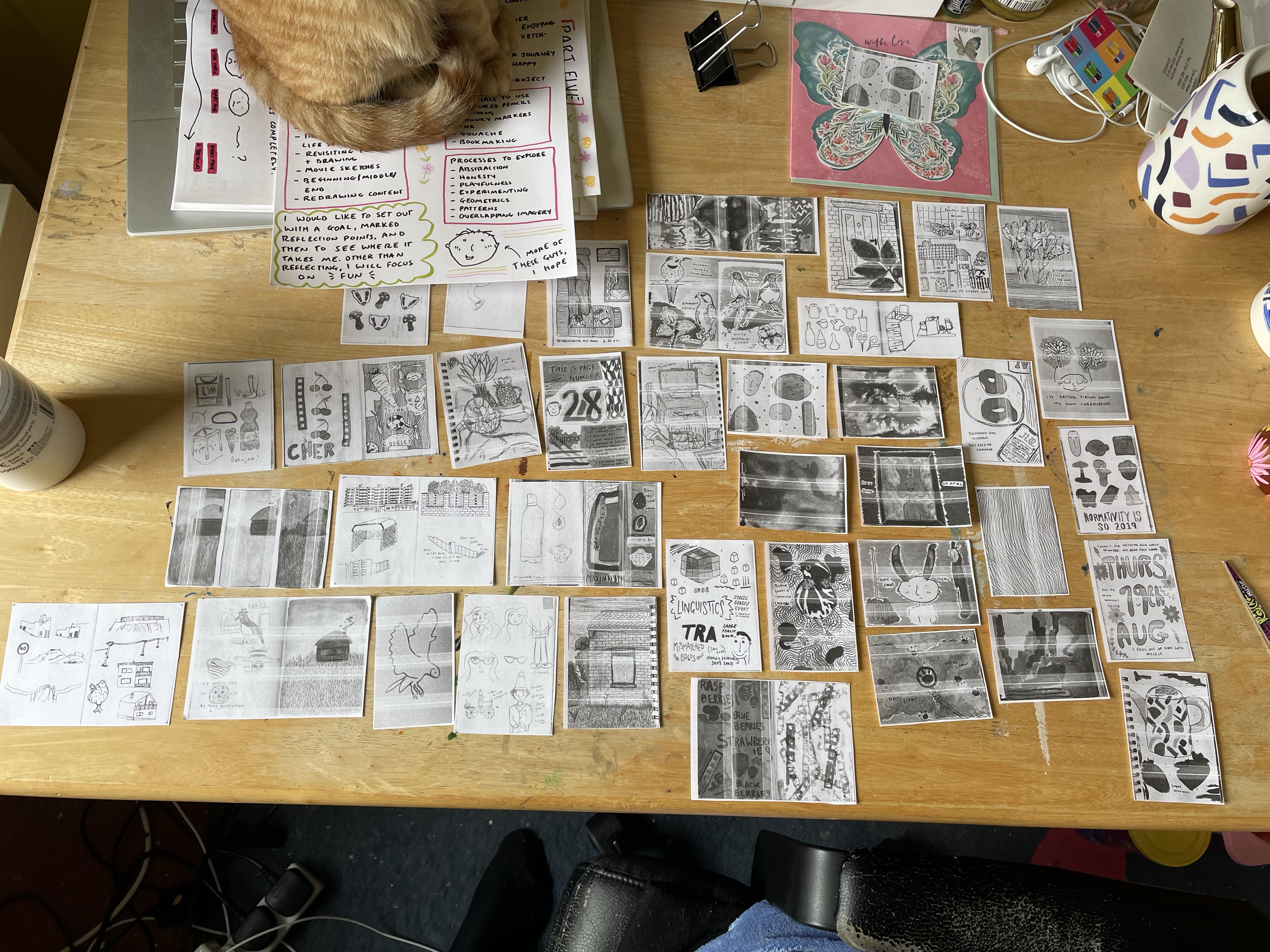

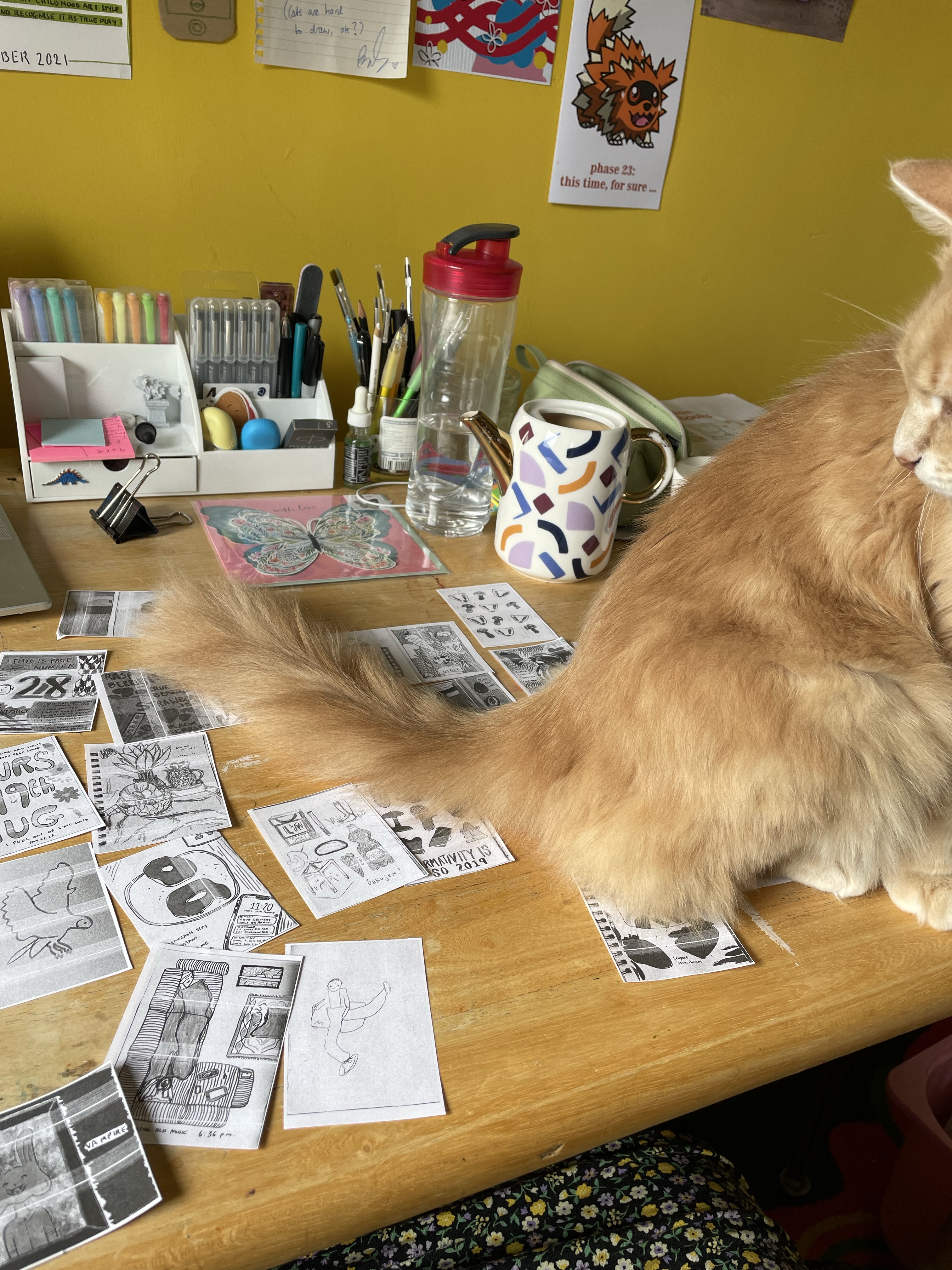
I then cut out all of the missing pieces and went back to assessing everything simultaneously. I started creating ‘collections’ of work, things I felt fit together and categories that I felt described my style and interests. I ended up with six categories, and one ‘everything else that doesn’t fit’ category, which is bound to happen! I think maybe someday that category can be better named or split off into several categories as it grows. I feel like each category describes the things I enjoy using my sketchbook for, and areas I fit into as a designer. The categories are:
- Experiments, Explorations, and Mistakes
- Pattern Design
- Expressing Thoughts and Feelings
- Nature Studies
- Observation, Still Life, and the Everyday
- Character Design
I’m not surprised by most of the categories, but realising that ‘Observation, Still Life, and the Everyday’ is a category not just of work I have produced because I have to, but of work I actively enjoy and want to make more of, is a shock. It turns out I really, really enjoy drawing objects. I love drawing still-life setups, buildings, trinkets, and ‘stuff’. It’s fun, playful, and meaningless. I’m also a little surprised at how much I enjoy drawing nature, and hopefully, I can expand this beyond birds and plants. This review of my work has also helped me to contextualise what I enjoy about character design – the playfulness of it. Removing the serious and stressful elements and just drawing silly faces and little people makes me happy.


Once I had sorted and organised all of the work, I went through and stuck everything down on the backs of the paper I had already used for the previous exercises, thinking ahead to Exercise 5.3. I added some illustrations, notes, and decorations to the pages, and it was great fun. I now have a gorgeous portfolio of my sketchbook work and illustrative likes and dislikes which I am able to refer back to whenever I please! I feel so much more grounded in who I am as an artist and what my goals are, both in sketchbooking and in general.
This exercise was enormously useful for me. Ordinarily, I avoid cutting and sticking and prefer to do everything digitally. Actually getting my hands dirty and seeing my work spread out as it was helped me find contexts I don’t think I would have otherwise. I feel very happy with my work from this exercise.
 Learning Log