For the final assignment of Illustration Sketchbooks, I was given a choice between three different briefs. I was asked to generate a new sketchbook based on one of the themes, and to produce a final reflective statement. In the introduction to the assignment, it was made clear that the focus was not on making resolved or finished drawings, but on investigating the illustrative potential of my drawings and sketchbook work. I was asked to look back at my action plan throughout the assignment, using it as an opportunity to show a heightened development of my creative voice. I was encouraged to also try a wide range of approaches, materials, and exercises throughout to realise my goal.
I began by reading through each of the three briefs. I was instantly drawn to option three: Everyday Stories. Option one had an appealing outcome – using previous illustrations in a new context – however, the content itself didn’t appeal to me much. I feel like I’ve spent a lot of time drawing kitchen-related items and foods, and it’s not super exciting for me. Option two was very unappealing as I have realised throughout this unit that reportage is not for me at all. It also, once again, required me to go out into a public place, which isn’t very accessible to me. Option three felt like a broad brief that I could easily work within, considering narrative contexts within my work whilst also exploring the concept of ‘the everyday’ one last time.
This brief asked me to write six words or sentences based on the everyday, then to create a series of six drawings that convey a narrative by connecting the content from my exploration, or ideas based on one of these phrases. I had to conceptualise these six drawings as if they were ‘key frames’ in a short trailer, video, or animation. I felt this all fit in well with my action plan and goals as an illustrator, as well as what I have enjoyed throughout this unit.
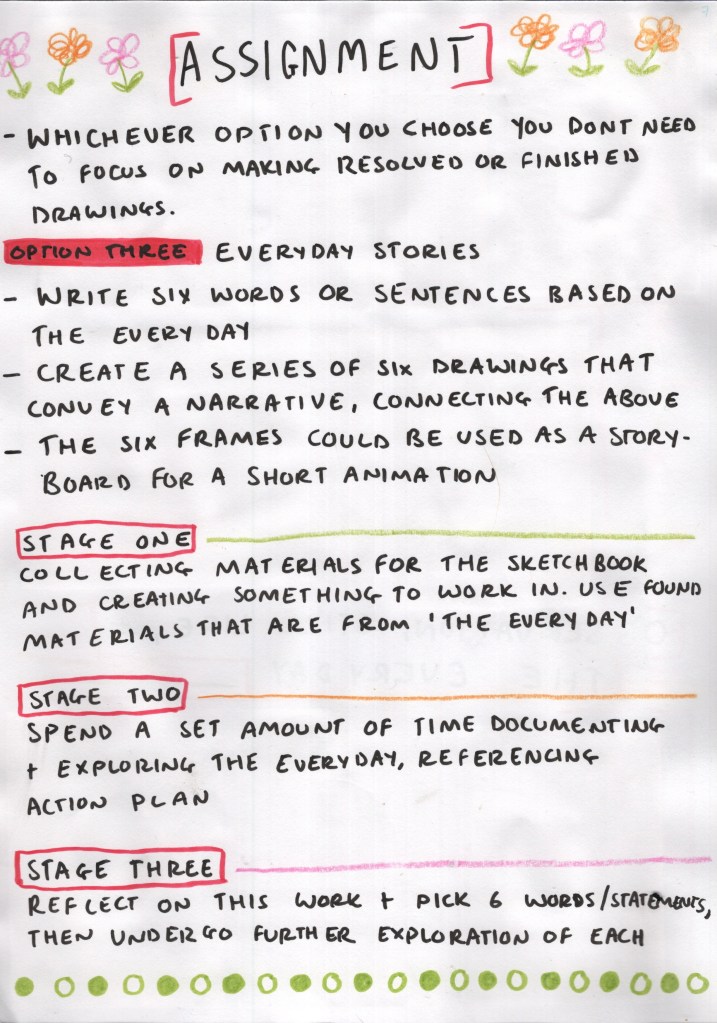
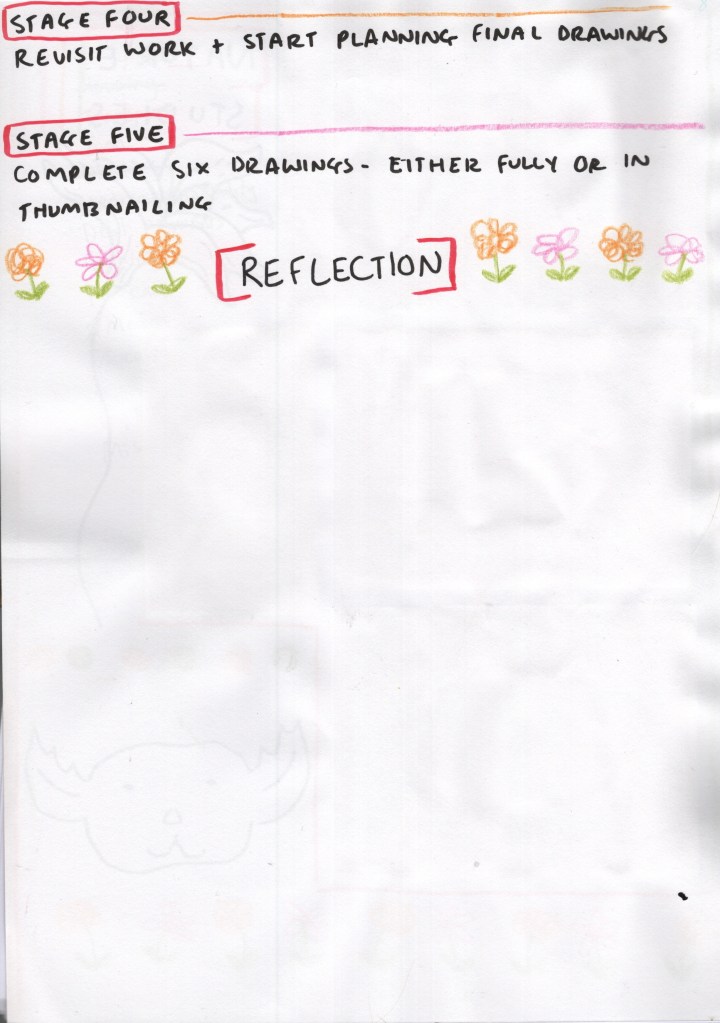
I considered how I would approach this brief and wrote out a preliminary plan. I didn’t want to dive straight in with my six words, and instead wanted some time to document some everyday experiences, which I could then reflect on and pick words that I felt resonated with the theme. From there, I would then be able to create the six drawings. The plan had five stages to it:
Stage One – I would collect materials for my sketchbook as my action plan stated I want to make my own for this project. These materials would be ‘everyday’ items that I could create something visually engaging with.
Stage Two – I would spend a set amount of time documenting and exploring the everyday whilst referencing my action plan, approaching it almost like a visual diary.
Stage Three – I would pause, reflect on the work made so far, and consider 6 words or statements to undergo further exploration of.
Stage Four – I would revisit previous work, consider how to make use of it in my final illustrations, and start planning and designing the final images.
Stage Five – I would complete six drawings, either fully illustrated or mock-up/thumbnailed.
I felt confident and happy with my plan and was excited to get started with making my sketchbook.
Stage One – Making a Sketchbook
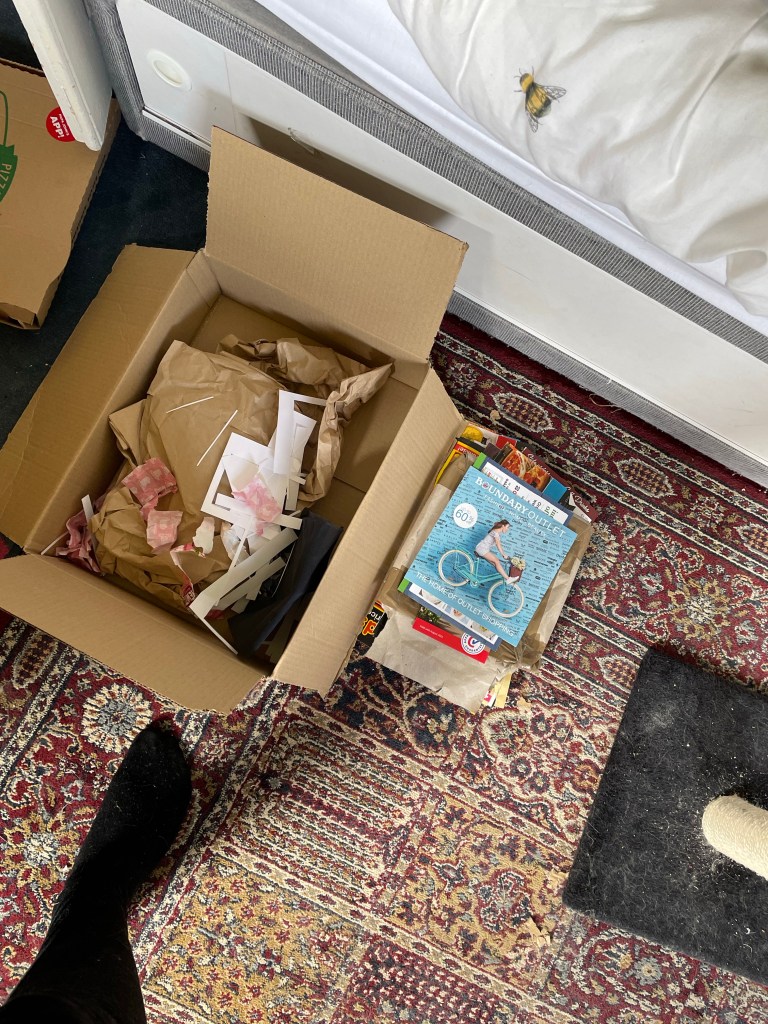
I wanted my sketchbook to show snippets of my everyday life and to be almost a collage of pages from throughout. I began by going into each room in my home and looking for pieces of paper that I could include – advertisements, bills, envelopes, wrapping paper, newspaper, anything that I could possibly draw on. I then brought all of it into my studio to sift through. My focus initially was on paper quality, being mindful of the materials I wanted to use throughout the assignment. If the paper was too glossy, too thin, or too crinkled, I discarded it. I then started considering the content of the paper – is it too busy? Could I actually add to it? Anything that felt cluttered or impossible to work on got discarded, too.
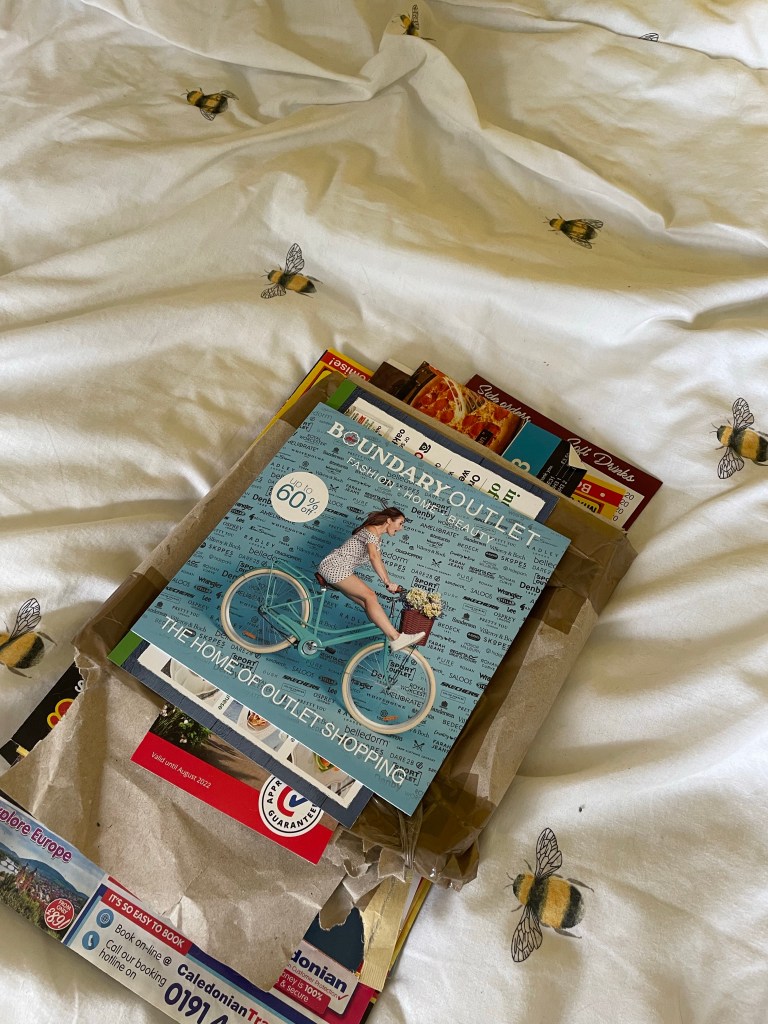
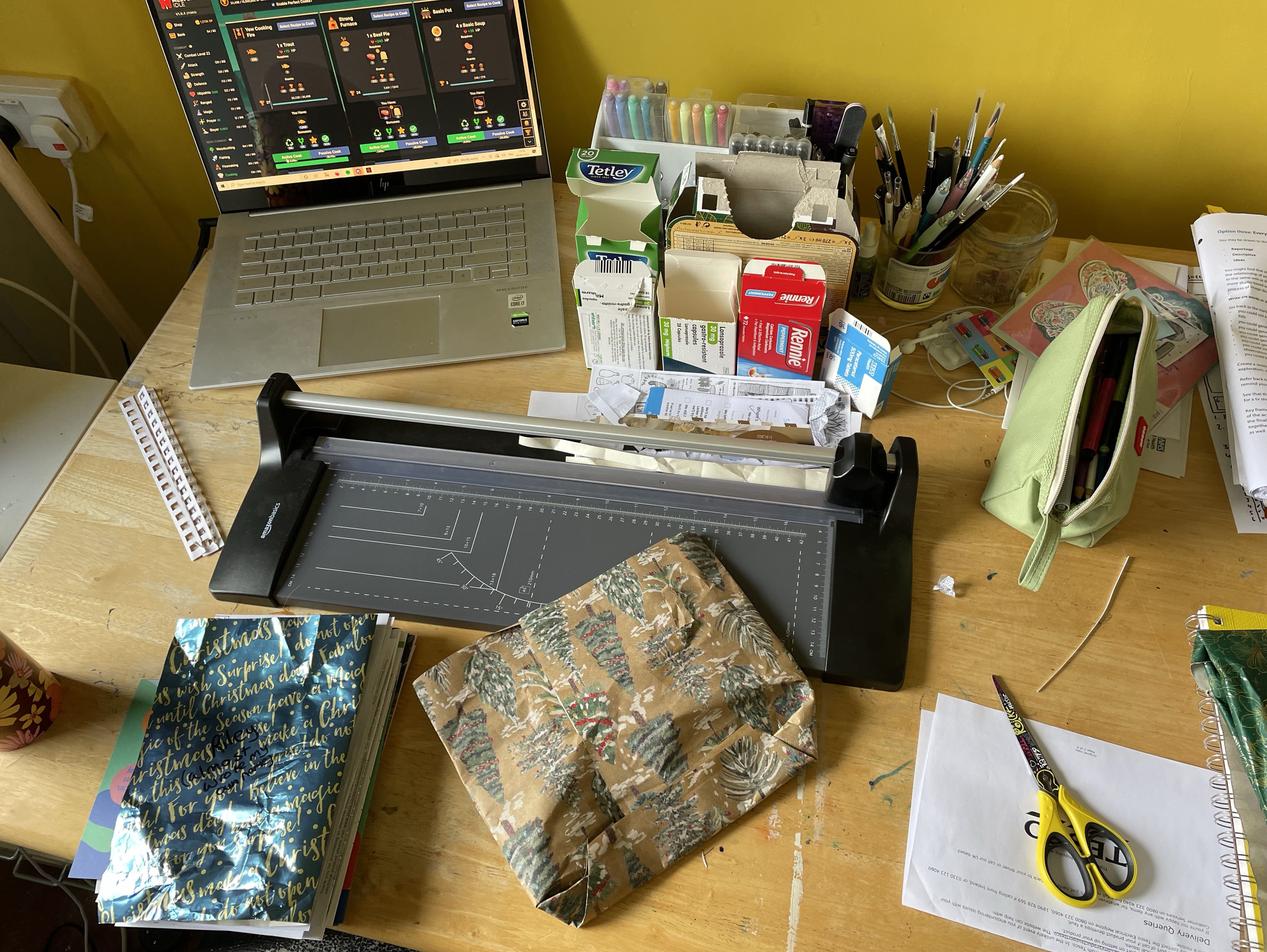
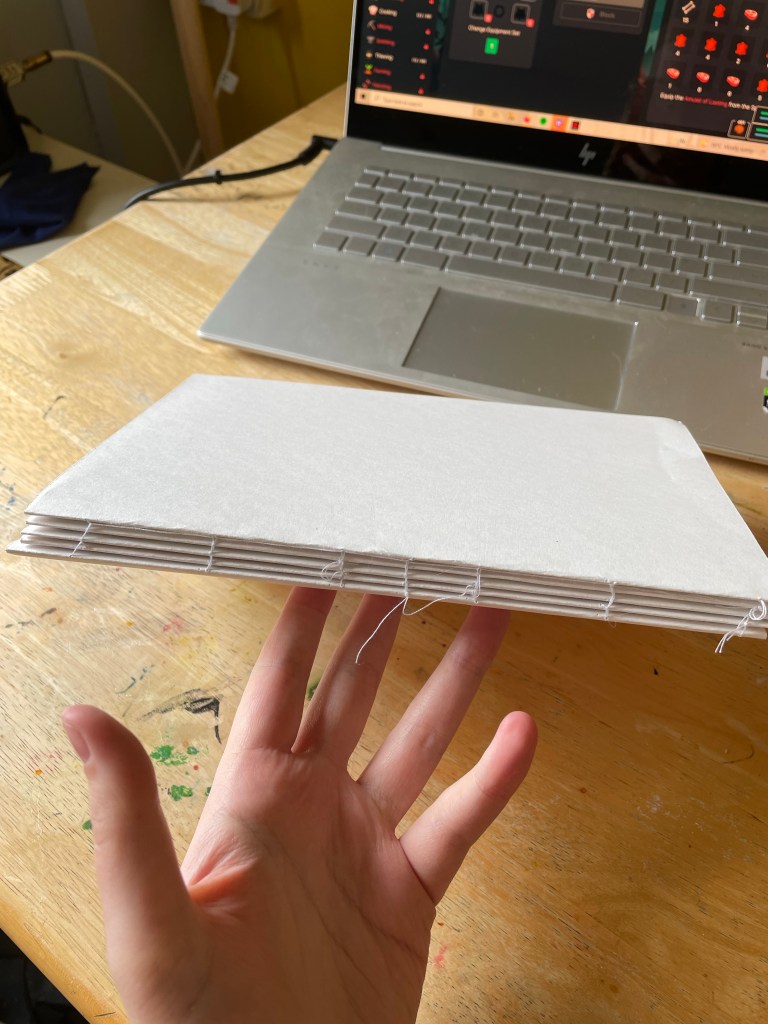
Next, I began cutting all of the paper to size. I added some plain mixed media paper to my stack, as I felt it would be important to have alongside the recycled found materials. This acted as a guide for the rest of my pages. Once all of the paper was folded and cut, I began sorting it into signatures. Each signature had one large piece of mixed media paper holding the rest, followed by a mix of recycled paper and smaller mixed media paper. There were a total of 48 pages across 4 signatures. I then decided to add a signature of just mixed media paper at the back of the book, conscious of the fact I will be going back over my work and redoing it, which I will likely want plain paper for.
I then marked guidelines for stitching on each page and began to sew my signatures together. This was harder than previous bookmaking experiences, as all of the paper was slightly different sizes, in different places, and organised in a slightly chaotic manner. However, its natural imperfection was also helpful, as it made me feel less pressured to get it right. It didn’t really matter if the stitching and binding were messed up – the whole sketchbook already felt like a hodgepodge of stuff. Once stitched, I applied glue to the spine and added paper to secure it. I left it in a press overnight to let the glue set, and I began working on the cover.
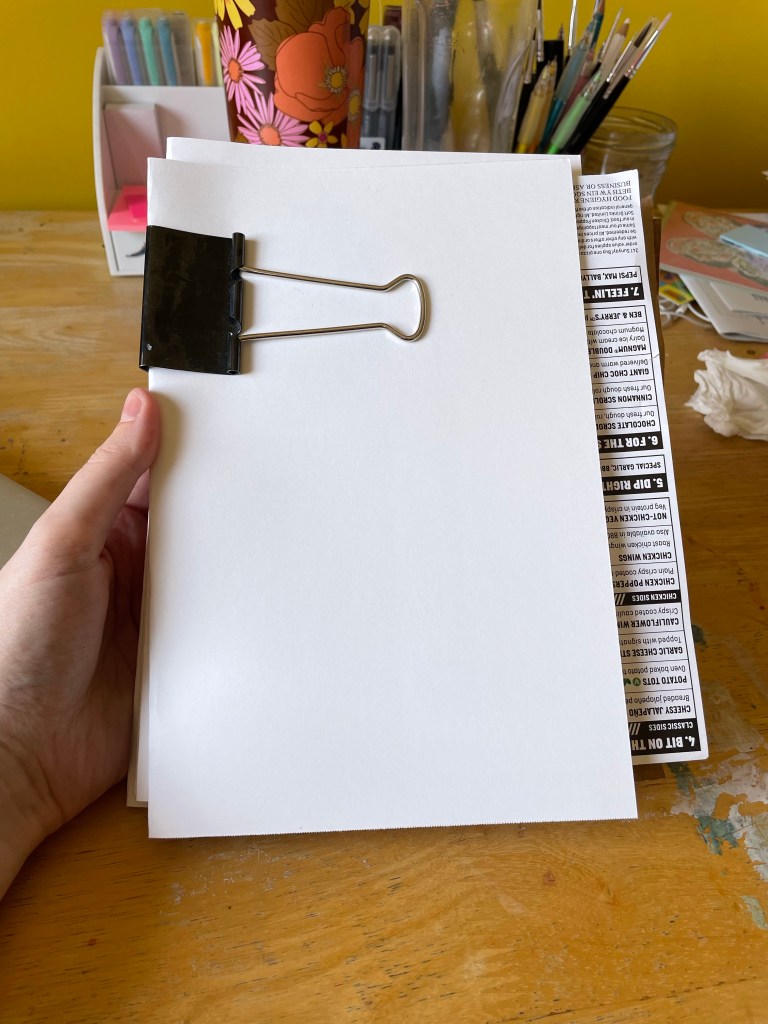
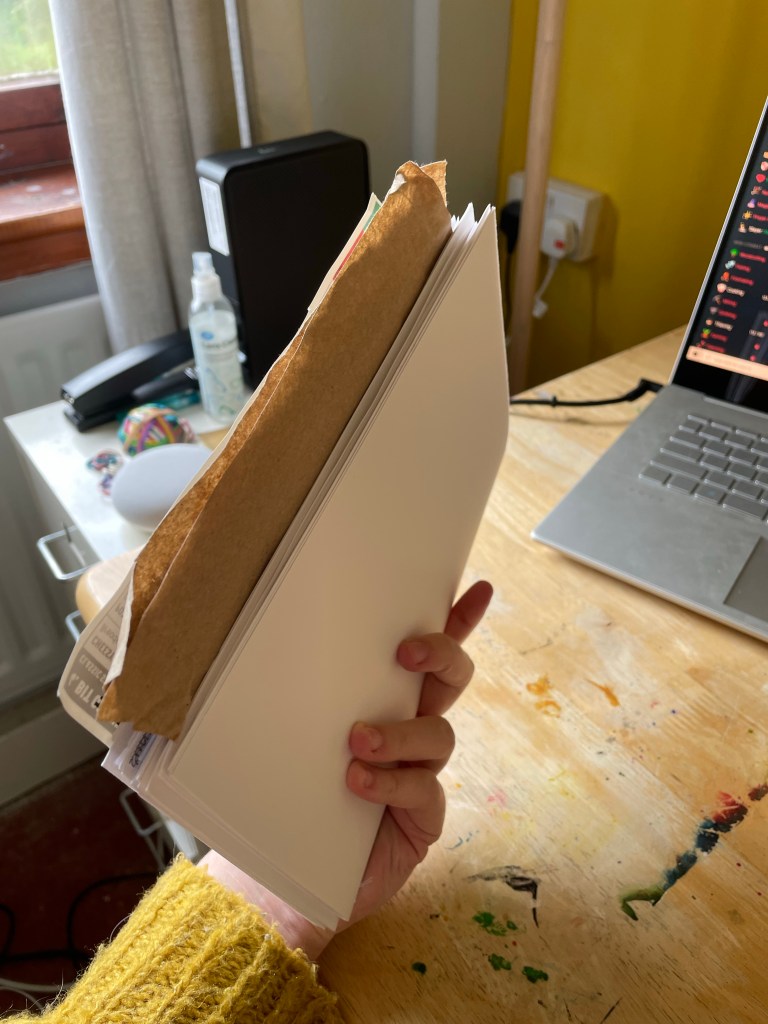
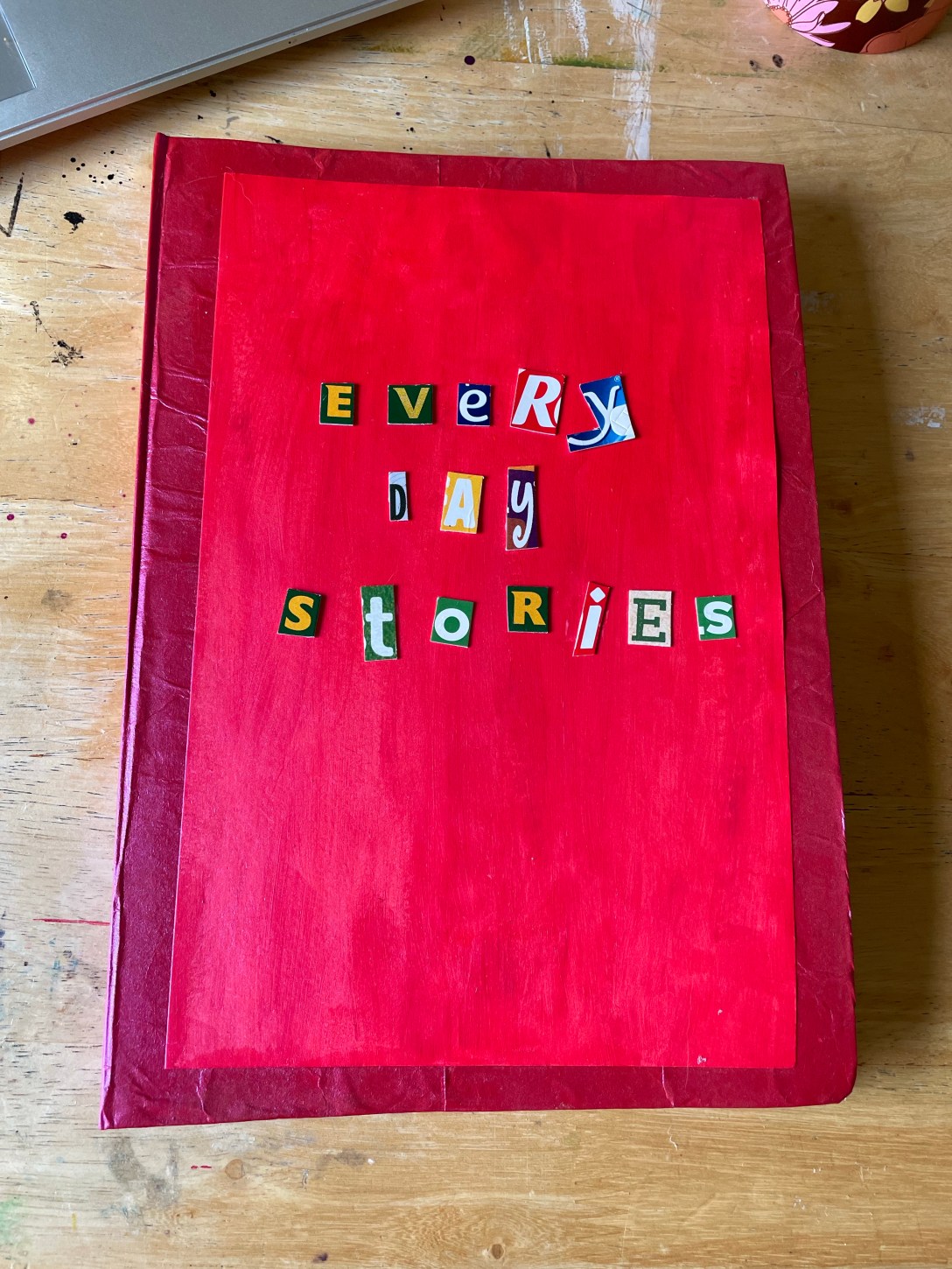
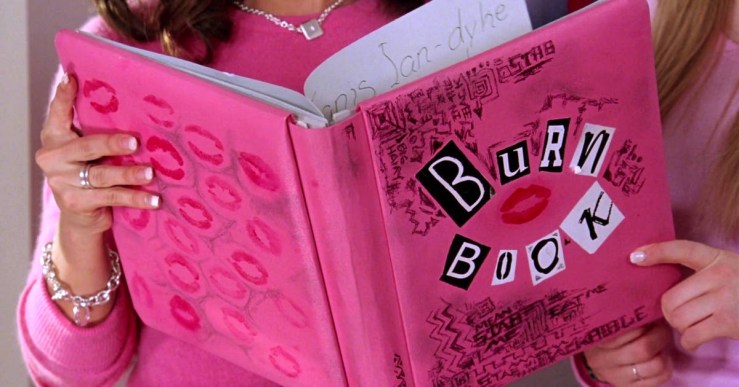
I used a weaker cardboard than I usually would to make the cover, as I wanted something a little less bulky. I was already making quite a large and eclectic sketchbook, adding to this with weight felt like a mistake. I cut two panels for the front and back, and a panel for the spine. I then wrapped them in a layer of brown paper I had lying around from a package I received, and left it to dry overnight. The next morning, I painted the cover with neon metallic acrylic paint. There was no reason for this other than ‘I felt like it was right’. I was just drawn to the paint and colour for this sketchbook. When I was painting it, I was reminded of the ‘burn book’ from the movie Mean Girls and decided it would be fun to continue leaning in that direction.
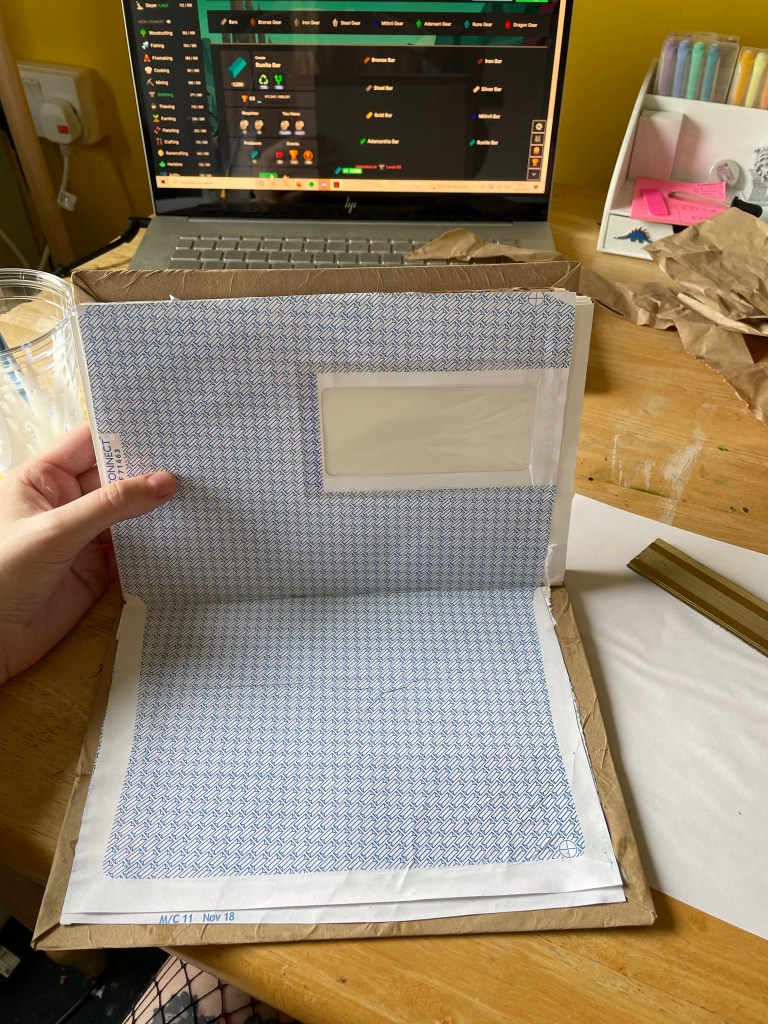
I used two envelopes to attach the book to the cover – one on each end of the book. There are envelopes scattered all over my house as I keep them around for when I just need to scribble something down that isn’t important enough for a notebook, requires speed, or for doodling. This is such a big part of my everyday, I had to include them throughout my sketchbook in staple ways!
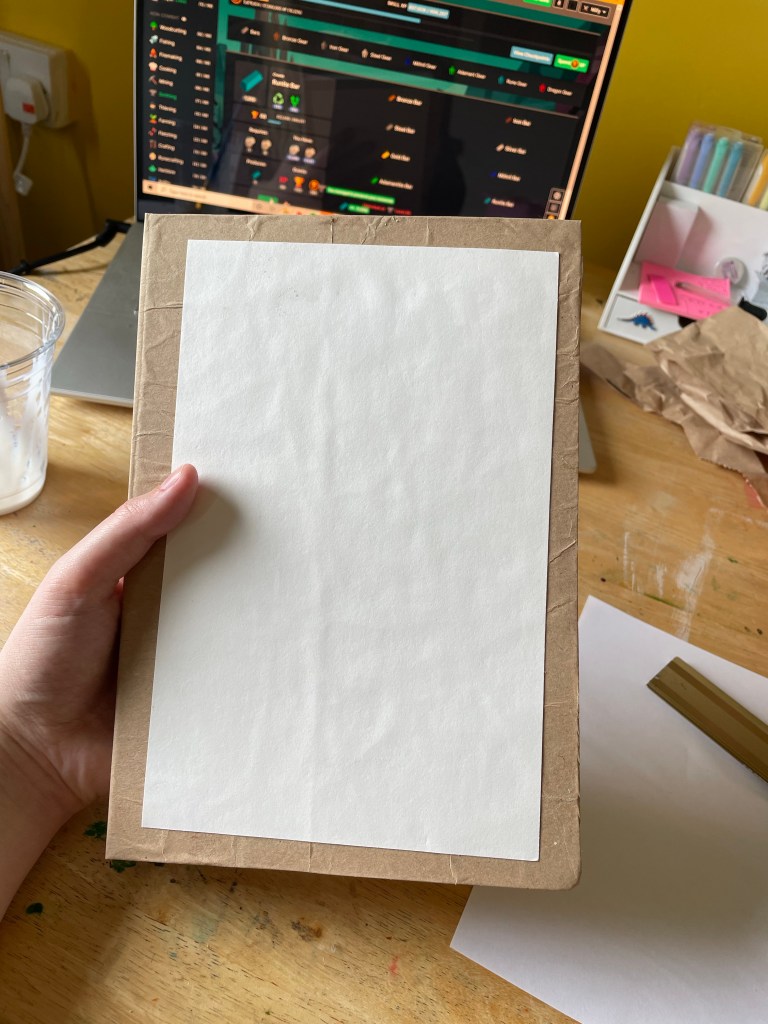
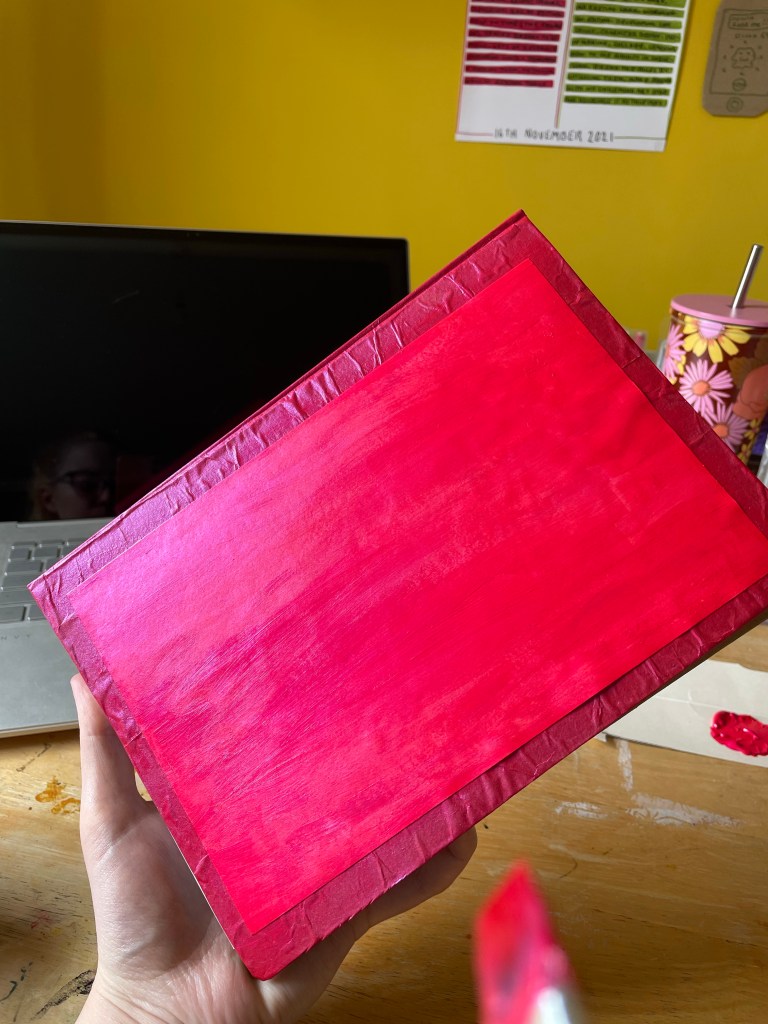
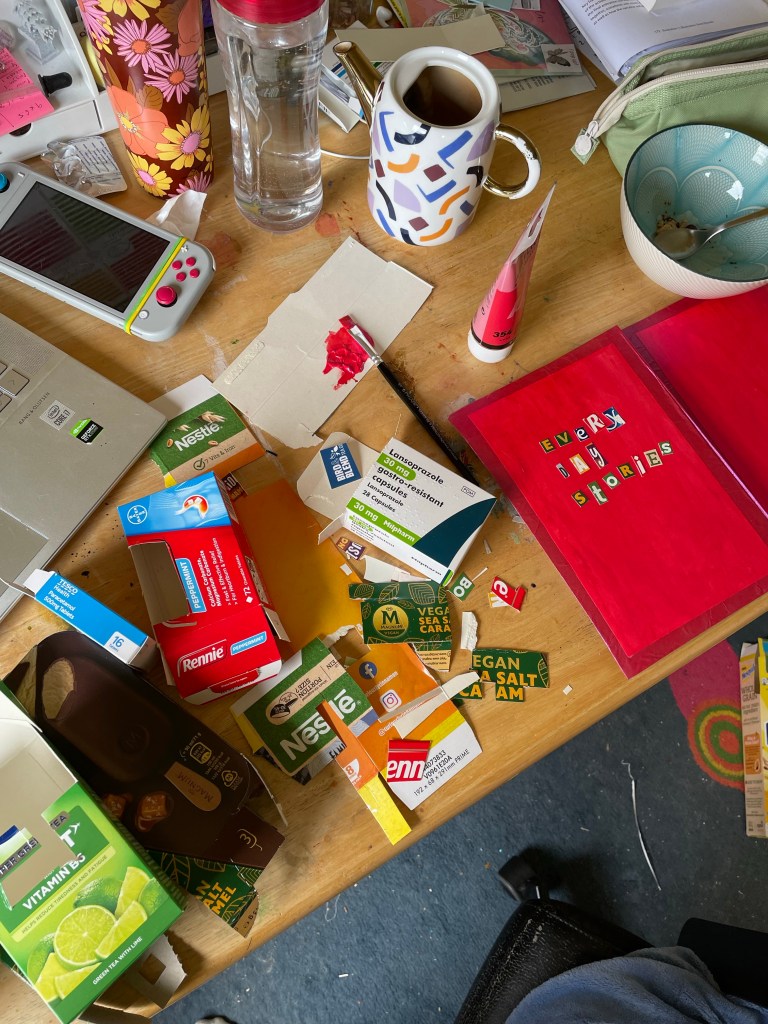
The book then went back into a press overnight, and once dry I added some text on the front cover. This isn’t something I normally am drawn to doing, however it was in keeping with my ‘burn book’ theme. I went through all of the cardboard I had gathered in my initial collection of potential pages and cut out all of the letters. I am so happy with how this looks – and so excited about the sketchbook as a whole. Everything about it from the pages used to make it, to the colour and lettering on the front. I had so much fun making the sketchbook!
Stage Two – Visual Diary
Now that my sketchbook was complete, I could begin with stage two of my plan. I decided to spend 10 days working on my visual diary, planning to fill at least one page every day in that time frame. This ended up being a big struggle. My health is very unpredictable at the minute, and it got in the way of my ability to make art on several days. This started to impact my process and my attitude towards the project.
I started out by doing a page each day introducing the day itself. As time went on, I stopped doing this, as it was making me feel demotivated seeing that I wasn’t able to keep up with my intentions. I also felt it was ‘showing’ that I was ‘failing’. I started to feel quite demotivated as time progressed, as trying to engage with my sketchbook felt like a reminder of how unwell I am and all of the difficult feelings I have concerning that.
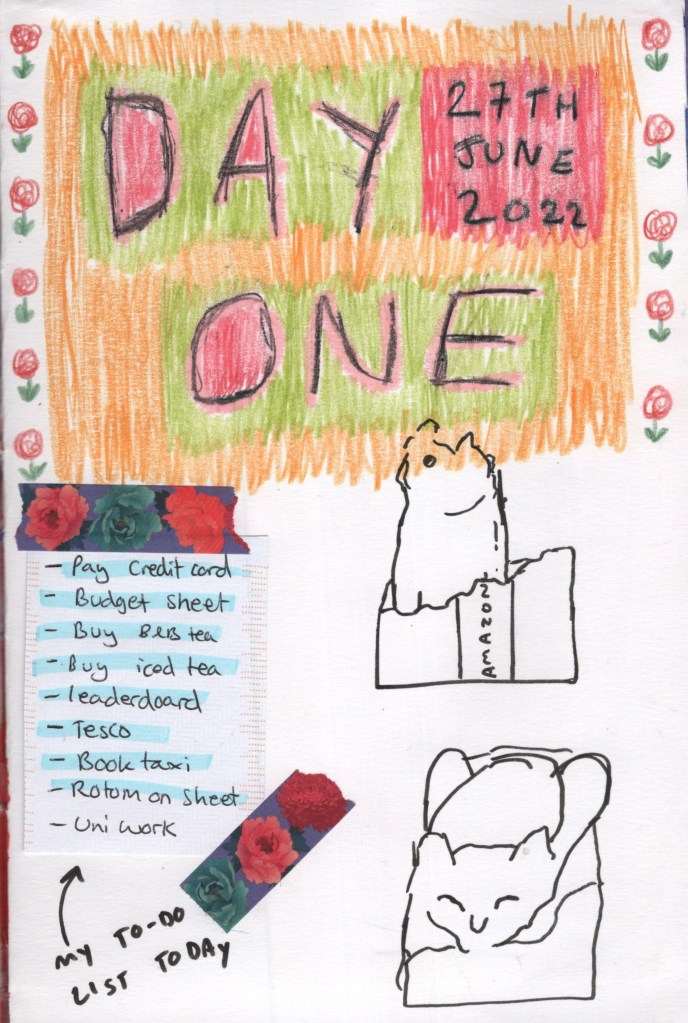
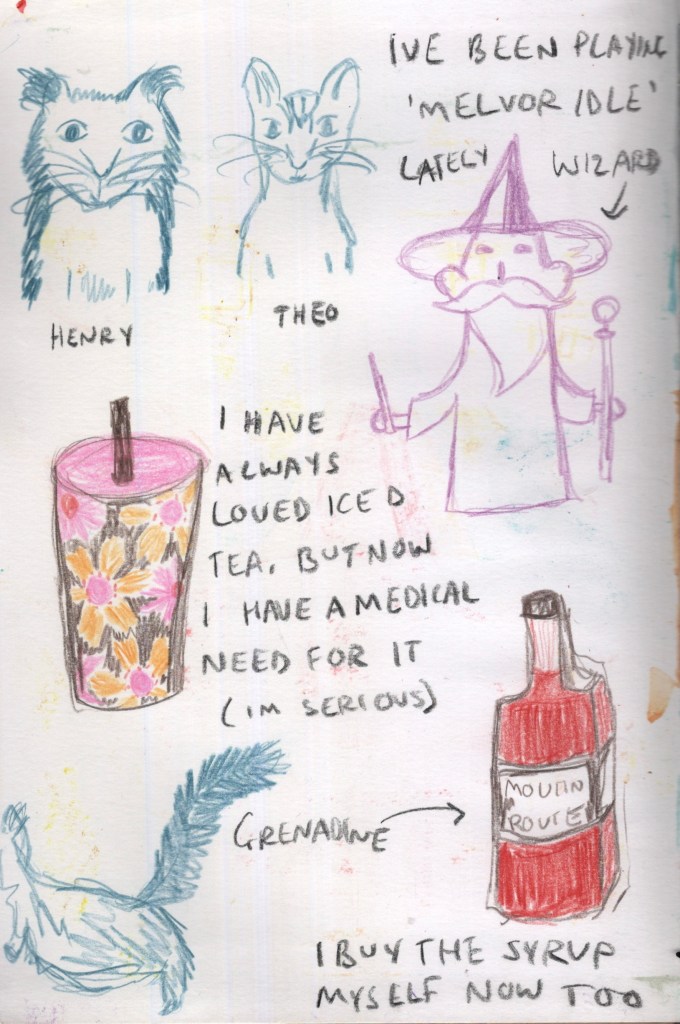
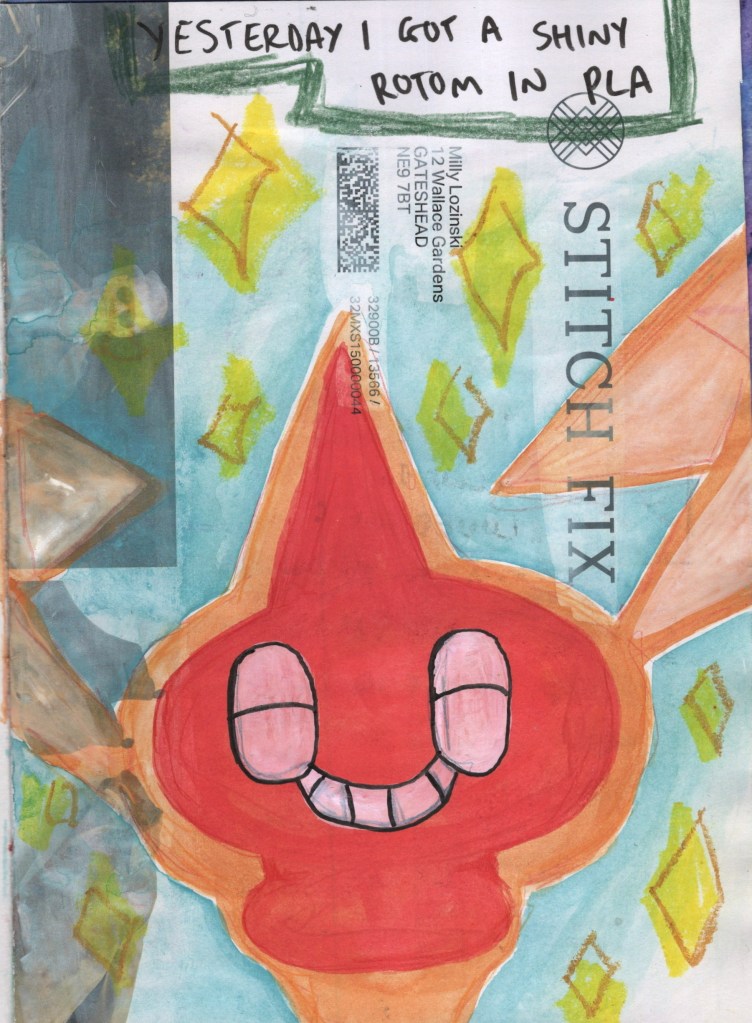
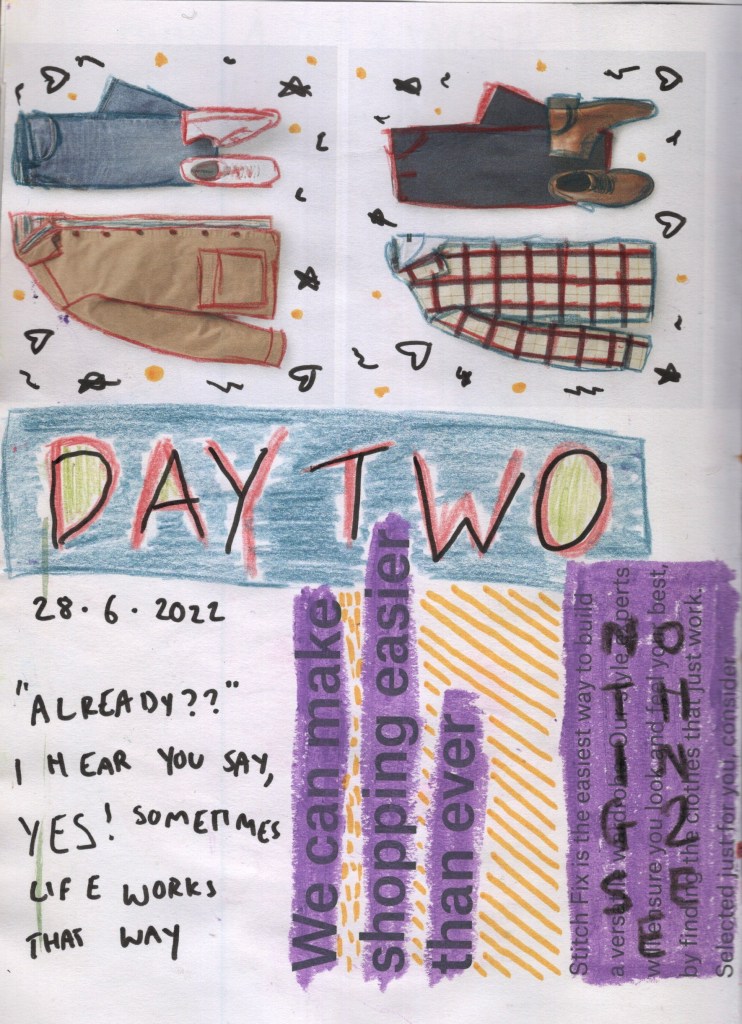
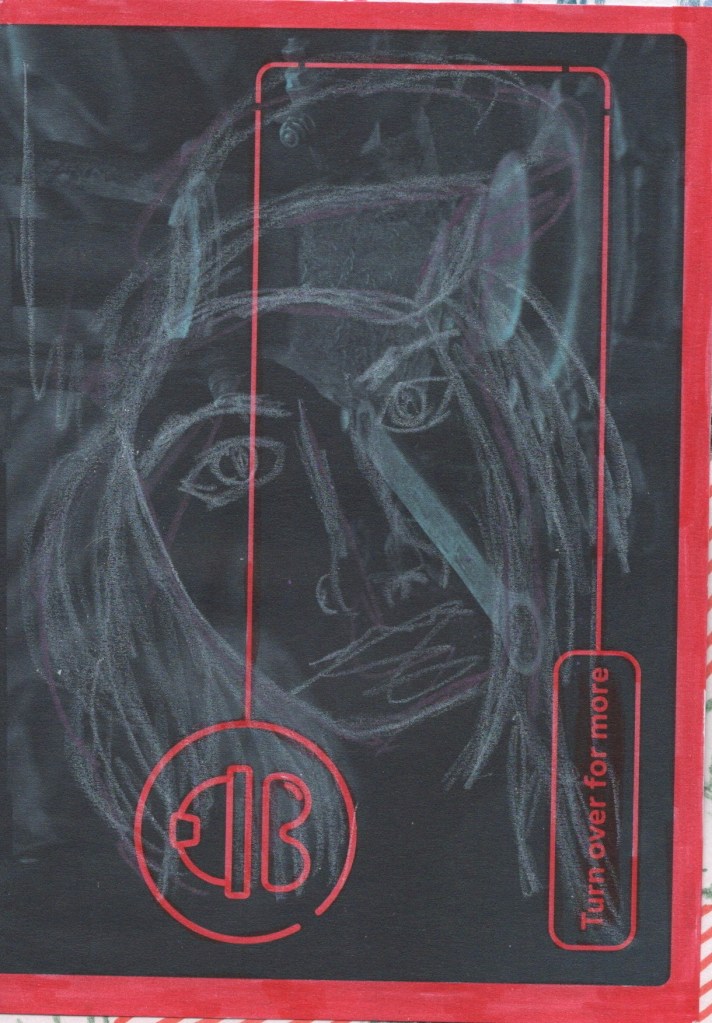
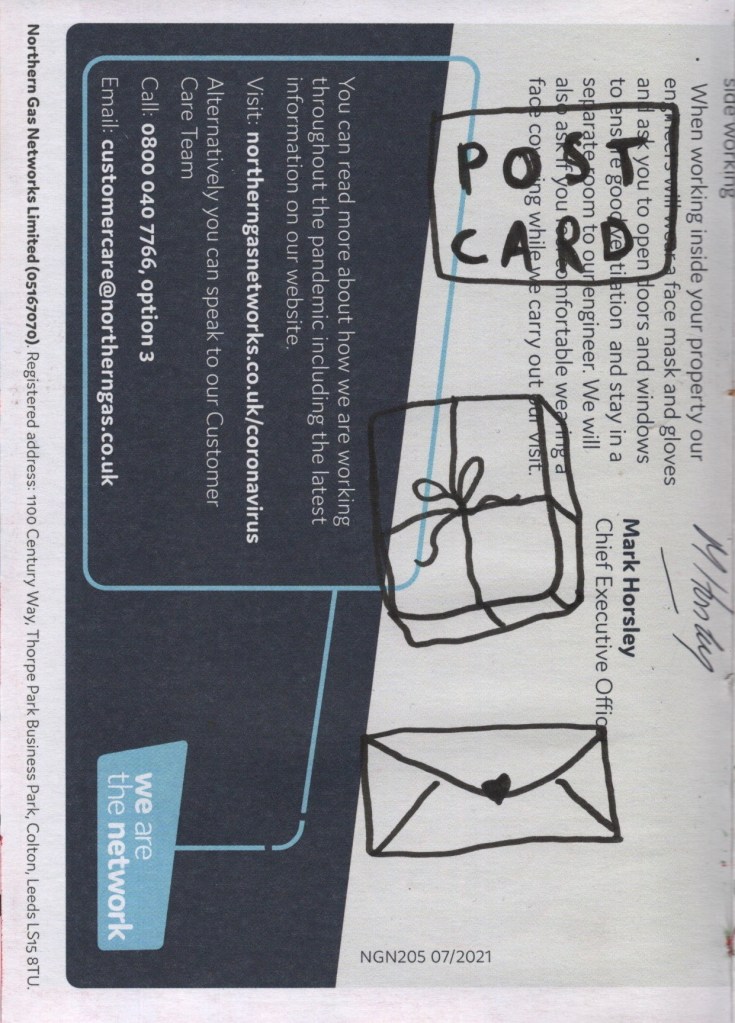
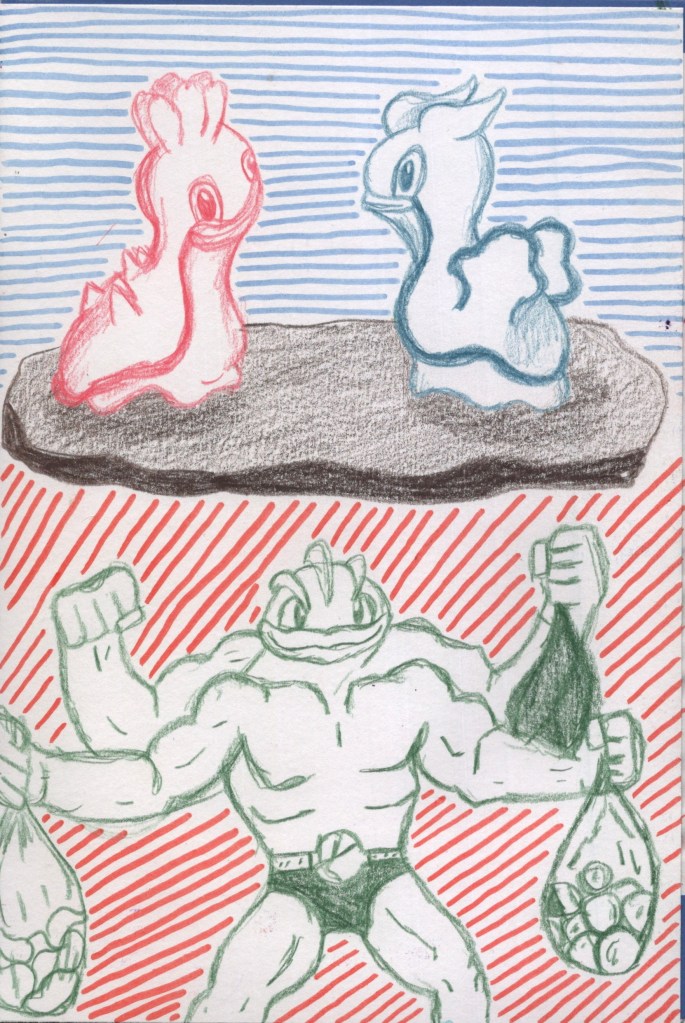
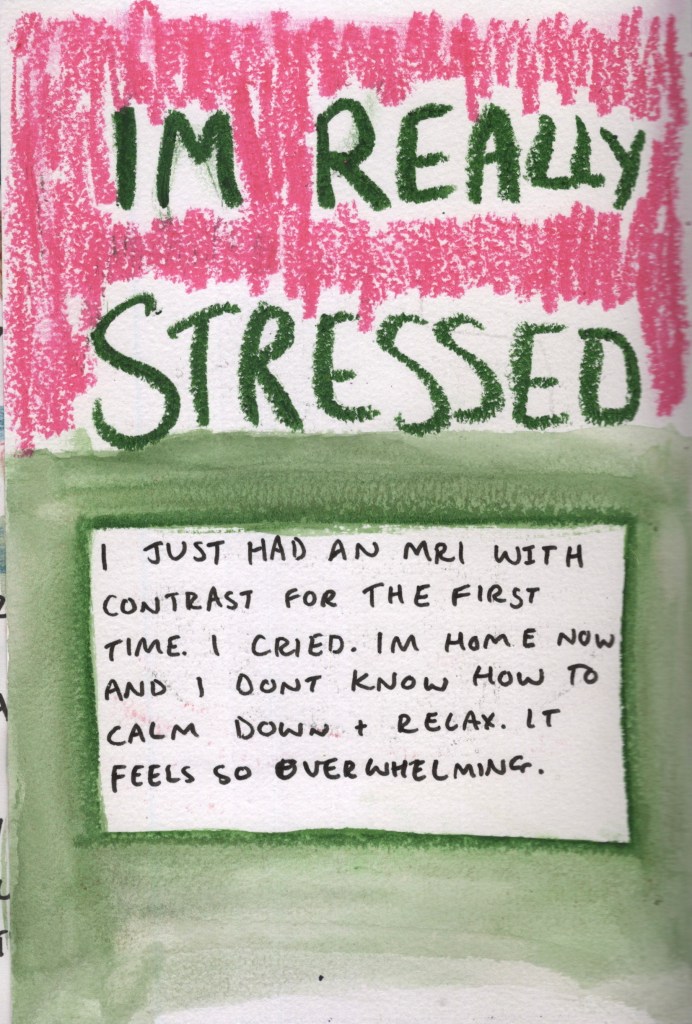
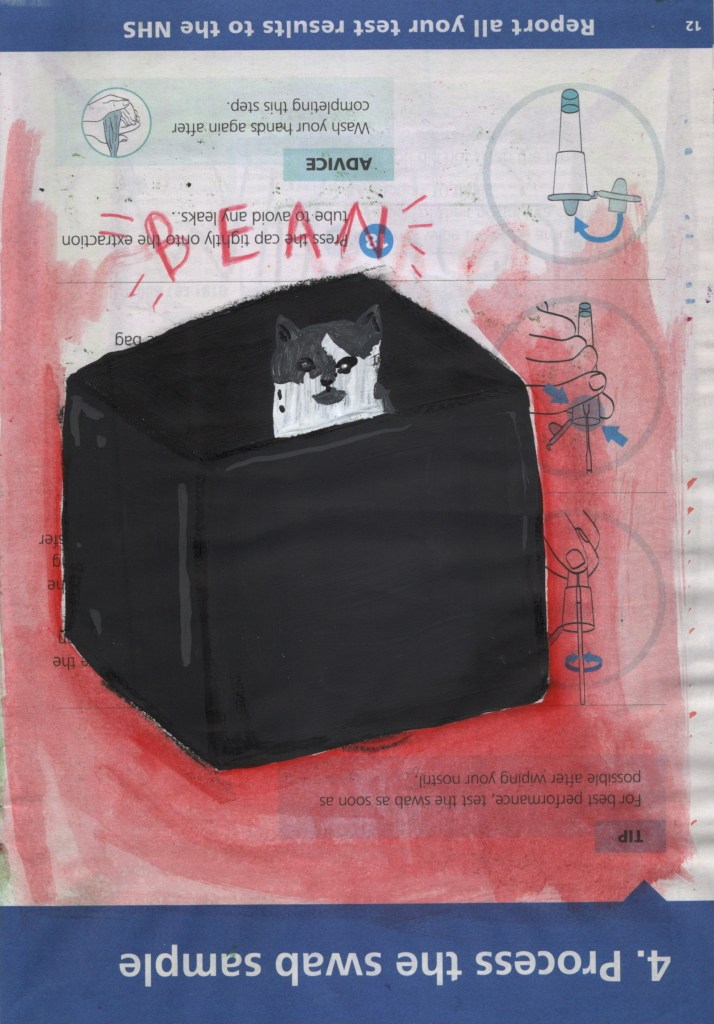
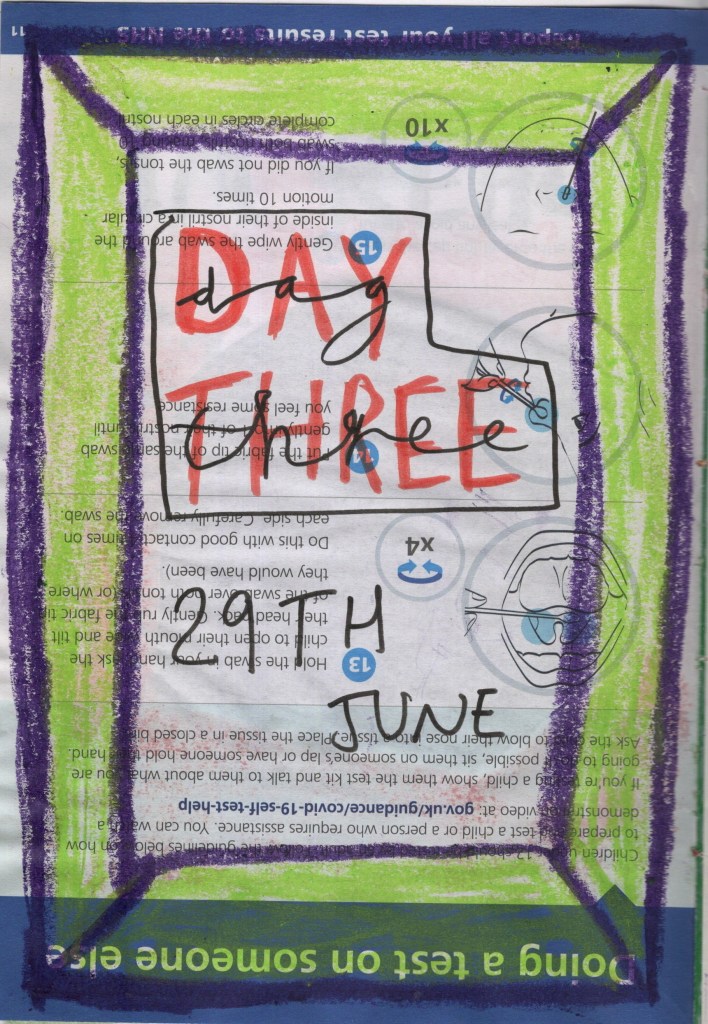
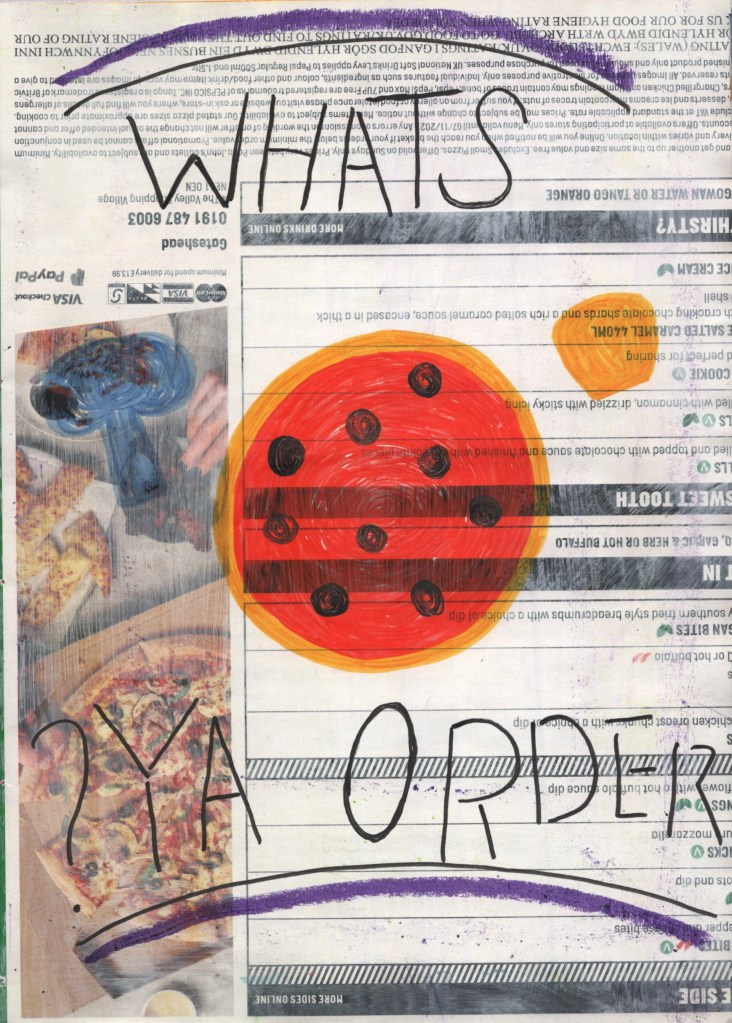
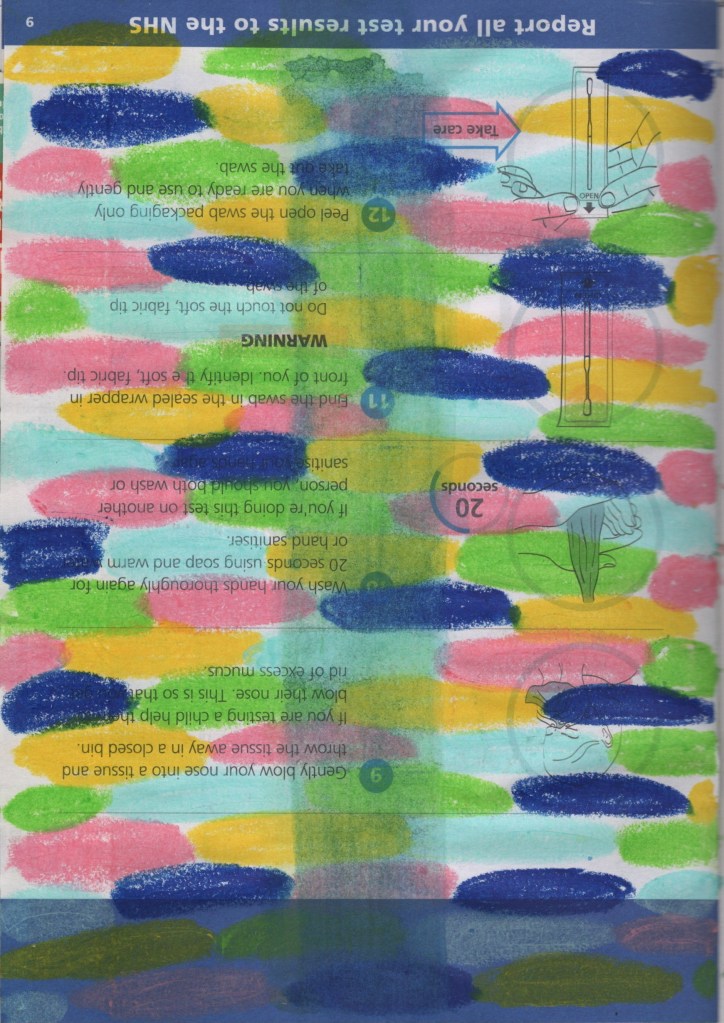
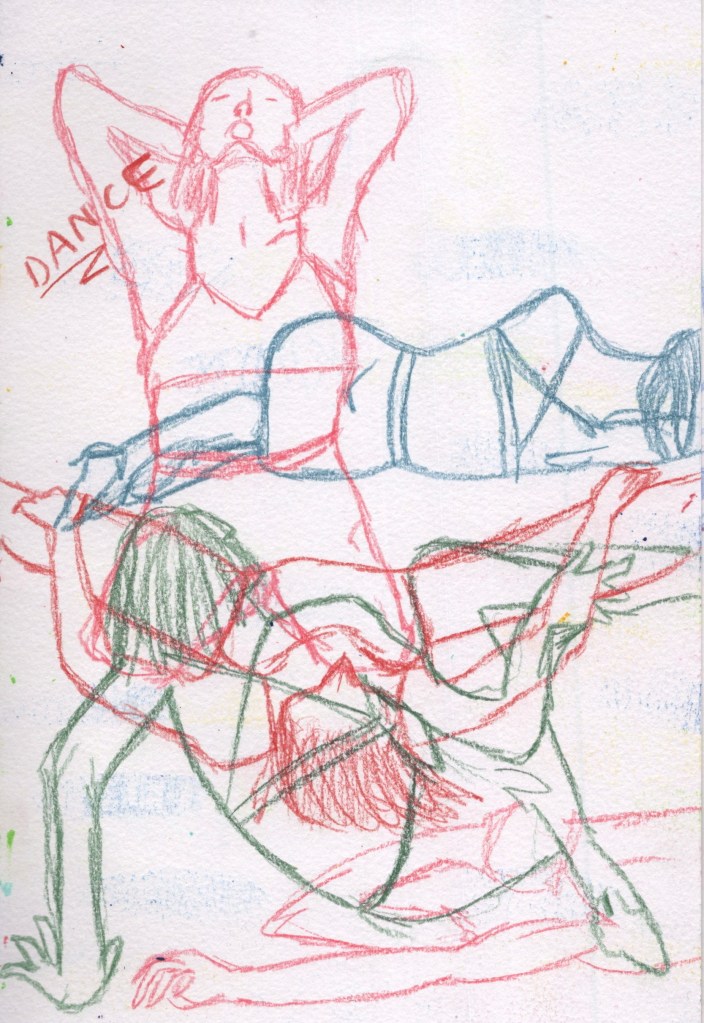
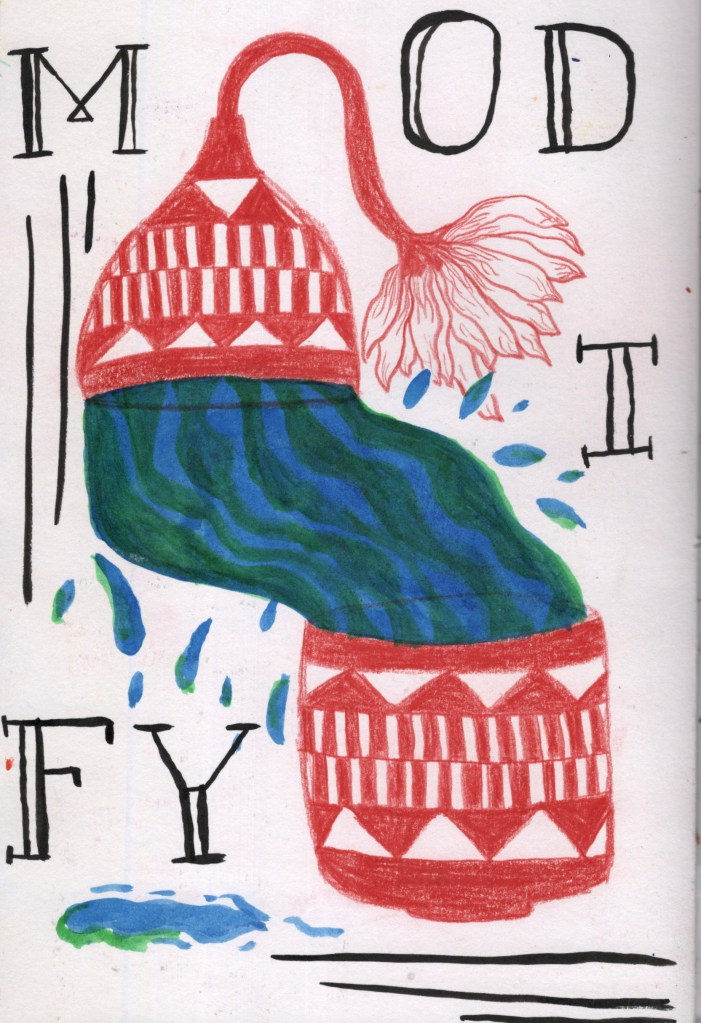
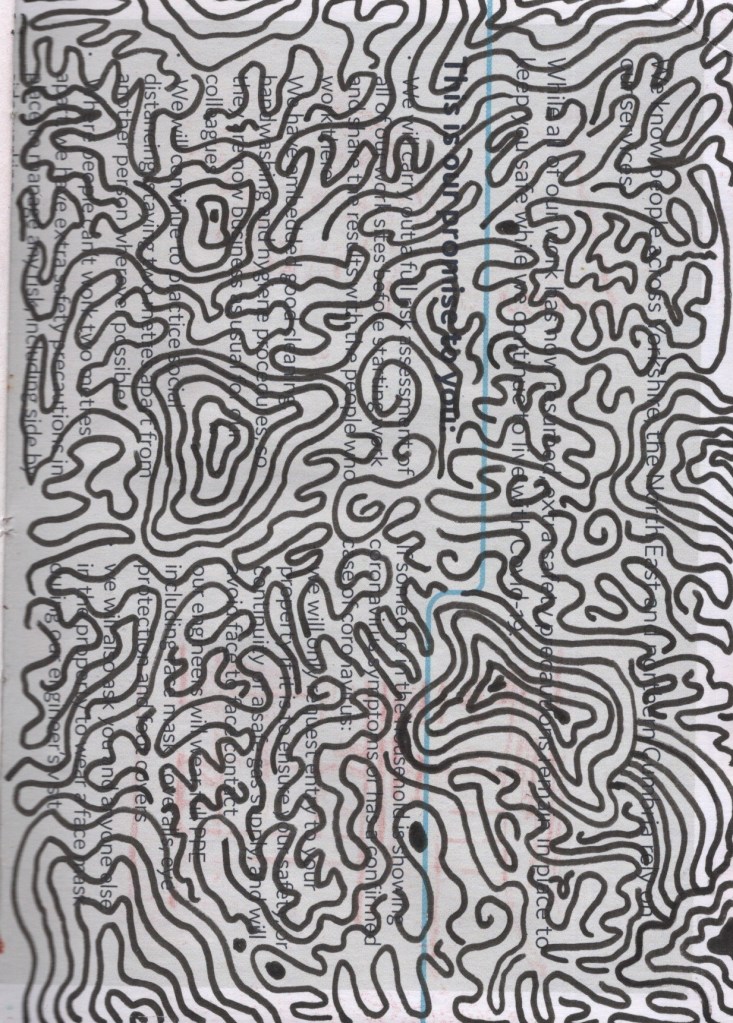
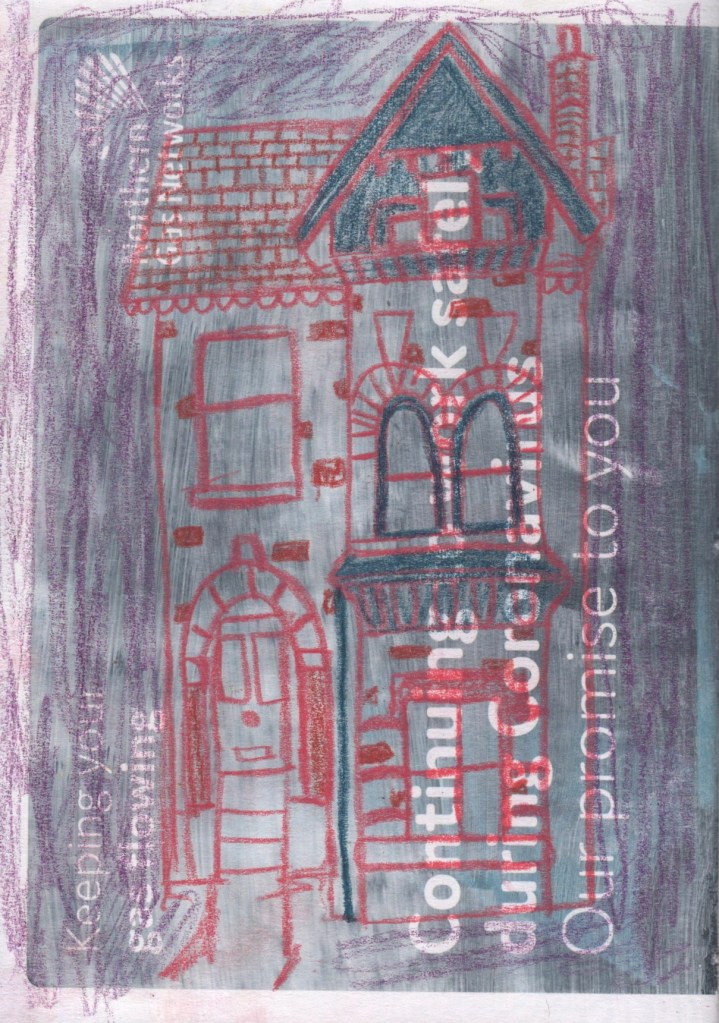
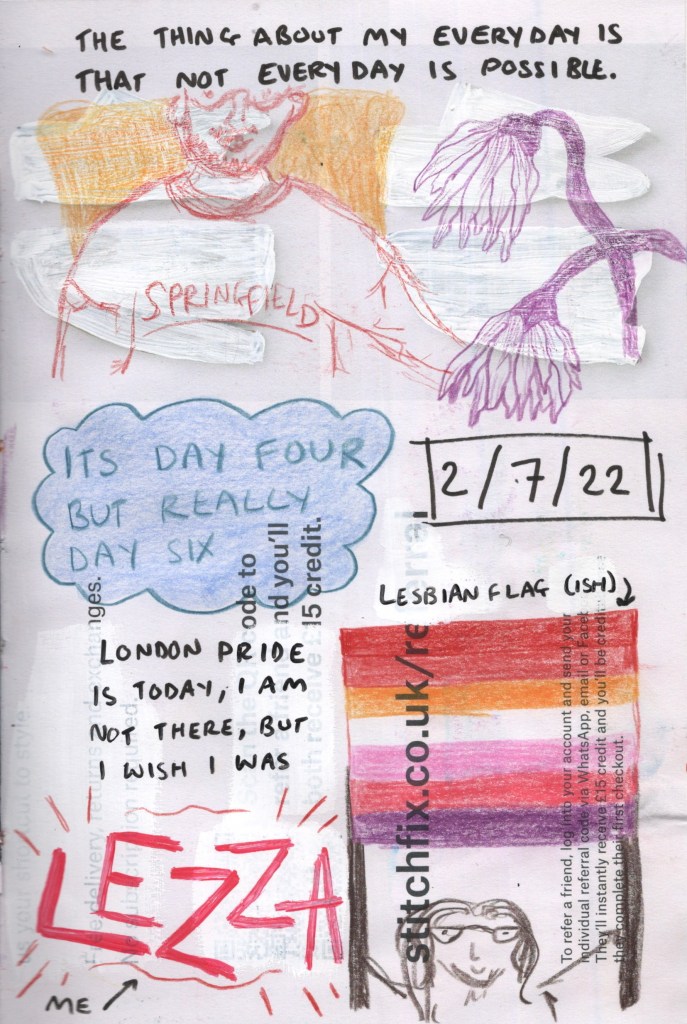
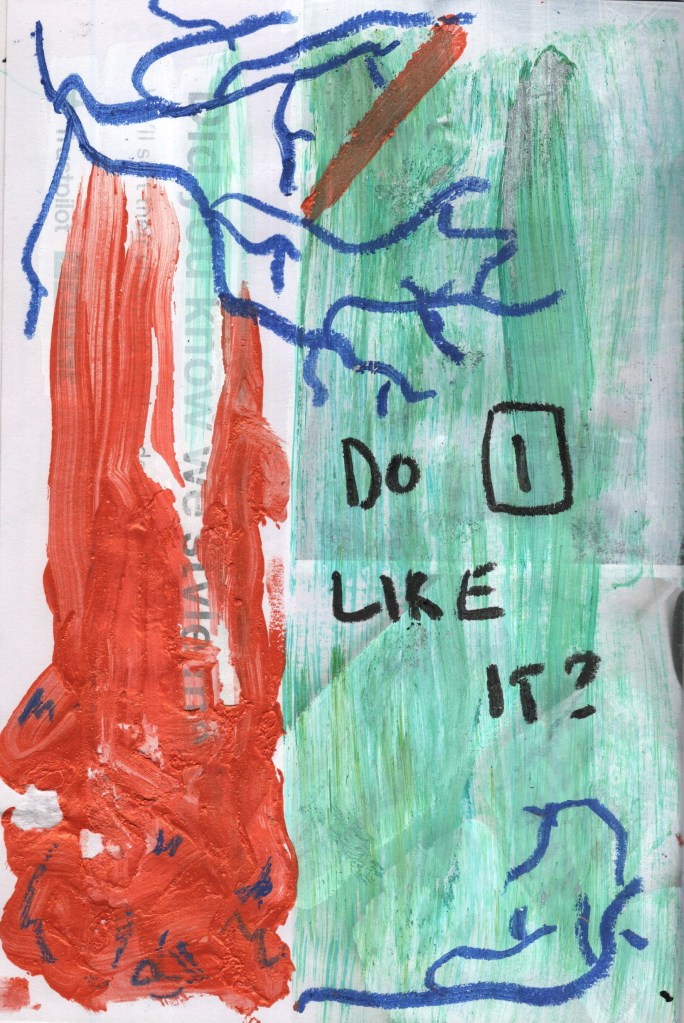
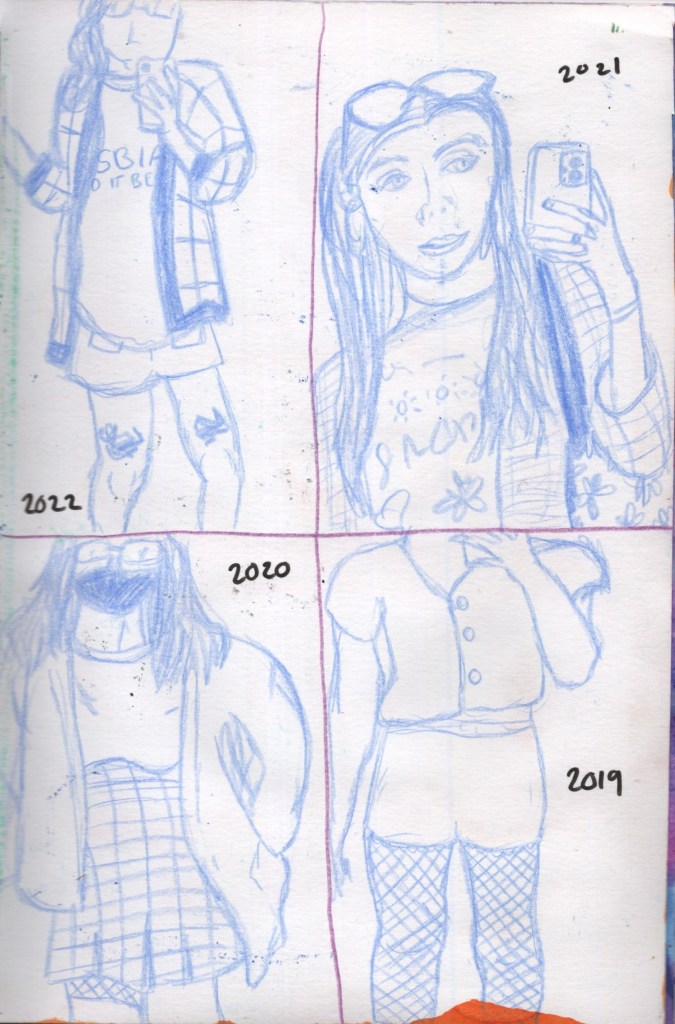
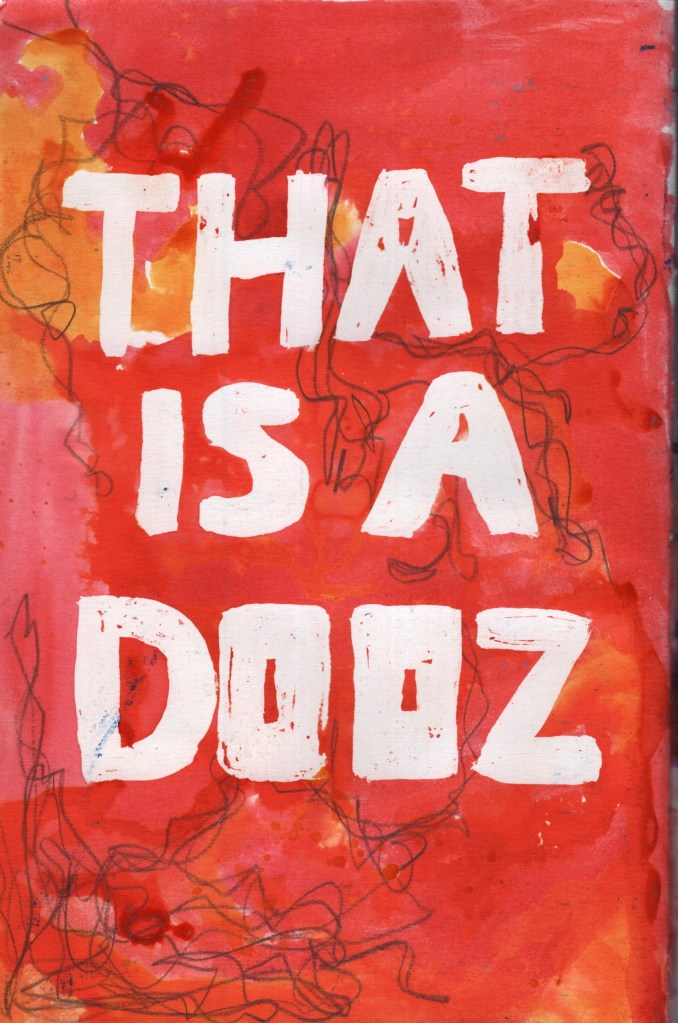
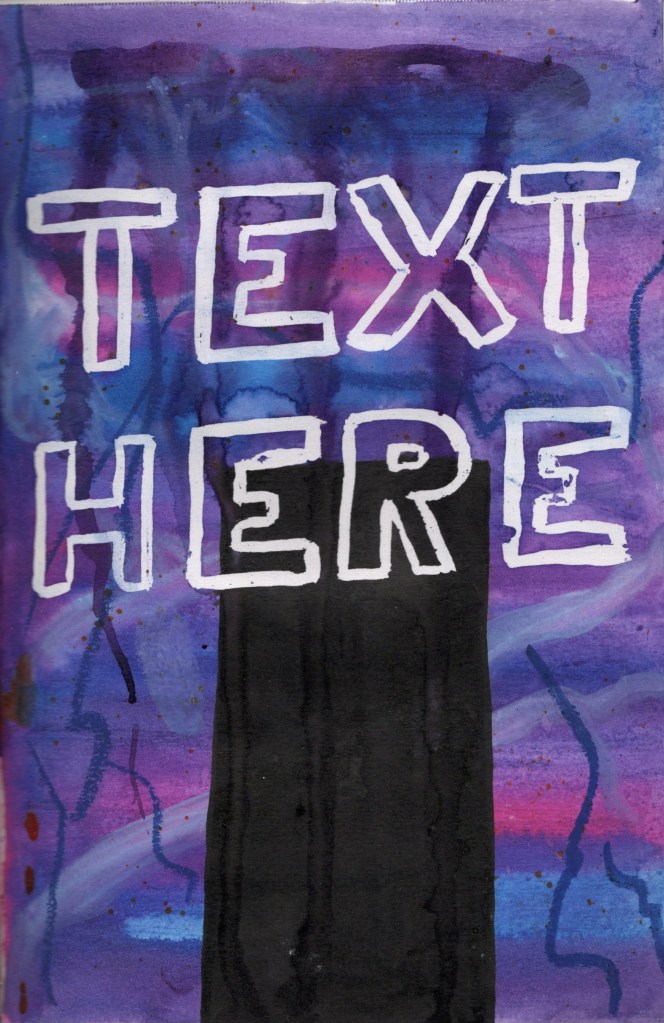
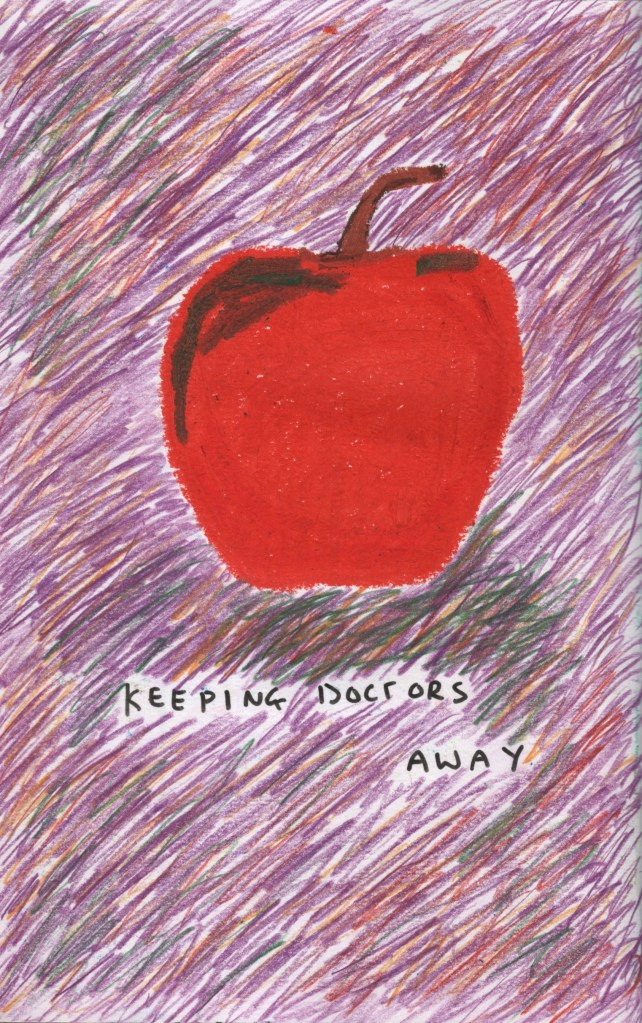
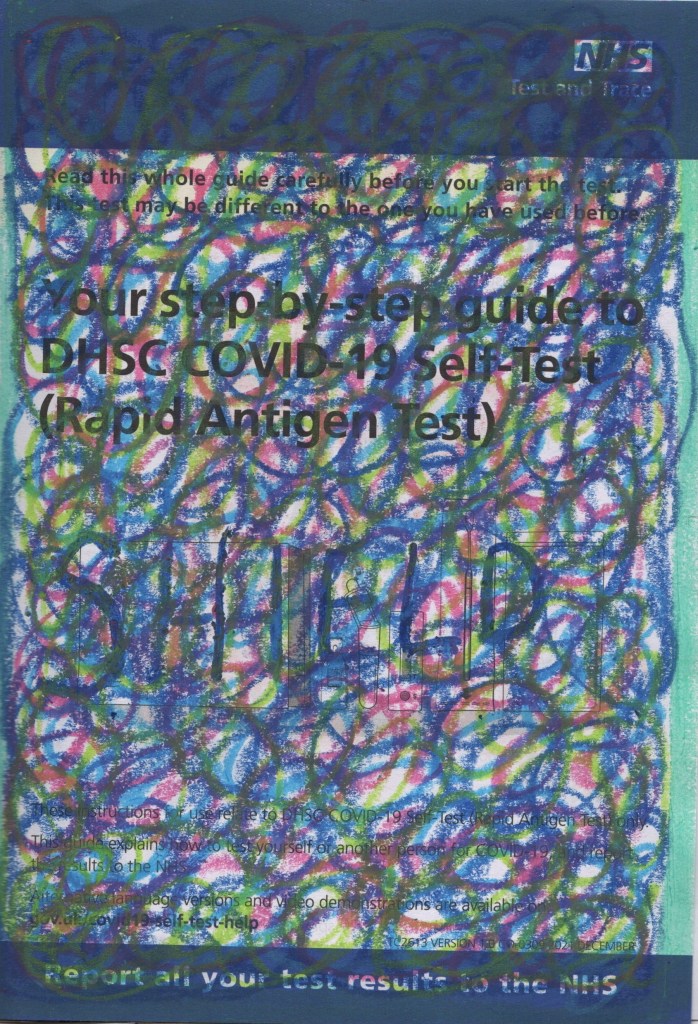
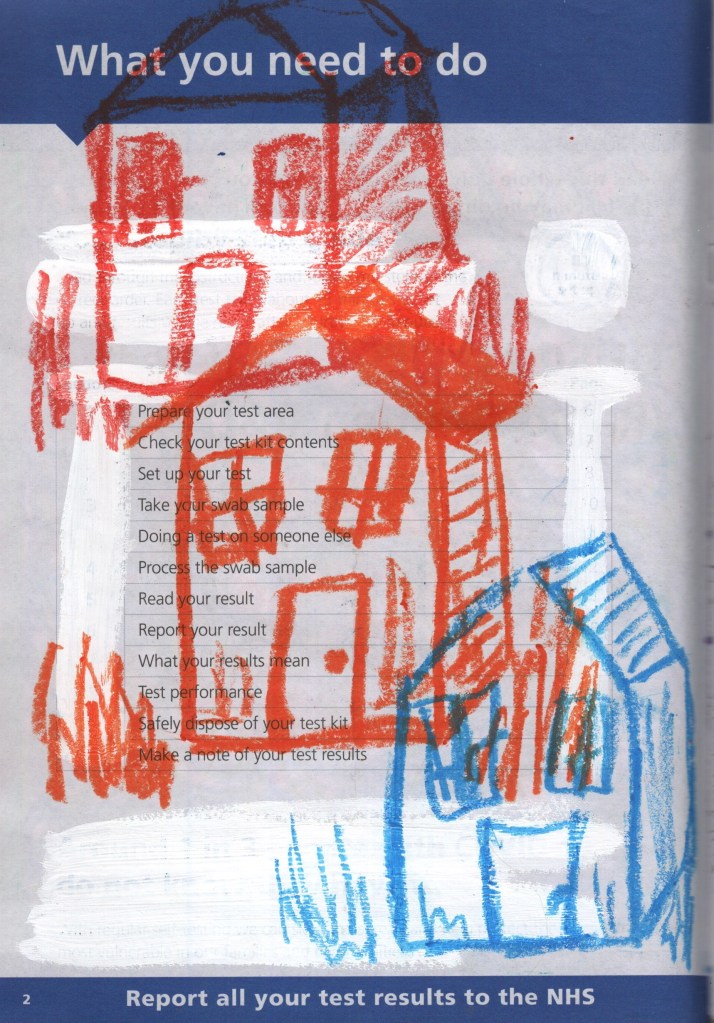
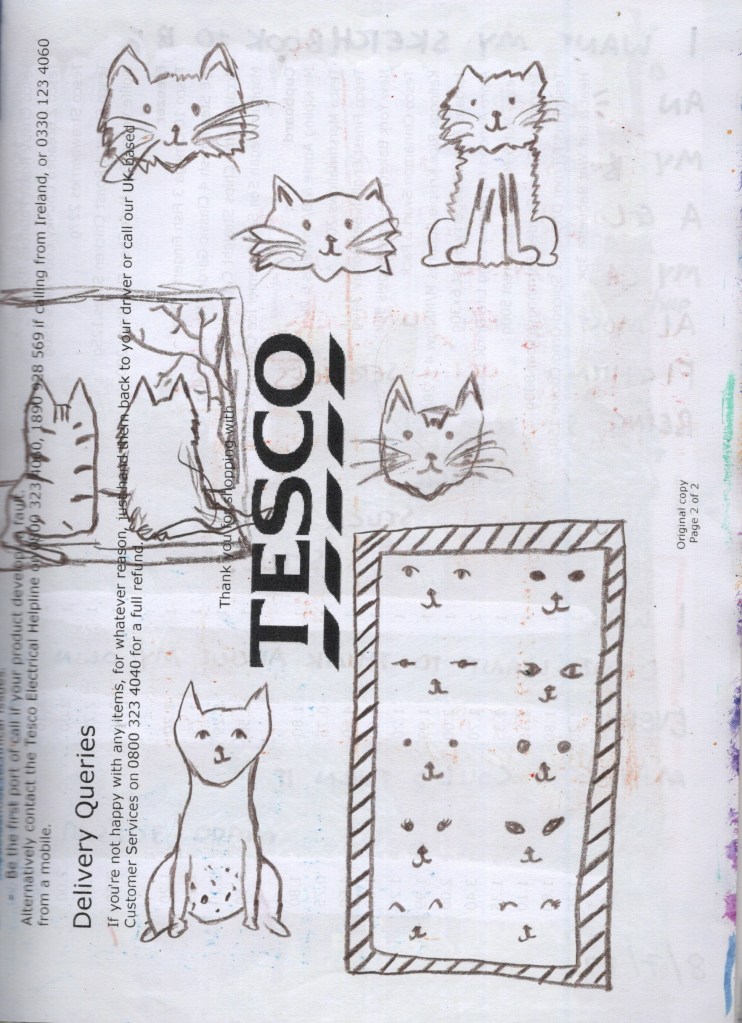
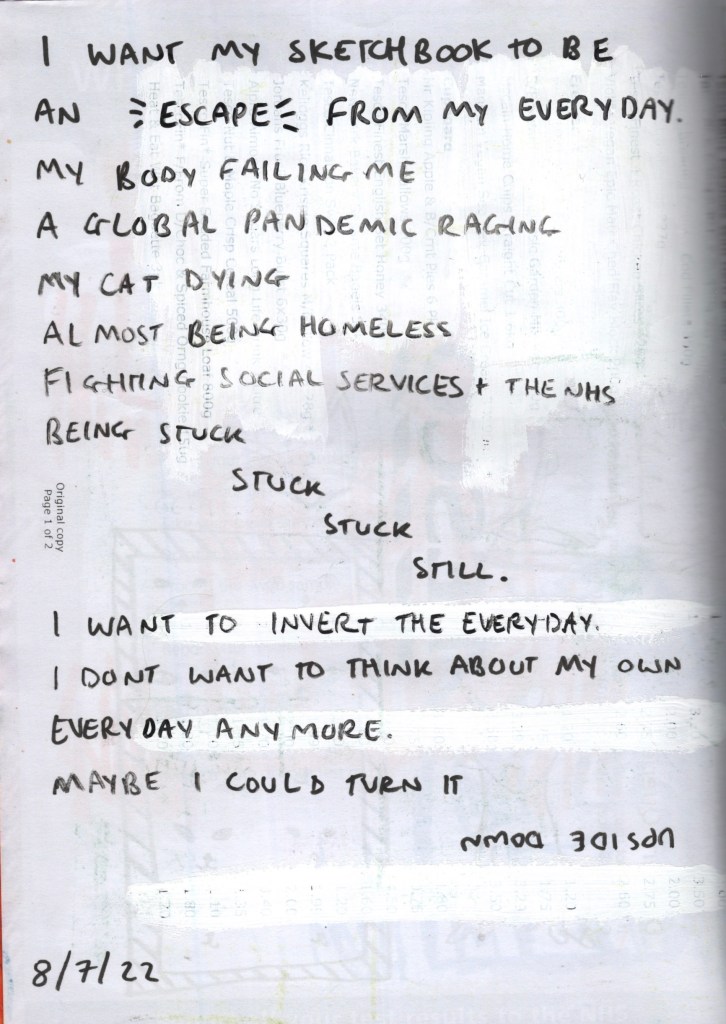
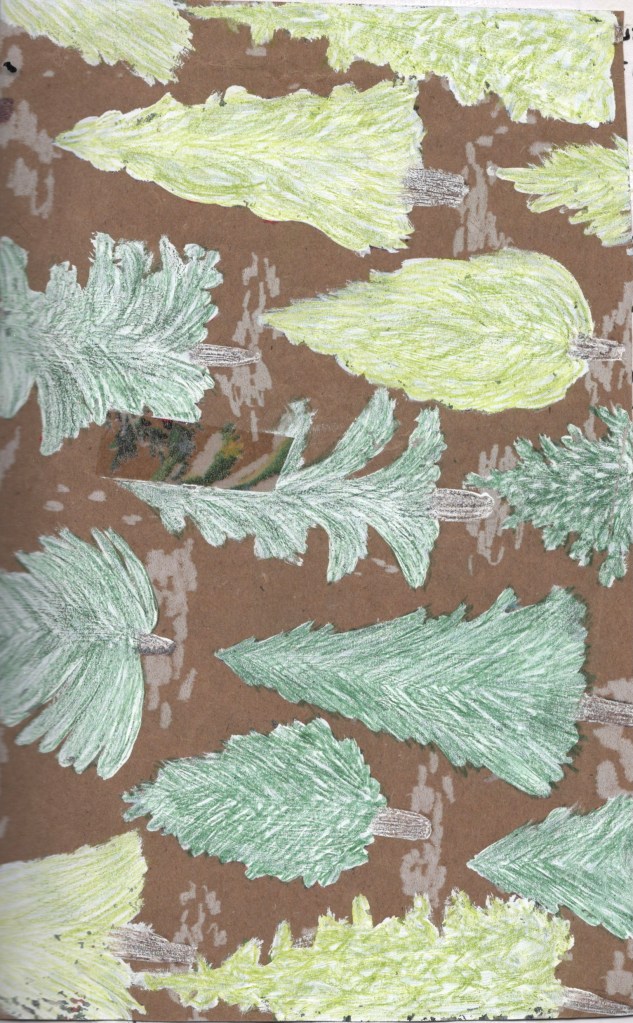
Despite the difficulties, I had a lot of fun with this part of the assignment. Finding ways to interact with the different papers was very interesting and often the paper itself inspired me to create. I found that some of the papers weren’t great to work on, though, mostly because there was too much writing or pictures on the page already. On some pages, I painted over these areas with white ink or acrylic paint, but for others, I just skipped the page as trying to find a way to work with what was already there felt stressful. The skipped pages still add a lot to the sketchbook and communicate things about my everyday, which is a bonus of making a book like this.
I tried to work through my action plan, using a wide range of materials and exploring different approaches. I studied some artists – Cy Twombly and Ed Ruscha, as well as being inspired by Michel Majerus. This also helped me achieve the goal of ‘having fun, letting go, and being loose’. I don’t feel like I achieved ‘drawing happy things’ as much as I would’ve liked, but I was still happy with my drawings. I practised some rapid still-life sketching, and managed to use all of my target mediums.
There were a few exercises I didn’t repeat – such as drawing from movies and setting timers to draw when they go off. I also didn’t feel like my output was ‘enough’ for the 10 days I had worked within. I felt a little bit directionless, hopeless, and frustrated at the end of stage two. One goal I achieved consistently was expressing my thoughts more, and on one of the last pages I opened up about these feelings, and about my relationship with my sketchbook.
I feel a little bit like I’m swimming upstream at the minute, and this was made clear in my assignment approach. I just felt so disengaged. It’s hard when you’re exploring something excitedly and then have to stop for two days because you aren’t well enough to sit upright. Coming back to it just felt daunting, and like a reminder of all I can’t achieve. It was a difficult process.
Towards the end of my visual diary, I began thinking about stage three and the context of my work, the theme of the everyday, and how I could turn this into something tangible. I was reflecting on the year I’ve had, the experiences I’ve been through, and how they’ve shaped my abilities as an artist and my approach to both sketchbooking and illustration in general. I wrote some of my thoughts down one night whilst struggling with where I would go next and, once again, feeling like I just hate this unit.
Stage Three – Reflection
This naturally led me into stage three, as I was already reflecting and processing where I wanted to go next. The writing I had done at the end of my visual diary was really helpful for summing up and contextualising my issue with the assignment, the unit, and having to focus so much on my day-to-day life. It helped me see what I actually want my sketchbook to be in a much clearer way – an escape from the slightly depressing experiences in my every day, and a place I can let go.
I decided to write down all of the words I could think of that were connected to the way I was feeling – the dread, emptiness, and negativity. I try hard to avoid this in my artwork, and especially in uni work, as I feel it’s somewhat taboo or inappropriate. I try to be positive as much as I possibly can, but with such self-focussed projects, it’s hard to keep it up. Even just putting this on paper was helpful, it felt like I was being honest and owning up to where I was at. It was also helping me figure out what I could do for my final images.
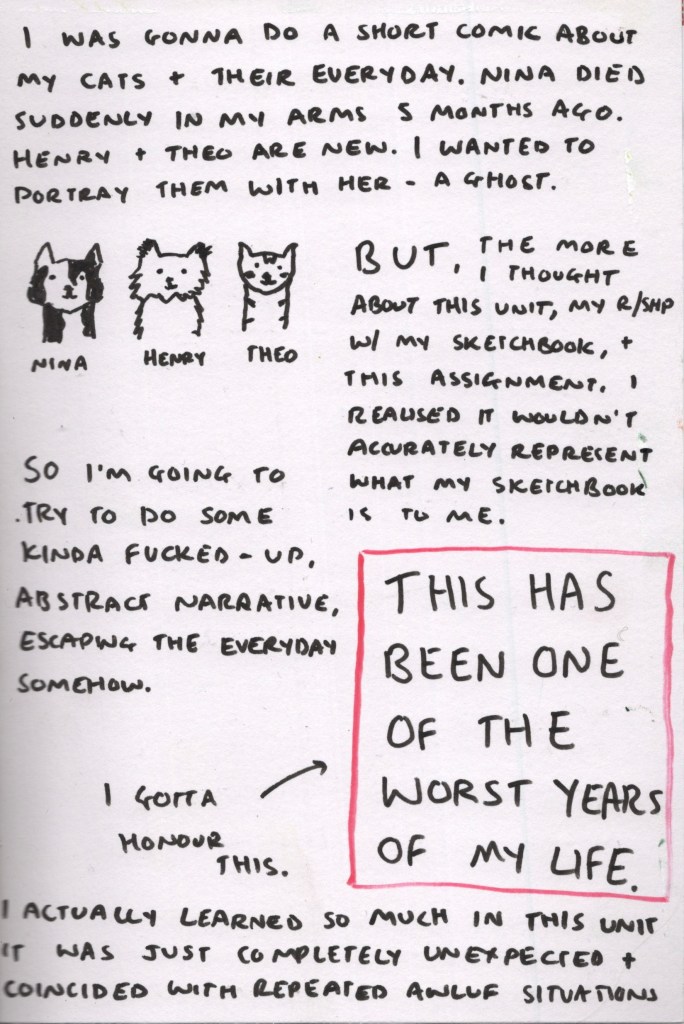
The idea I had originally when I started reflecting on the work produced so far and the assignment theme was focused on the routines I have in my life and how my cats are involved in them. My cat, Nina, unexpectedly died in February, and I have since adopted two new cats – Henry and Theo. I feel somehow their lives are woven together despite them never crossing paths, and I wanted to illustrate a short comic showing areas of our routine with Nina still there as a ghost-like creature. However, after having thought more about it, my relationship with my sketchbook, and the whole purpose of this final assignment, I changed my mind.
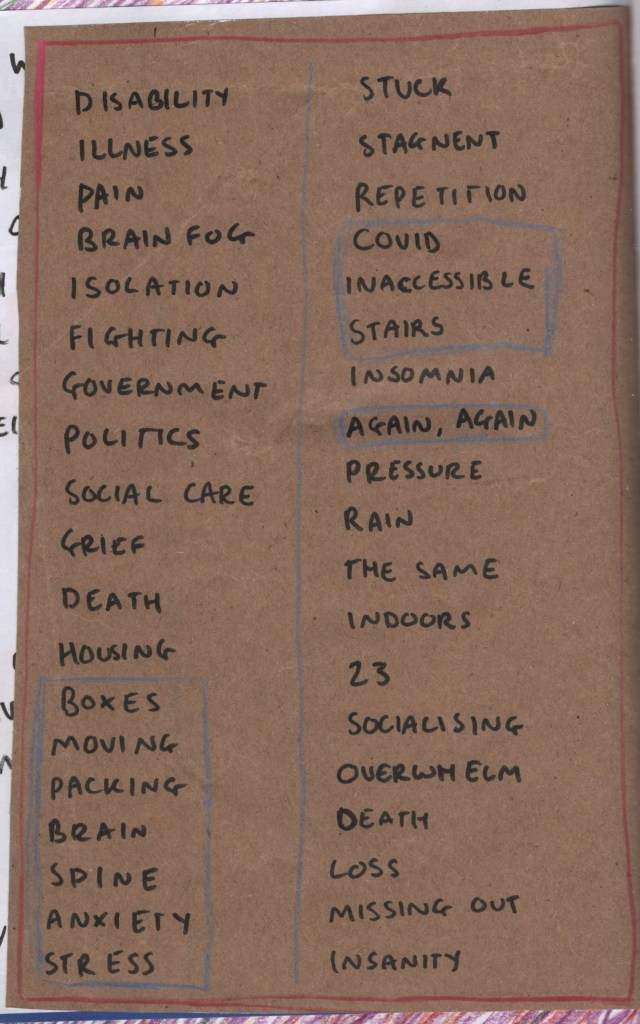
After getting everything out, and thinking about how I can utilise the work created in my sketchbook, I went back to my list of words. I stared at the page for quite some time, seeing which words could be paired together, which ones jumped out at me, and which felt meaningful. I then circled groups that were inspiring me, ready for the final stages of the assignment. I had three groups: ‘Boxes, Moving, Packing, Brain, Spine, Anxiety, Stress’, ‘COVID, Inaccessible, Stairs’, and ‘Again, Again’.
Stage Four – Ideas and Planning
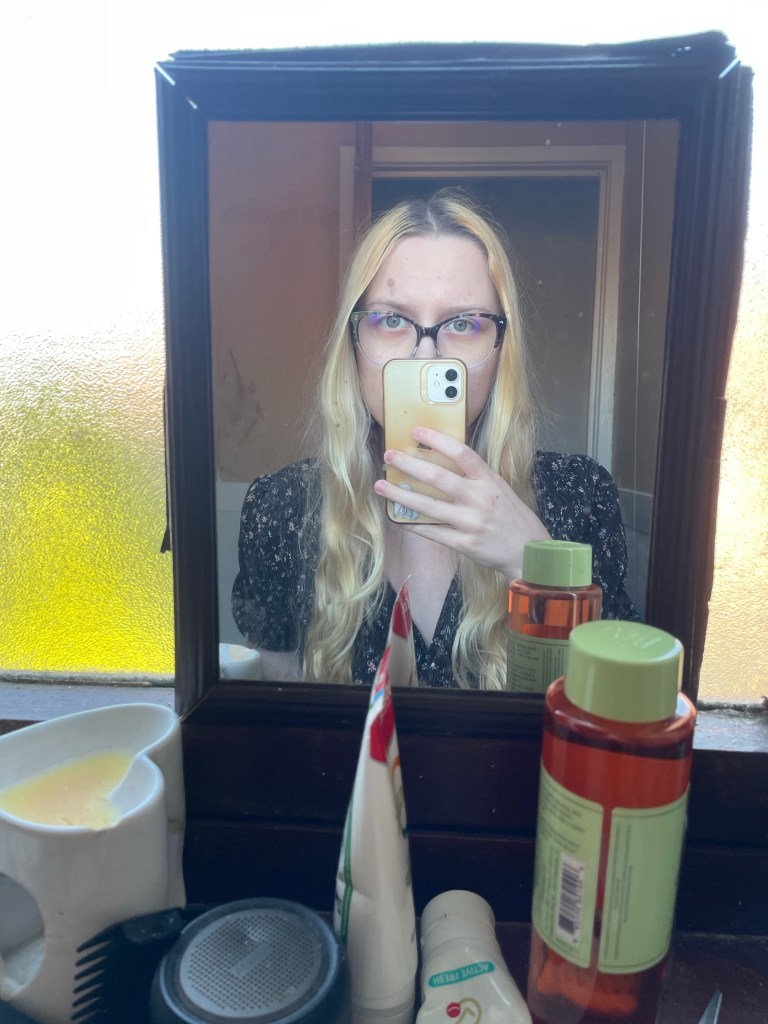
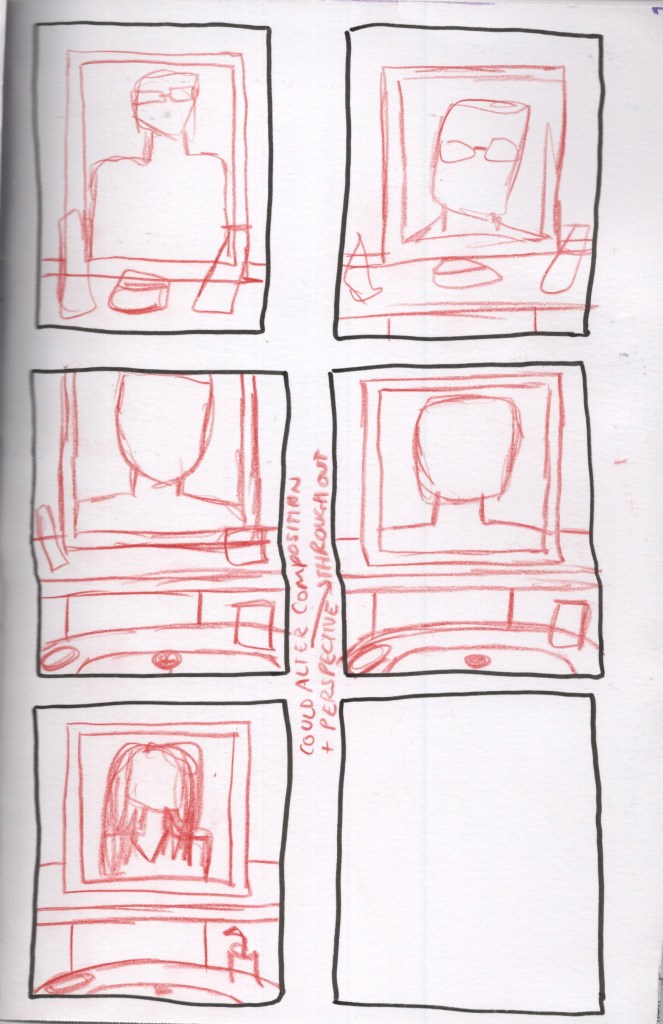
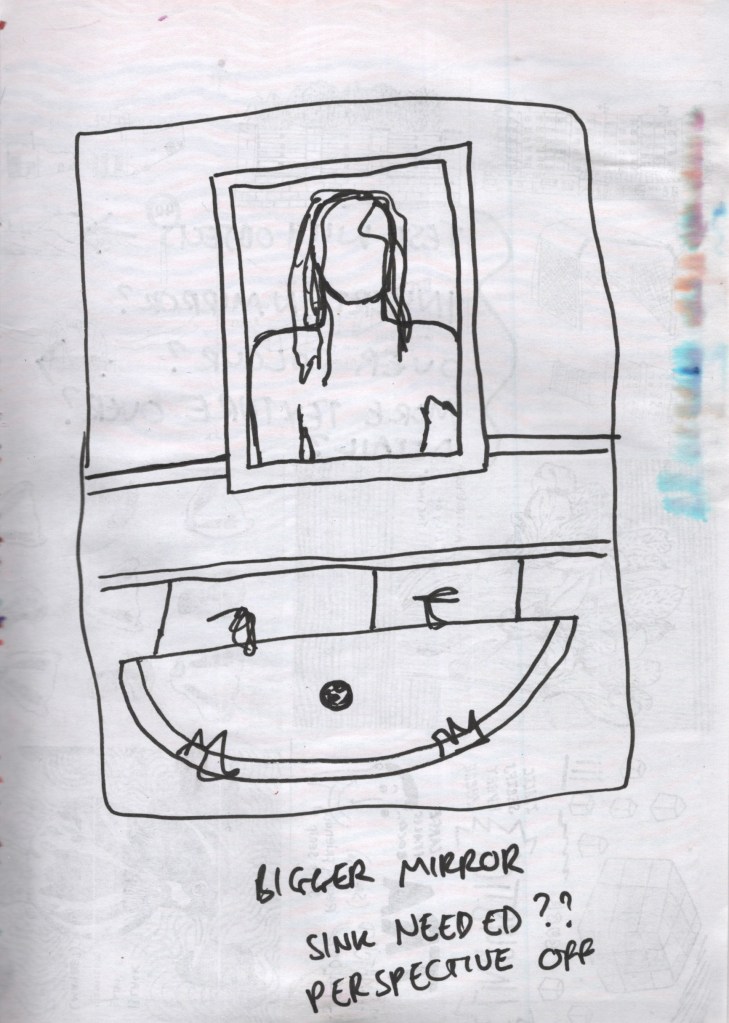
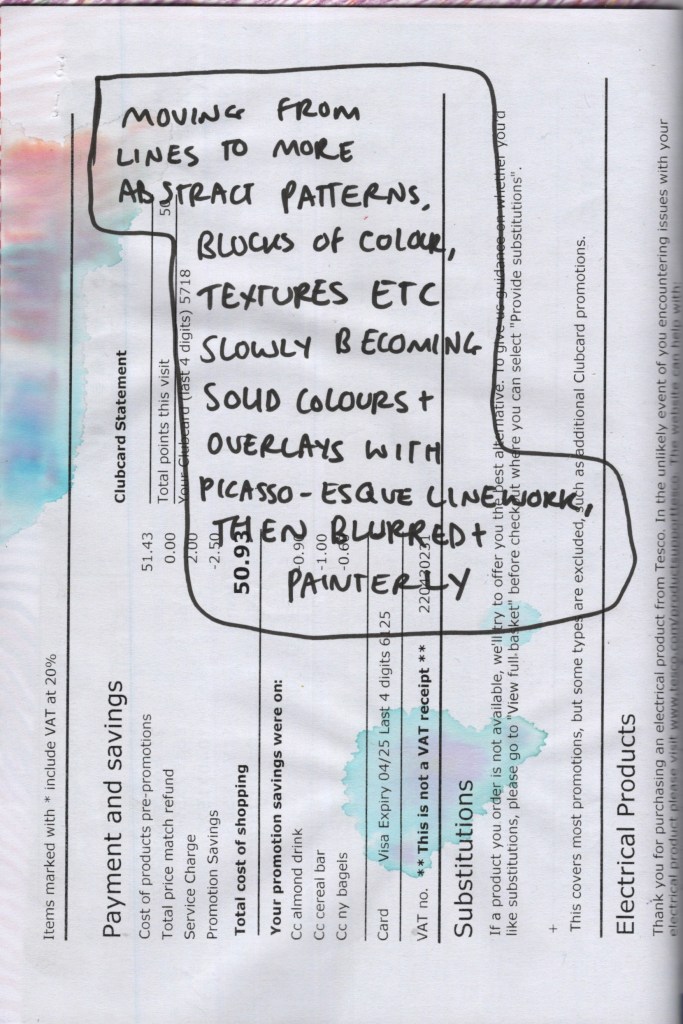
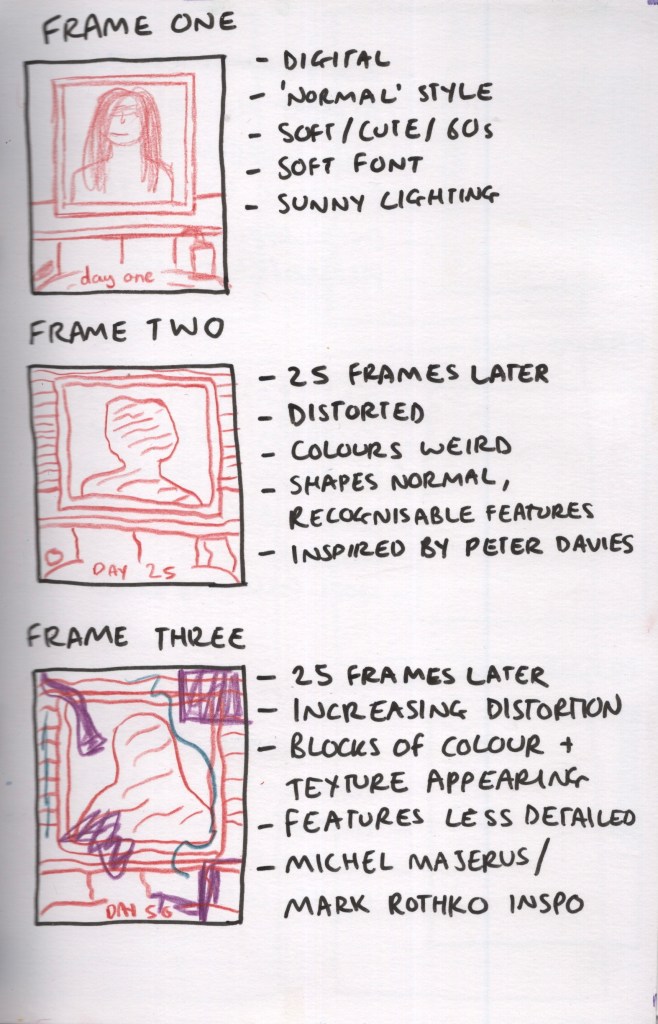
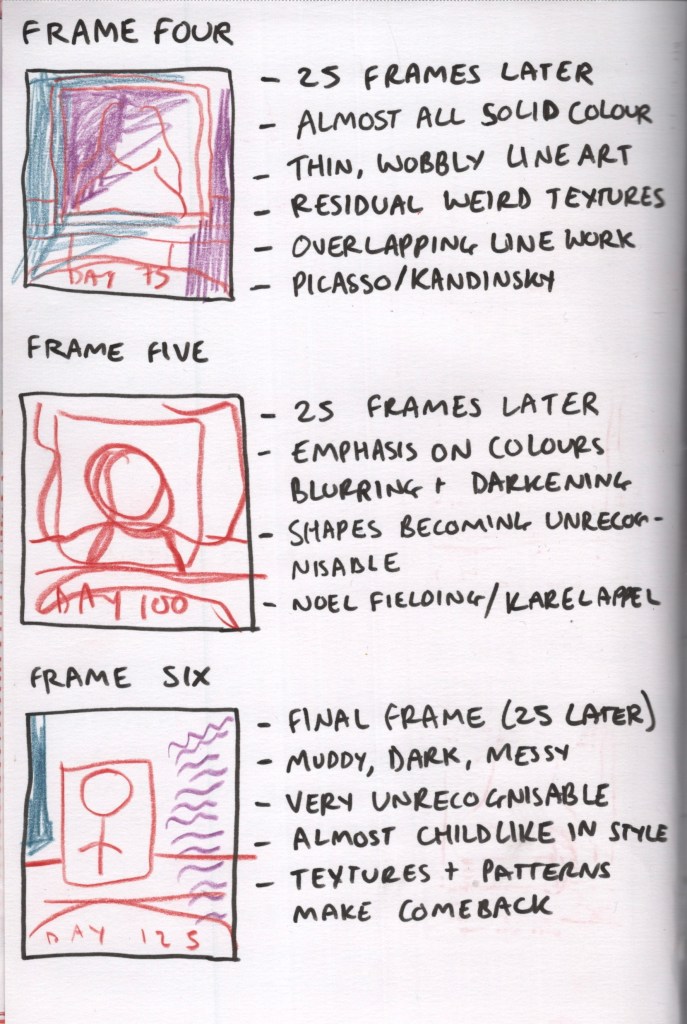
I began exploring each of these groups as concepts and how I could create something more abstract and connected to my sketchbook work. My first idea – based on the phrase ‘again, again’ – was inspired by the feelings I’ve had being stuck shielding from COVID alone in my house in an endless loop of the same thing all of the time. Each frame would show the same image – me, looking in my bathroom mirror each morning – however as time progressed the style would become more abstract, distorted, and blurred.
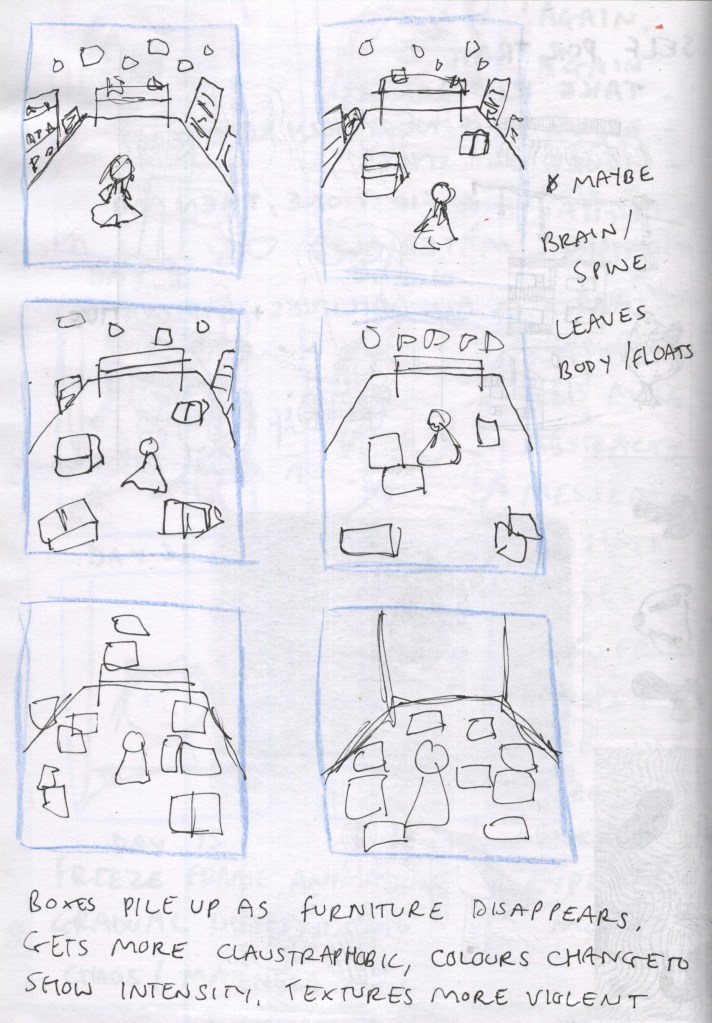
The second idea was based on the words ‘Boxes, Moving, Packing, Brain, Spine, Anxiety, Stress’. In November 2021 I was due to move house and packed up the majority of my belongings. The move fell through, and my health suddenly worsened, and as a result, most of my things are still in boxes around my home. The concept here featured me sitting in the centre of my studio as everything is slowly replaced by boxes of things. Each frame showed more boxes, furniture disappearing, and the colours shifting to show how stressful it was. I also played with the idea of my brain or spine floating outside of my body as the frames progressed.
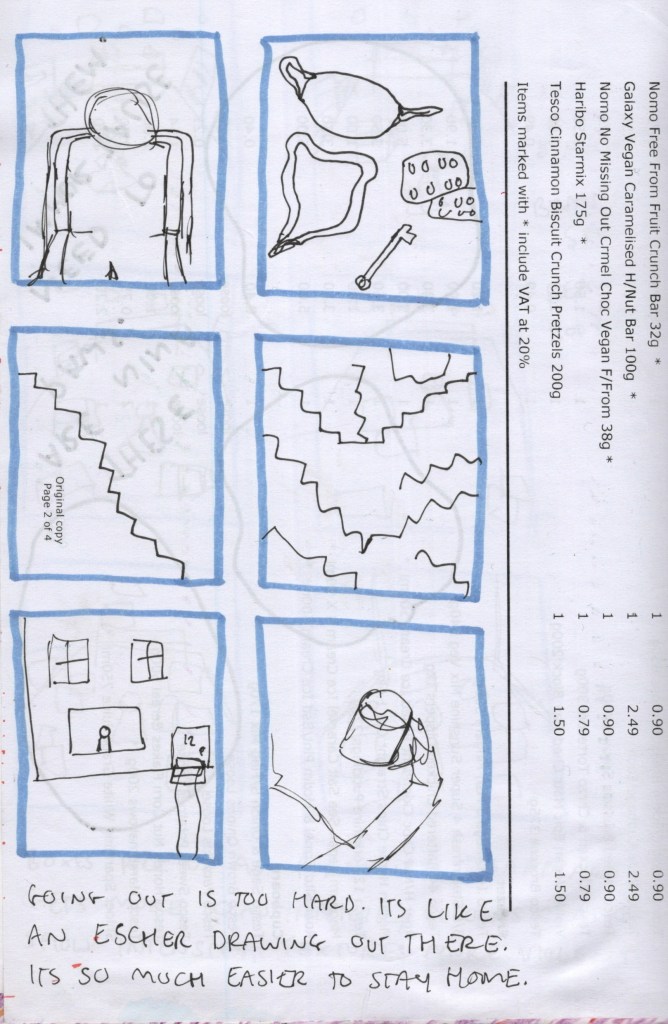
My third and final idea was based on the words ‘COVID, Inaccessible, Stairs’. The animation concept was about how hard it is to access the outside world, and the frames demonstrated this by showing me in my wheelchair, all of the things I have to take out just to be safe, all of the stairs in an M.C. Escher inspired illustration, and how much easier it is to just stay at home. This felt like a very raw way of expressing how I felt, and a little too direct. It was my least favourite of the three concepts.
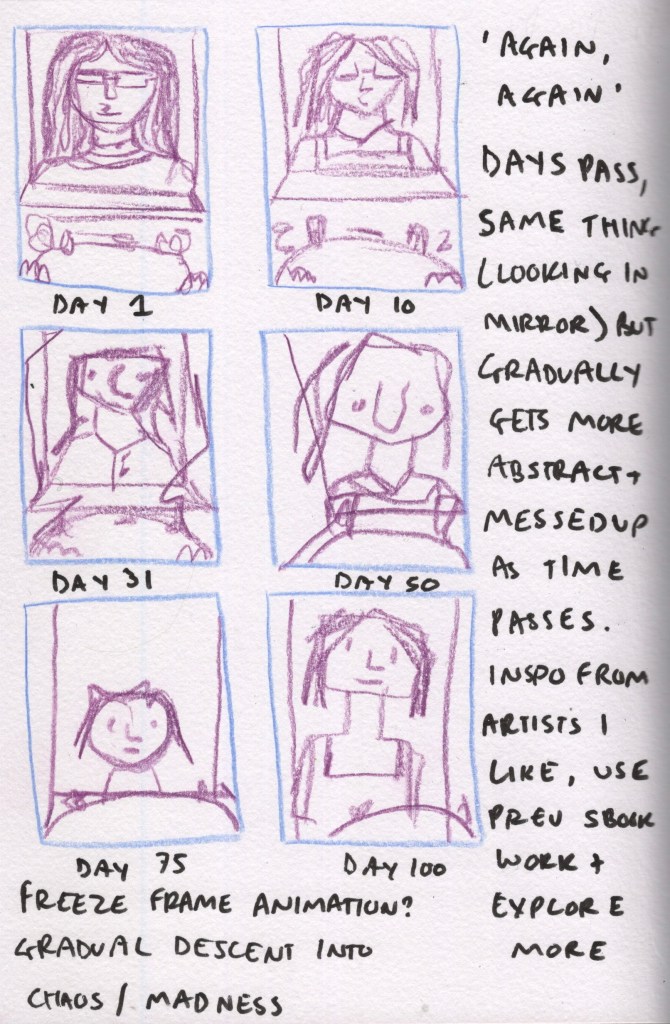
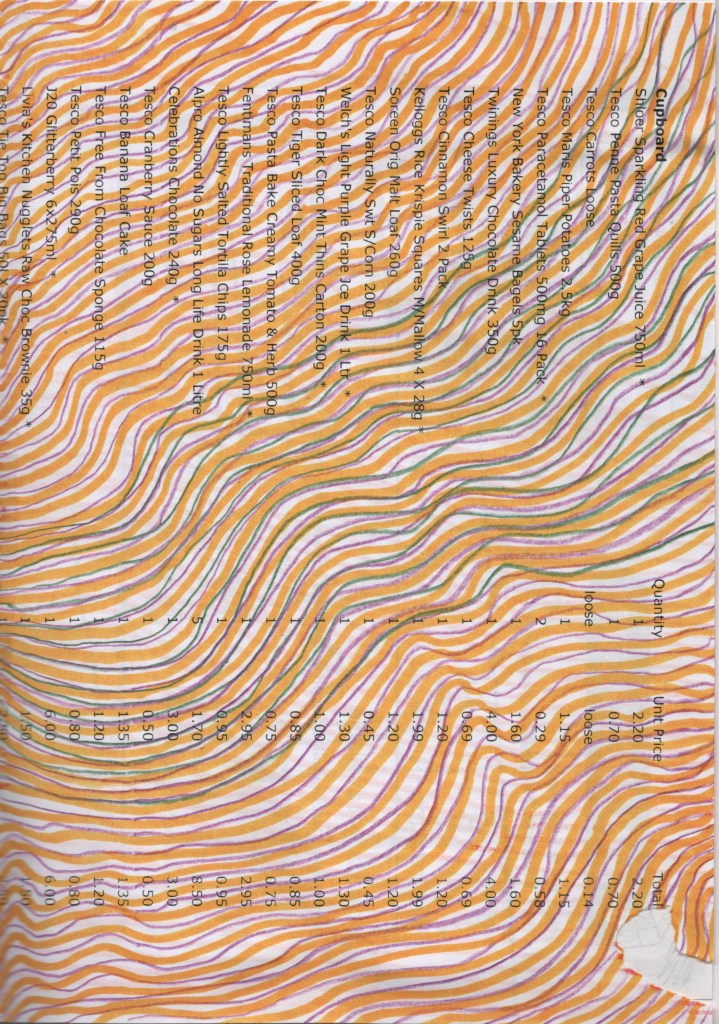
My favourite idea was ‘again, again’. I felt really excited by it, connected to it, and like it truly represented how I felt. It would also utilise my sketchbook work and approaches in a way that is new and refreshing for my illustrative style. In order to explore the idea further, I decided to undertake some more research on the abstract artists I am inspired by, so I began collecting some imagery to reference. Once I had a folder full of work, I began further experimenting and exploring different ways that I could use the patterns, shapes, and textures I was inspired by. I also took some reference pictures of myself and my bathroom to draw from.
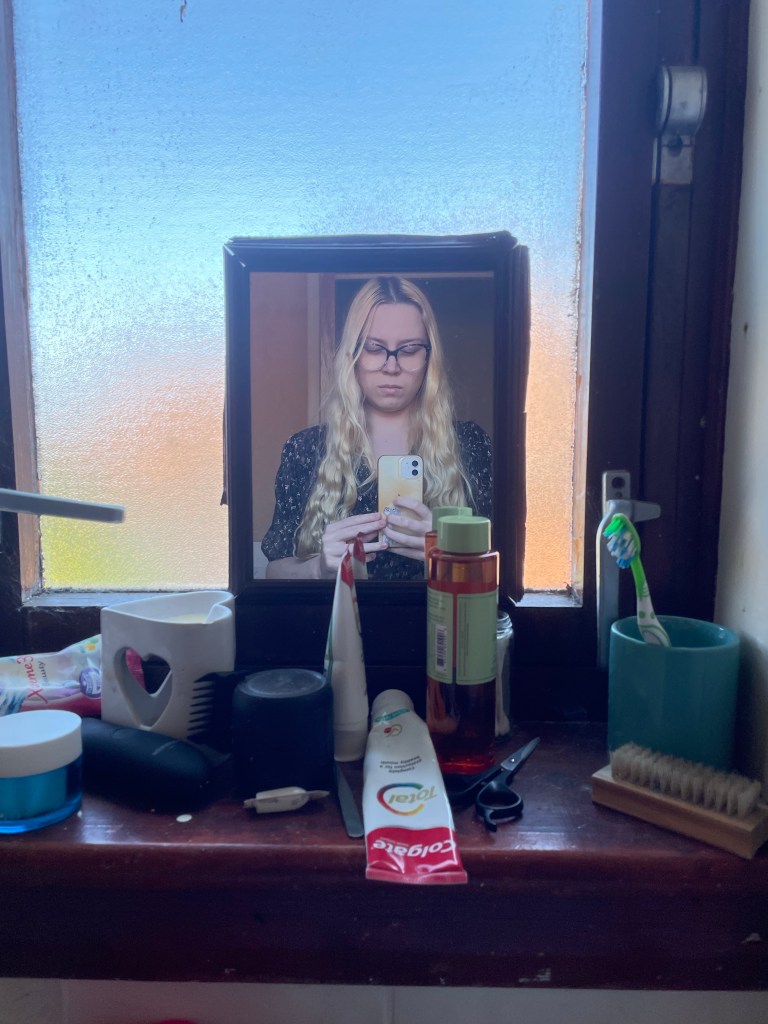
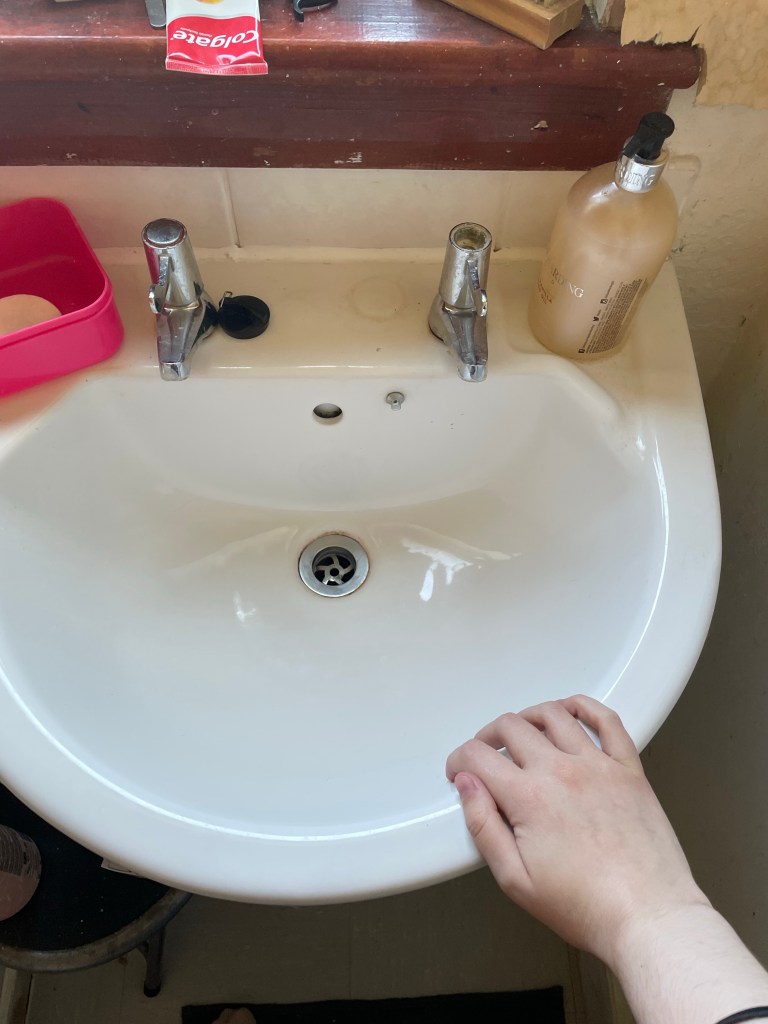
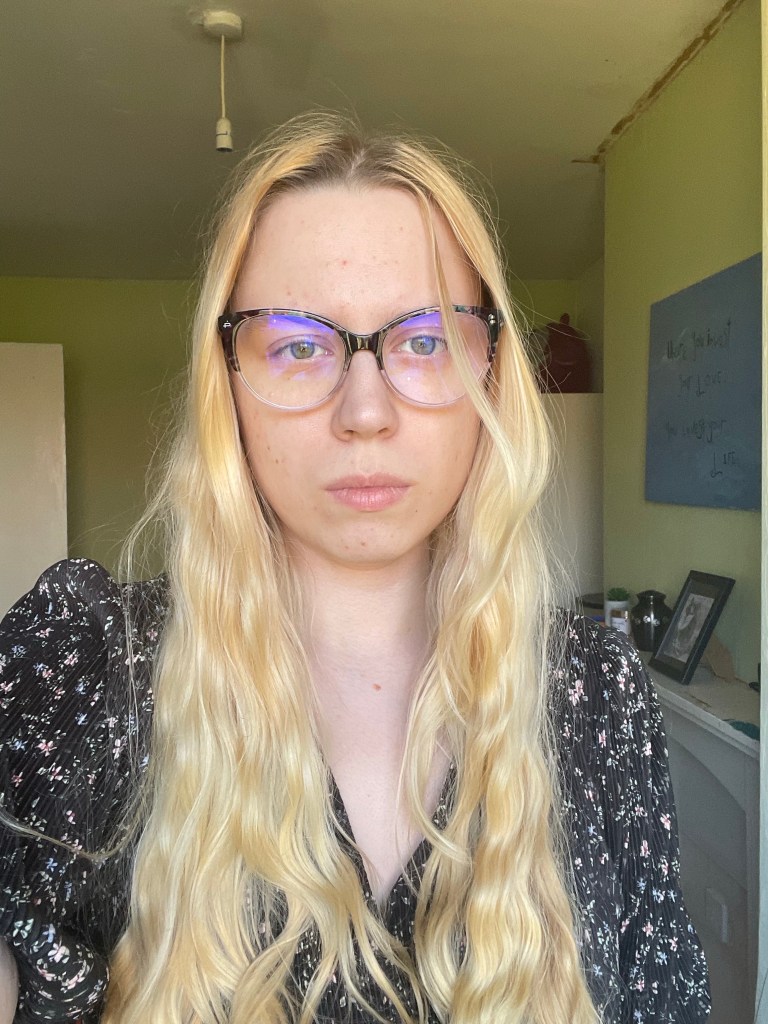
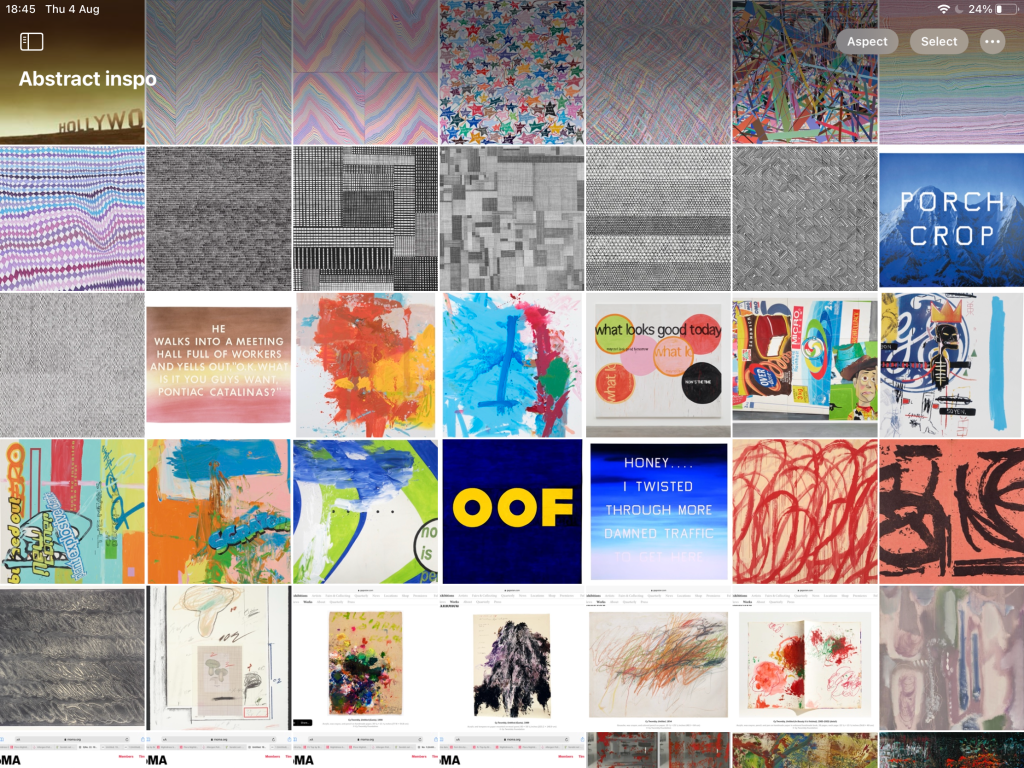
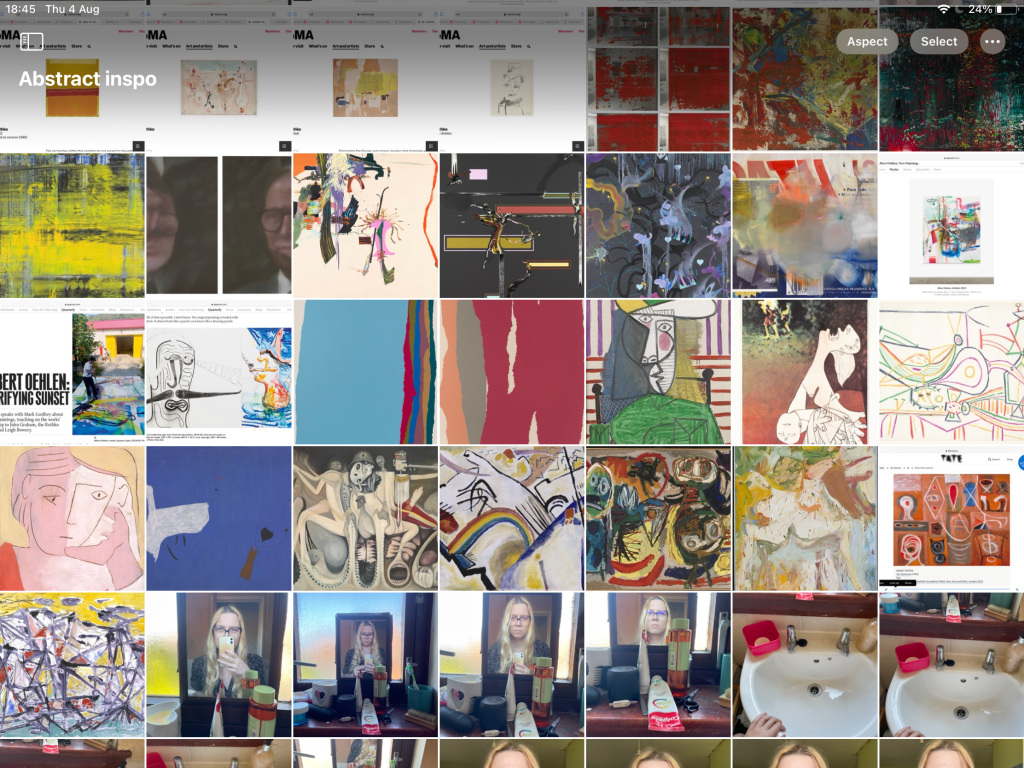
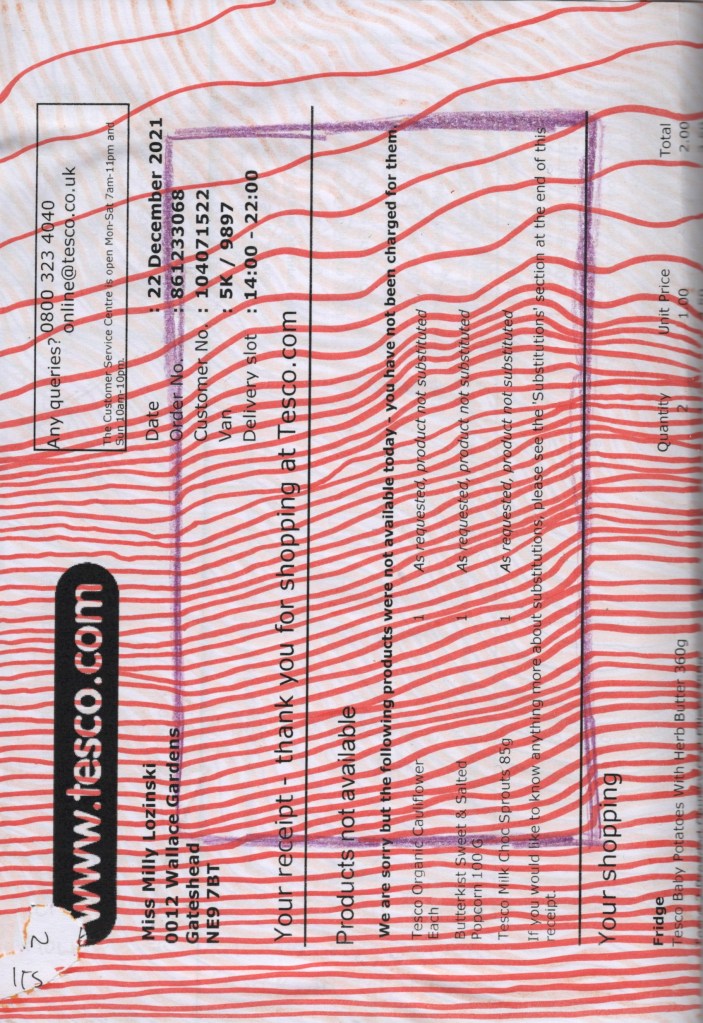
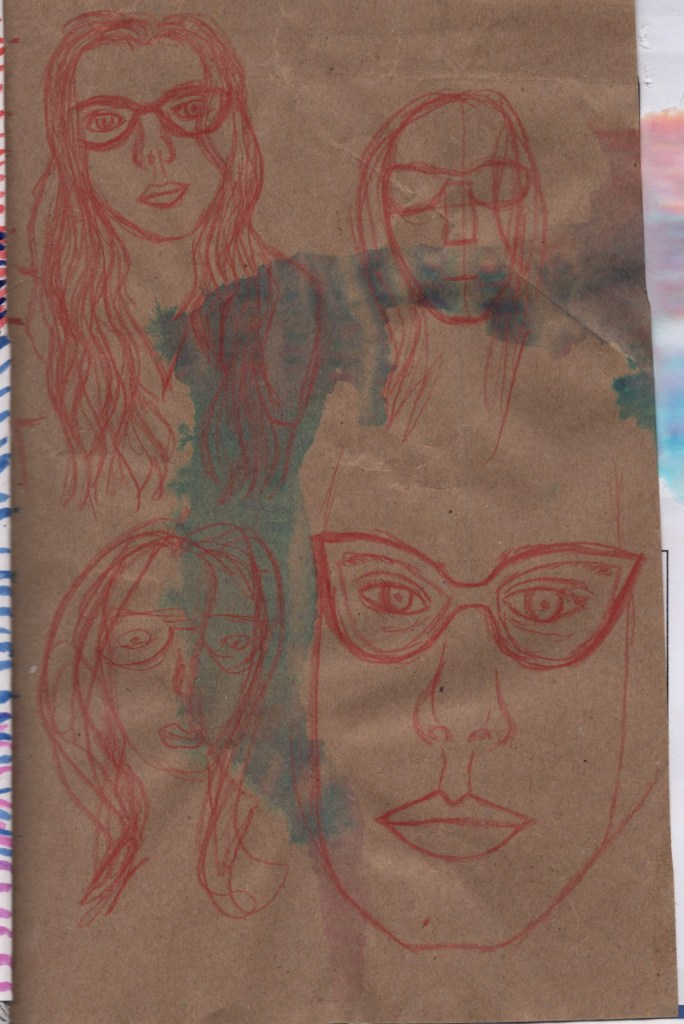
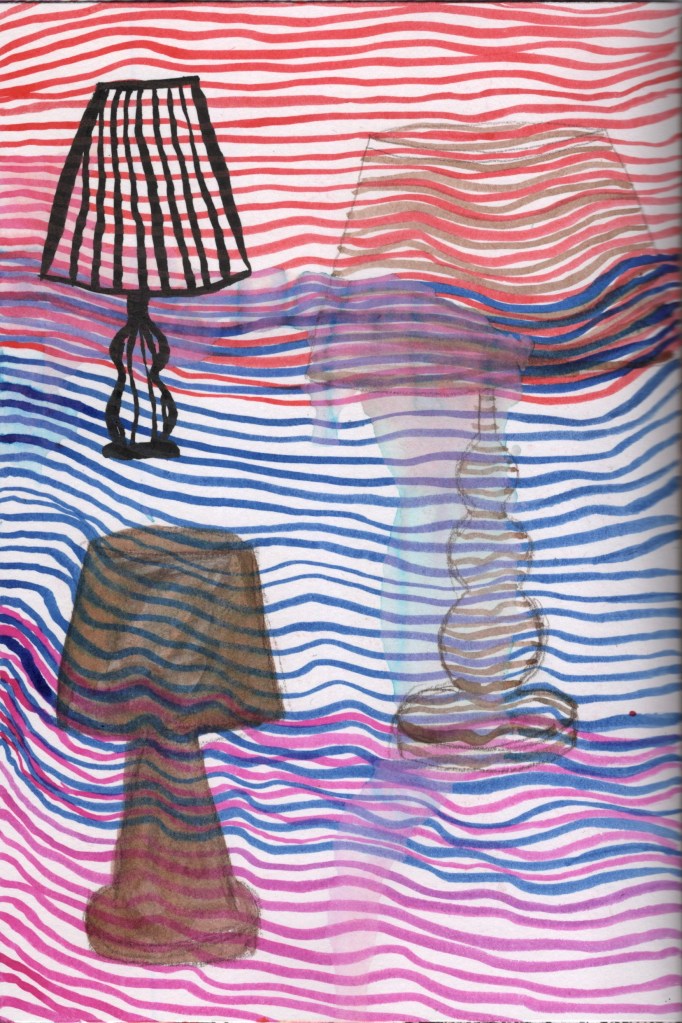
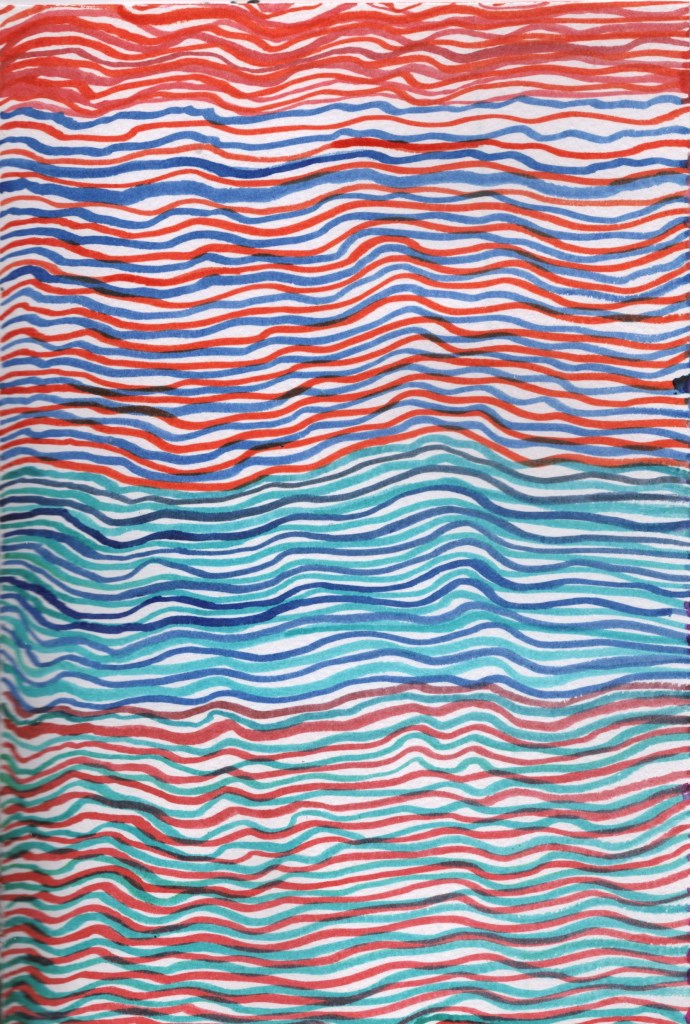
I then began considering different compositions and layouts for each frame. As it would be the same image slowly becoming more and more distorted, I only really needed one composition to work with. Once I was happy with my composition, I began planning out how I would approach each frame, where in the overall animation sequence they were, and which artists would be inspiring each piece. I envisioned each frame being 25 frames apart so that the abstraction was noticeable in them. I made sure to consider how easy it would be to get from one style to the next, and if it was possible to do it slowly over 25 frames.
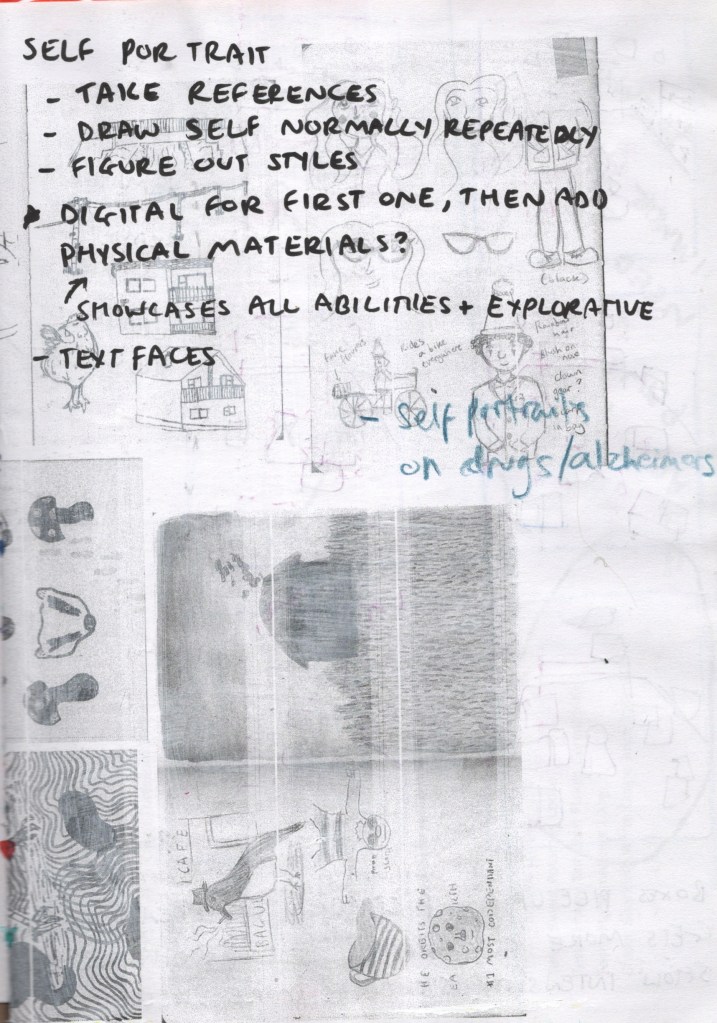
At this point, I was starting to get frustrated with my sketchbook itself. I hadn’t used as much as I expected to in my visual diary stage, and the paper I was working with wasn’t appropriate for planning out clear imagery. I was skipping a lot of pages in order to find the blank paper. I was also starting to struggle with where to go next and how to use my sketchbook to further my designs and plans. I sectioned off an area of the sketchbook with a bulldog clip so that I could skip to the end where all of the blank paper was, but even still I felt stuck.
At this point in my illustrative process usually, I would begin making the final illustrations. I would then refer back to my sketchbook as and when needed to experiment or explore something further, to test out colours and linework, text options, and more. I had some thoughts on more I could plan and develop, such as linework of the final composition on a full A5 page, preliminary text exploration, and transitions between frames. However, this felt very forced and like I was trying to tick boxes rather than working how I naturally work.
Stage Five – Completion
I felt stuck. I was ready to move on to final illustrations, but I also did not feel equipped to fully illustrate all six frames. As I said, my health is very unstable currently, and it was a big task to complete in a short timeframe. Finishing the assignment at this stage felt like giving up, though. I decided to reach out to my tutor for some guidance on where to go next.
My tutor recommended we call and chat about the project, what I’ve done so far, and what I’m struggling with. I expressed how I felt I had two sides to my artistic approach – a more creative side where I let go and have fun, and a more serious side with which I approach design briefs. I discussed wanting my sketchbook to be an external self-contained place for me to let go and be loose when not focused on design work.
She empathised and said she too has a ‘designers brain’ not a ‘fine artists brain’, which helped me again feel less alone in my approach. I am ultimately a designer, and trying to force myself to work like a fine artist isn’t helping me to learn. My tutor discussed the purpose of this unit and how I have achieved finding out how I want to use sketchbooks, and that part of level one units is figuring out what is for you. What I have learned, is that this isn’t for me, and isn’t necessarily how I work. I do love to use my sketchbook, and I have a better relationship with it now, but spending weeks exploring a concept in my sketchbook just doesn’t help me in my process.
I also reflected on my initial plan and notes for the assignment. I had highlighted the sentence in the introduction which said ‘Whichever option you choose you don’t need to focus on making resolved or finished drawings.’ I guess I knew I would end up stressing out about this! I had also written for stage five that thumbnailing the final frames counted as ‘completing’ them. This, alongside my discussion with my tutor, reassured me that I wasn’t completely failing.
I do want to create these illustrations and feel very connected to the concept and idea. Not doing so feels harder for this reason. I also feel like after making such a huge sketchbook, it didn’t get to fully live up to its purpose. I seem to keep making this mistake, but I worry if I make a smaller one I’ll run out of space. Having had some more time to reflect on everything since making the decision to end the assignment work, I feel I did what I set out to do. I also really love the work I produced in this sketchbook and looking at my earlier work in part five, I have a good sense of what I want out of it.
One of the things my tutor said when we called was that thinking time is such a big part of the process. It’s hard, as there’s nothing to show for thinking time, and a lot of this unit has been spent sitting thinking about my sketchbook, ideas, and what I could do. I’ve been working through problems, addressing complications, and exploring ways I could engage, but so much of it has happened in my head, not on paper. Maybe I could write more of these thoughts in my sketchbook – which I did start doing a lot more of towards the end of the unit, but I still don’t feel this represents the hours spent working without actually working.
A project like this one needs more time for me. I feel I could spend a whole year filling this sketchbook and working towards a final goal. I think that’s okay, and that’s where I’m at right now. I don’t feel bad about the work I’ve put into this, the quality of it, or the quantity. I feel inspired seeing the video above, and excited about what I might be able to create in the future.
Final Reflective Statement
This unit has shown me a lot about myself, my artistic process, my likes and dislikes, and how I want to use sketchbooks. I feel like what I’ve learned can be summed up into three points.
Firstly, I have learned that I want my sketchbook to exist as an escape from everything else in my world. I’d like for it to be a fun, explorative, and self-contained world in which I can study other artists, experiment with mediums, and let go a little. The sketchbook itself acts as the boundaries in which my inner creativity can go wild. I’d like to undertake specific projects, such as Inktober, drawing 100 faces, studying 20 artists, or painting every day for a week. I’d also like to open it when faced with art block and splurge out what I can to get myself motivated. Using my sketchbook often and engaging with my creativity in this way is highly desired and a part of my routine now, but my brain can’t merge it with my more structured design work.
However, I found throughout part five that creating a visual journal and documenting my thoughts in this way was extremely helpful, which is my second point. I began this unit knowing I liked to have ‘research sheets’ where I could lay out all of my thoughts when approaching a brief. I’d like to have an A4 sketchbook that I can use just for this, whilst still adding in some creativity as seen in part five.
The final thing I learned is that for some artists their sketchbook is a core integral part of their creative process. It comes with them everywhere and it’s where the magic happens. However, for other artists, it’s simply a tool that can be used when needed. I fall into the latter camp, and I feel okay with that now. My sketchbook engagement dips when my energy does and increases when I have a burst of creativity. It’s inconsistent, but always there. I used to really struggle with this and feel like I should try harder and fill sketchbooks faster. I don’t feel as much pressure anymore to make myself engage with my sketchbook in this way.
This year, and unit, has been hard. I’ve been forced to confront many challenges emotionally and physically. I am ending it relieved that it’s over, but grateful for the lessons I have learned. Sometimes you have to be dragged through the mud to realise what you want. As I’ve noted several times in this log, looking back at everything and what I have achieved and realised is helpful in framing my experiences as more positive.
I have a clearer sense of direction now, which I feel all level one units will leave me with. Key Steps in Illustration taught me how my illustrative process works, what briefs I enjoy, and areas of design I want to work in. Now, having finished Illustration Sketchbooks, I know how to utilise a major tool in accomplishing that. It feels like fitting puzzle pieces together, and it’s really nice.
 Learning Log