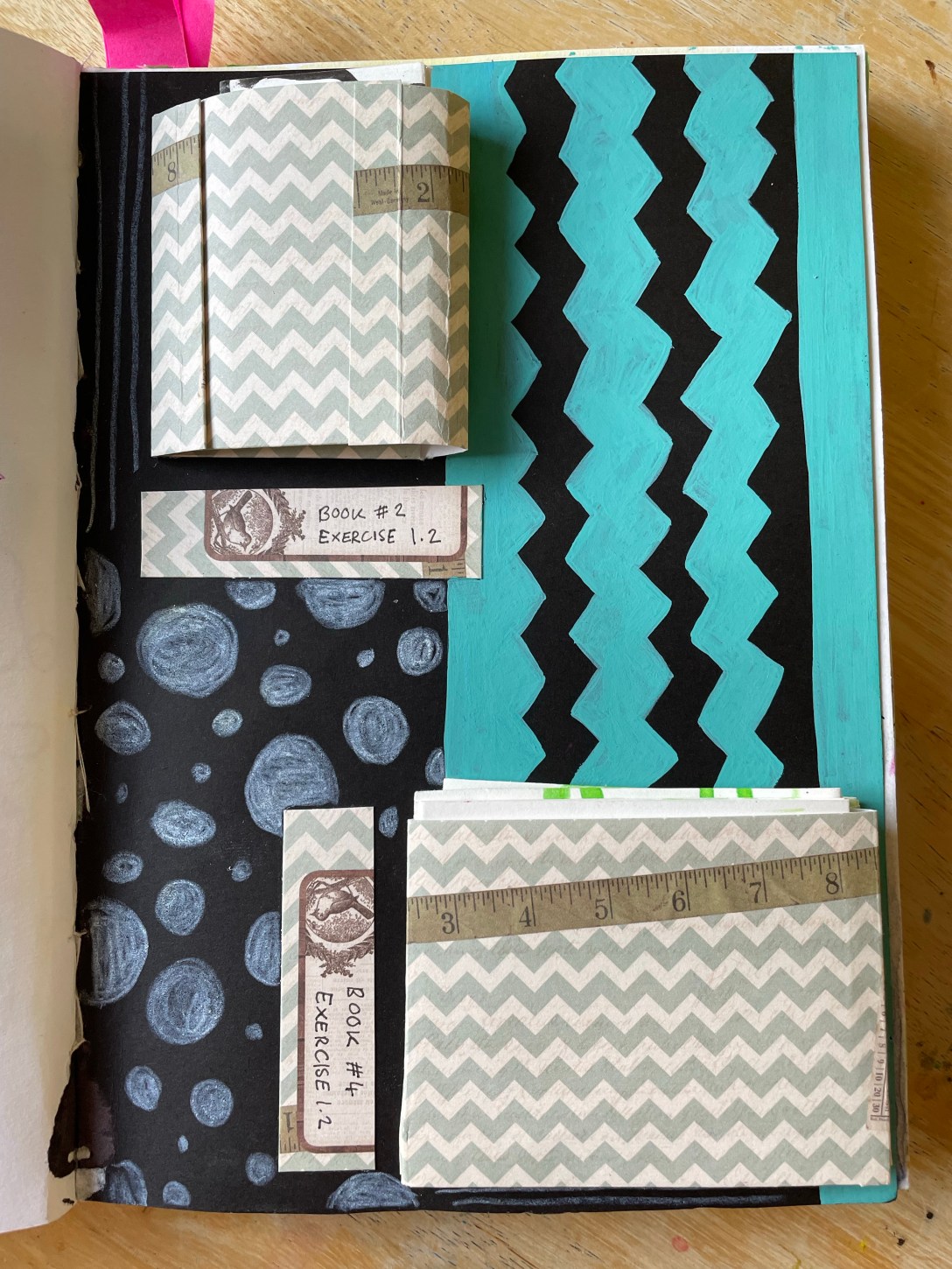
This exercise was focused on answering the question ‘to hide or not to hide?‘ I was asked to think about how I felt about my own work and how much of it I was comfortable sharing with the world. I was then asked to research ways I could hide my work within my sketchbook and use these methods to add the work from Exercise 1.2 to my sketchbook.
I really struggled with this exercise as I have no real desire to hide any of my work. I am entirely comfortable with putting everything out there into the world, and I’m not too fond of fiddly hands-on type stuff. At most, I might add an envelope or pocket to my book to store paint swatches or collage pieces, but I don’t ever see myself wanting to hide my work. Even the thought of painting over something I don’t like or concealing it with post-it notes – both popular ways of hiding work the artist dislikes – is unappealing to me. Thankfully, a lot of this unit is about your own relationship with sketchbooks, so I spent some time unpacking these feelings.
Firstly, my sketchbooks are mine, and they exist for my benefit only. If someone dislikes what I’m doing in my sketchbook, that doesn’t matter because I did it for me. As long as I feel good about the content in my sketchbook, that’s all that matters to me. I also have an odd relationship with the concept of ‘privacy’, which I’m certain stems from being autistic. I don’t see any of my thoughts as private, and I would be comfortable sharing any of them with anybody, including total strangers. Where the line is drawn for me is other people’s comfort – I don’t want another person to feel upset, uncomfortable, or like they know too much about a situation. So, in general day to day life, I share my thoughts according to other people’s comfort levels.
That’s just in everyday life, though, and not in my artwork. On some level, I’m interested in challenging the discomfort people might feel around knowing too much about another person. I’m curious as to why we hold these standards and what drives these feelings. If someone feels uncomfortable looking at my artwork, I’d hope they could question why and learn some things about themselves. Although, I never want to harm anyone, and for that reason, I am in the habit of adding trigger warnings and disclosures to anything I produce that might cause harm. However, the bottom line in my artwork is that I create for myself, not for the public eye.
I have experienced many traumatic and distressing instances throughout my life – abuse, cancer, chronic and mental illness, among other things – and I find it quite therapeutic to be open about these things. These ‘personal’ experiences and the feelings I have to go with them feel very normal and mundane to me. There isn’t much I haven’t experienced, and I think this also makes me feel a bit less like there’s a hierarchy of ‘public’ and ‘private’ things. Openly sharing my feelings brings me comfort, and I also hope that in doing so, other people feel comforted and less alone. I know that despite feeling isolated, I am never alone in the feelings and thoughts I have. Someone in the world will be feeling the same things – and knowing this has helped me through many hard times.
Even if I don’t like a piece of work or made a huge mistake, I still want that to be accessible to myself or anyone else. There is too much perfection in the art world. Artists need to see other artists failures. If we don’t, we continue perpetuating the idea that perfection is the standard within the industry, with no room for growth. I also can learn from my own mistakes, go back and change or add to them, redevelop them, or simply find inspiration from them. I would be robbing myself of that opportunity if I covered or hid it. I also find that almost every time I show my ‘failures’ to other people, they can’t see how it’s a failure – they find joy in the piece.
Another thing I consider is that what I put into my work isn’t necessarily what other people see in it. How we view any media we engage with – be it music, TV shows, games, or art – is influenced by our own experiences and ways of seeing the world. This is what makes concepts such as the Rorschach inkblot test so pivotal to understanding the workings of people’s brains. Even if I did feel a piece of work was deeply personal, how each individual viewer interprets it could be wildly different and have no connection to my initial intention. This, in a way, brings an automatic hidden element to literally every piece of artwork in existence.
Overall, I think there is an enormous amount of beauty in vulnerability. When I see artists bare their all, it makes me feel seen, heard, and understood, even if they’re discussing topics I can’t relate to. The act of being human is enough to feel connected to another person – and by exposing all, you are baring your humanity.
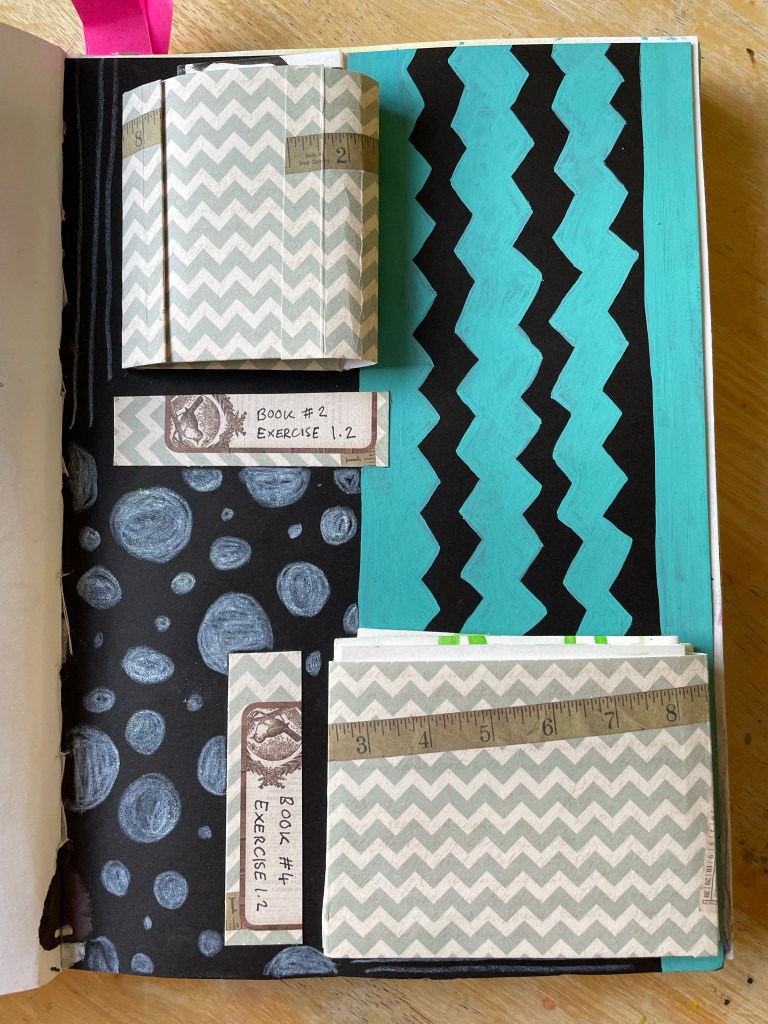
As the goal for this exercise was also to store the books made in Exercise 1.2, I did do some brief research on adding pockets to my sketchbook. I looked over the Pinterest board provided in the unit material, and I discussed with other OCA students how they approached this exercise. I didn’t sketch out any initial concepts. Instead, I started out by playing around with paper directly and seeing how I could make the pockets work. I wanted to make pouches that could collapse easily if I removed the books inside.
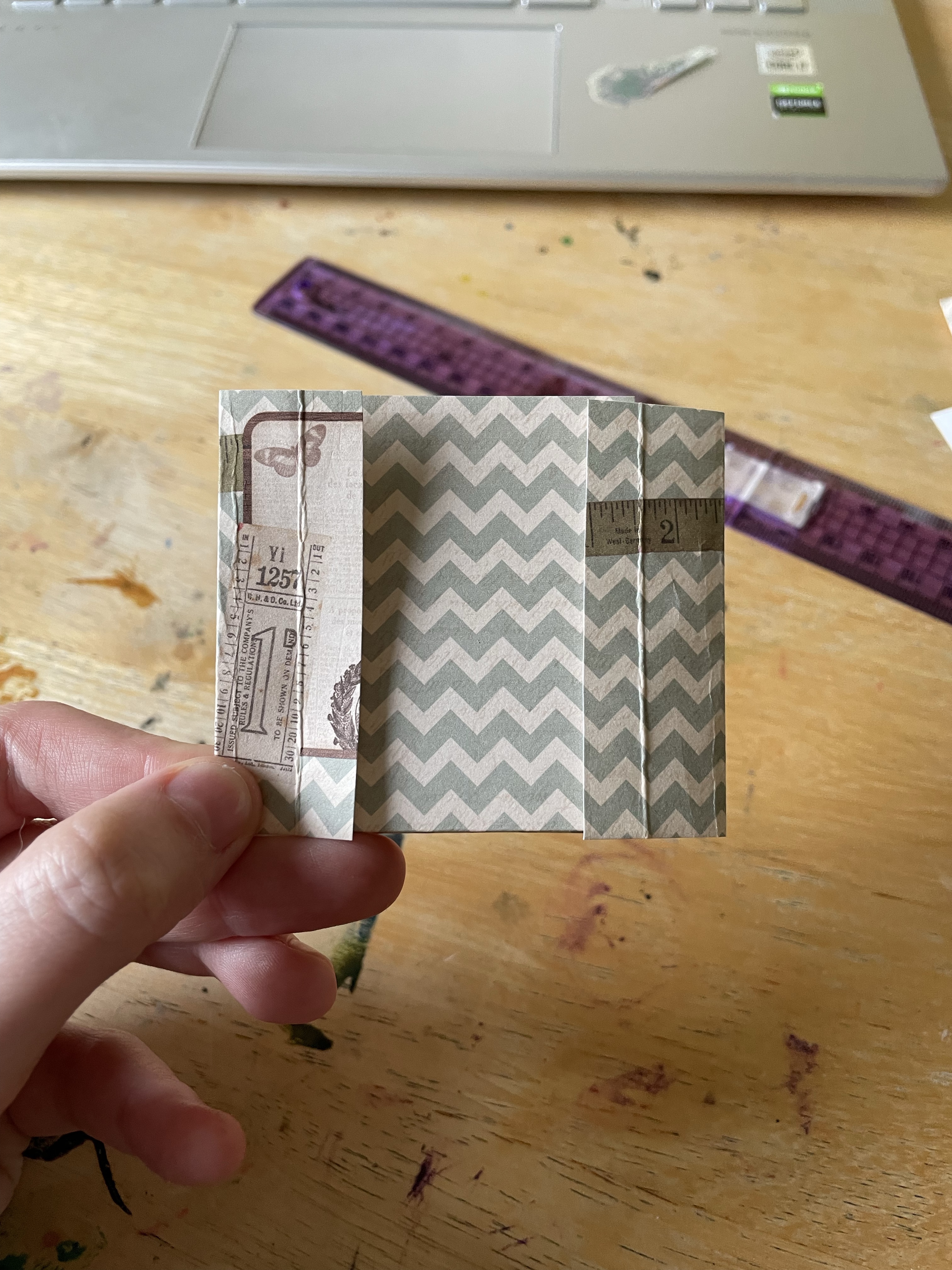
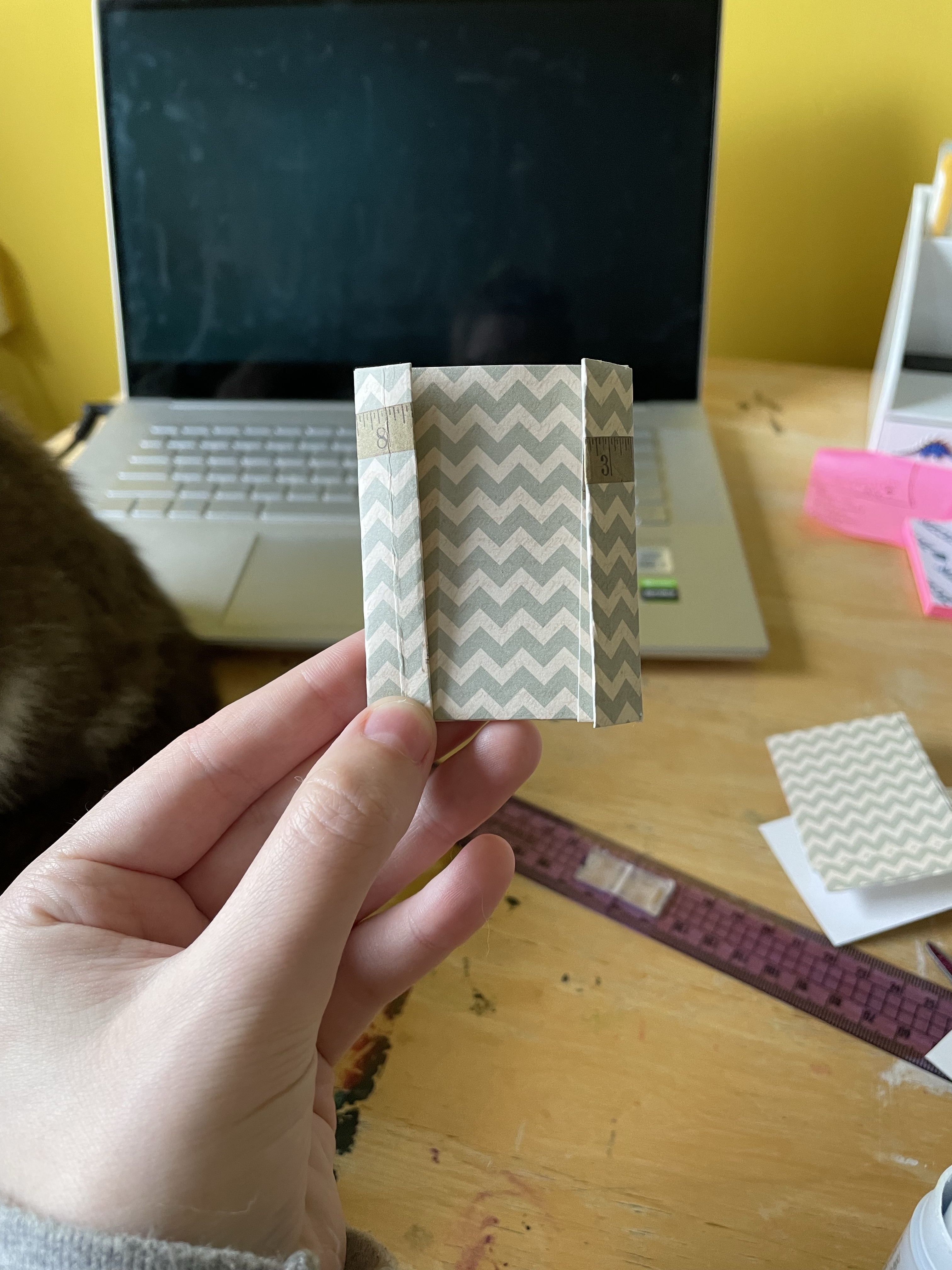
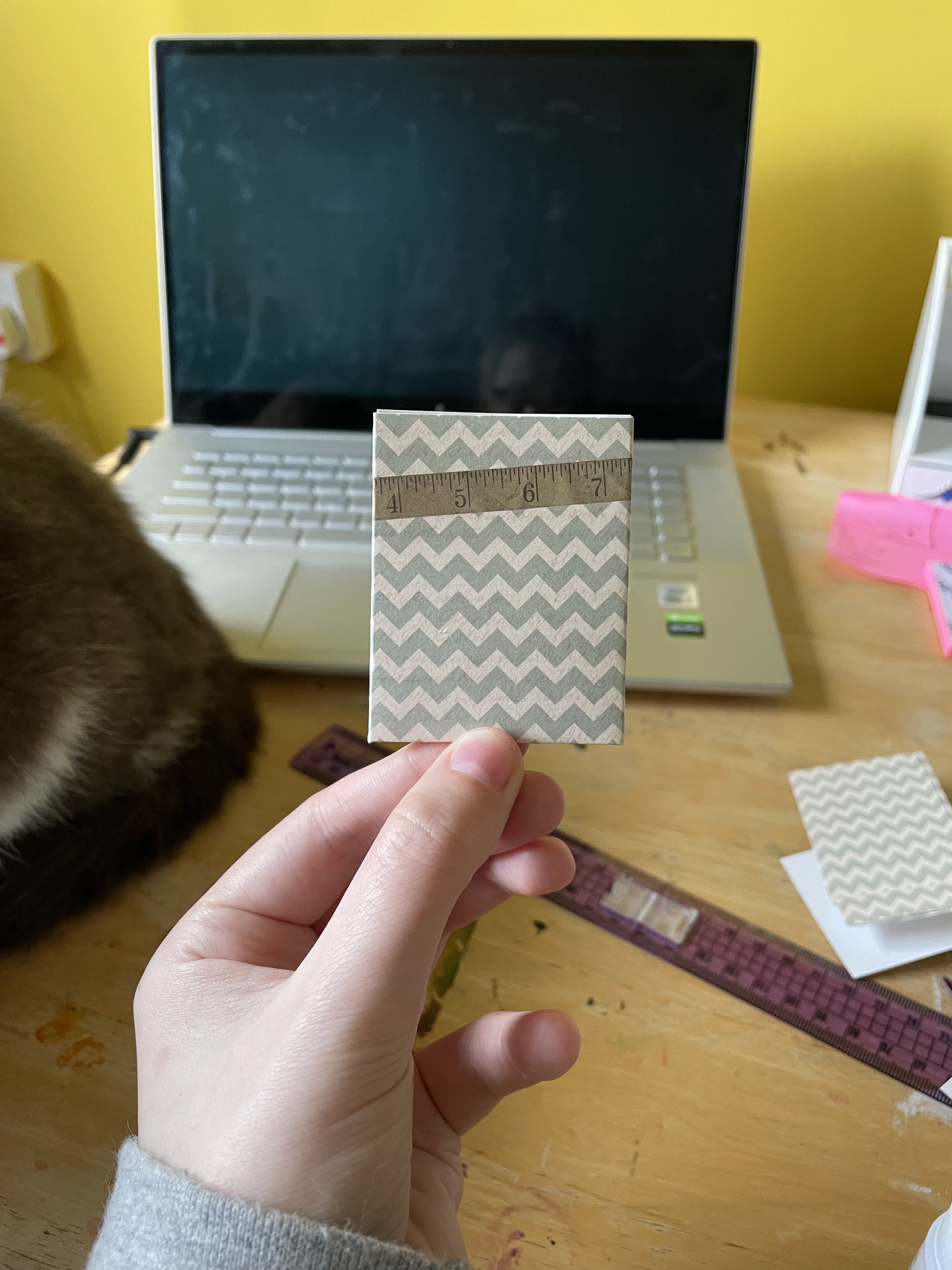
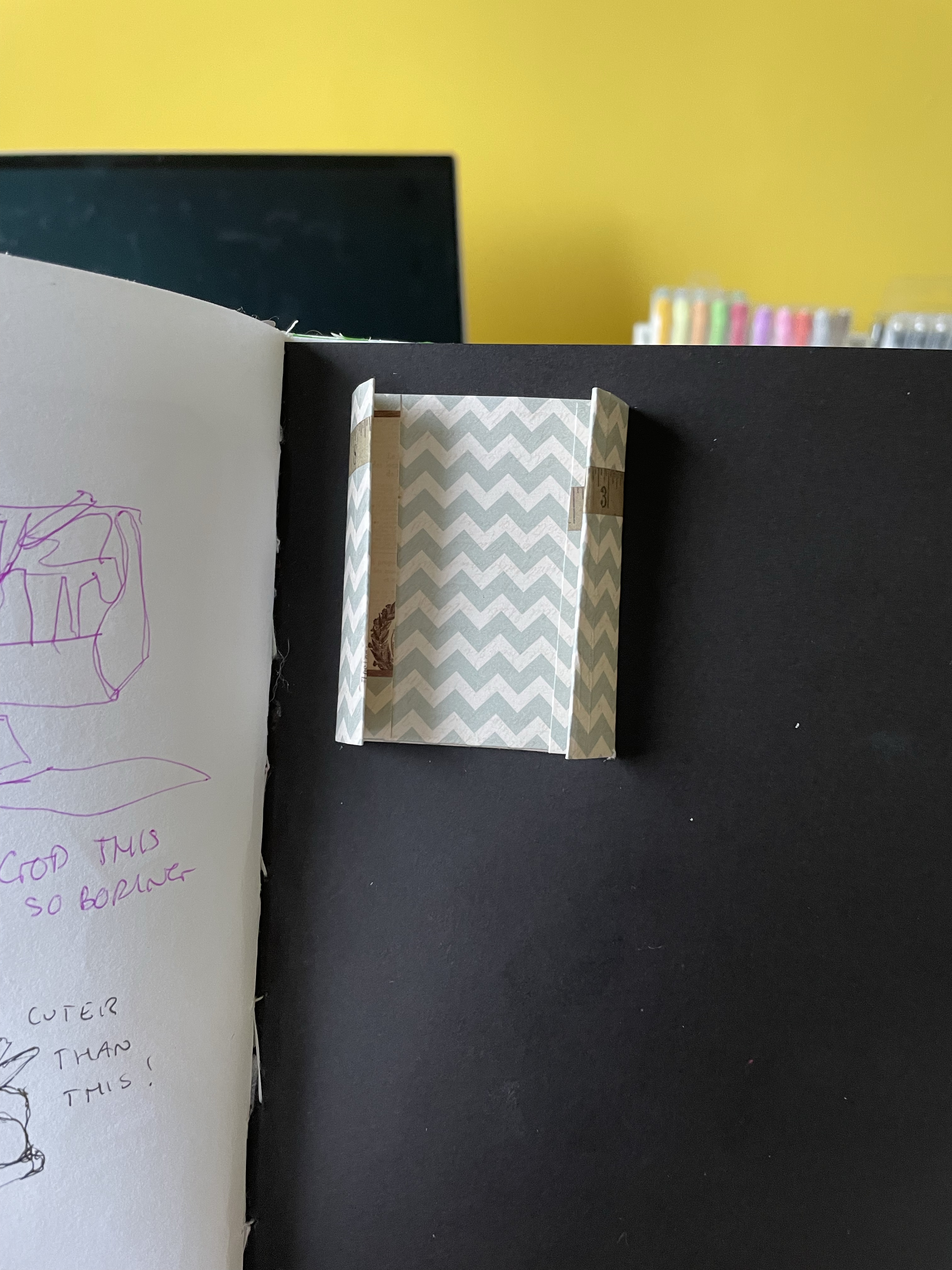
The second book I made was much better than the first – I think I learned quite a bit from the process. I would happily add another one of these to my sketchbook if necessary. Sadly, I forgot to take photos of the process of making the second pouch. When the books are in the pockets, my sketchbook is really bulky and difficult to work in. Annoyingly, I have to remove the books in order to use it comfortably. This is part of why I dislike adding everything into one sketchbook. I’m glad I made something that works for the job, though.
Upon reflection, I have considered that it’s pretty cool that I speak Italian and can, therefore, ‘hide’ thoughts in my work by using another language – but still be baring all. However, I don’t know how I feel about doing this intentionally to hide things. I’m grateful for this exercise as it has made me think deeply about my connection to my art and why I feel so comfortable, maybe even driven, to being so open.
 Learning Log
[…] the topic of being neurodivergent – my tutor pointed out that another way to interpret Exercise 1.3 would be to discover intentional hiding and obscuring of content as a part of the narrative […]
LikeLike