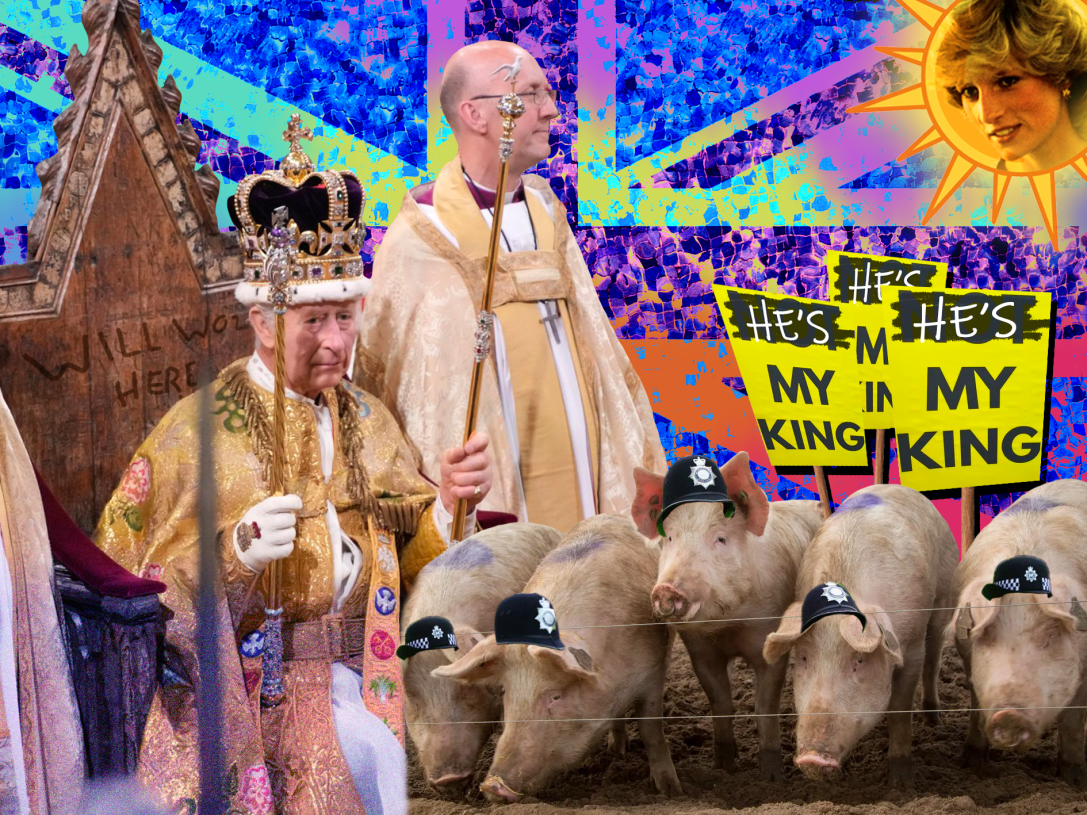
For this exercise, I was asked to make a photomontage or collage focusing on a political message of my choice. The brief used the words ‘playful, imaginative, proactive, and humorous’ to describe how I should manipulate the images I collected to create my final piece. It suggested using Photoshop to do this and asked that I reflect on the original meanings of my images and my subsequent collage in a short evaluative statement.
Despite having grown up with access to the Adobe suite, I have avoided paying the costs to access it throughout my degree, sticking to my favourite software of Procreate for the most part. For a personal project a few weeks ago, I needed access to photo editing software and ended up paying the £16 student fee to access Lightroom. I decided I may as well continue, at least for now, in order to access Photoshop and Illustrator too. This turned out to be a great decision, I forgot how much I love Adobe!
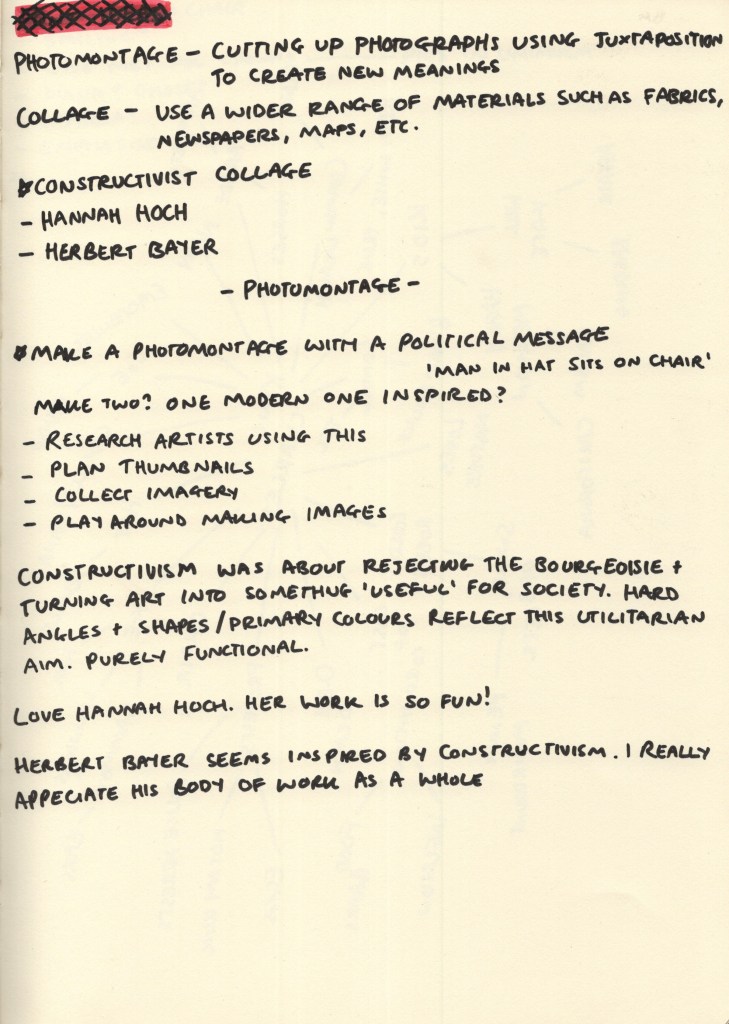
To start, I dissected the brief and considered some points to research. I’ve been introduced to several collage artists throughout my degree who have inspired me, and I especially enjoy the constructivist era collages. I revisited the work of Hannah Hoch, as well as Herbert Bayer, and considered what sort of collage I wanted to create.
I also found a very interesting article discussing the constructivist era titled Rodchenko: aesthetics as politics. The concept of using aesthetics within political movements – and the way in which politics and art directly influence each other throughout history – has always been fascinating to me. This article was not specifically about collage or photomontage, but it did prompt me to reflect on how this medium can be used for political purposes.
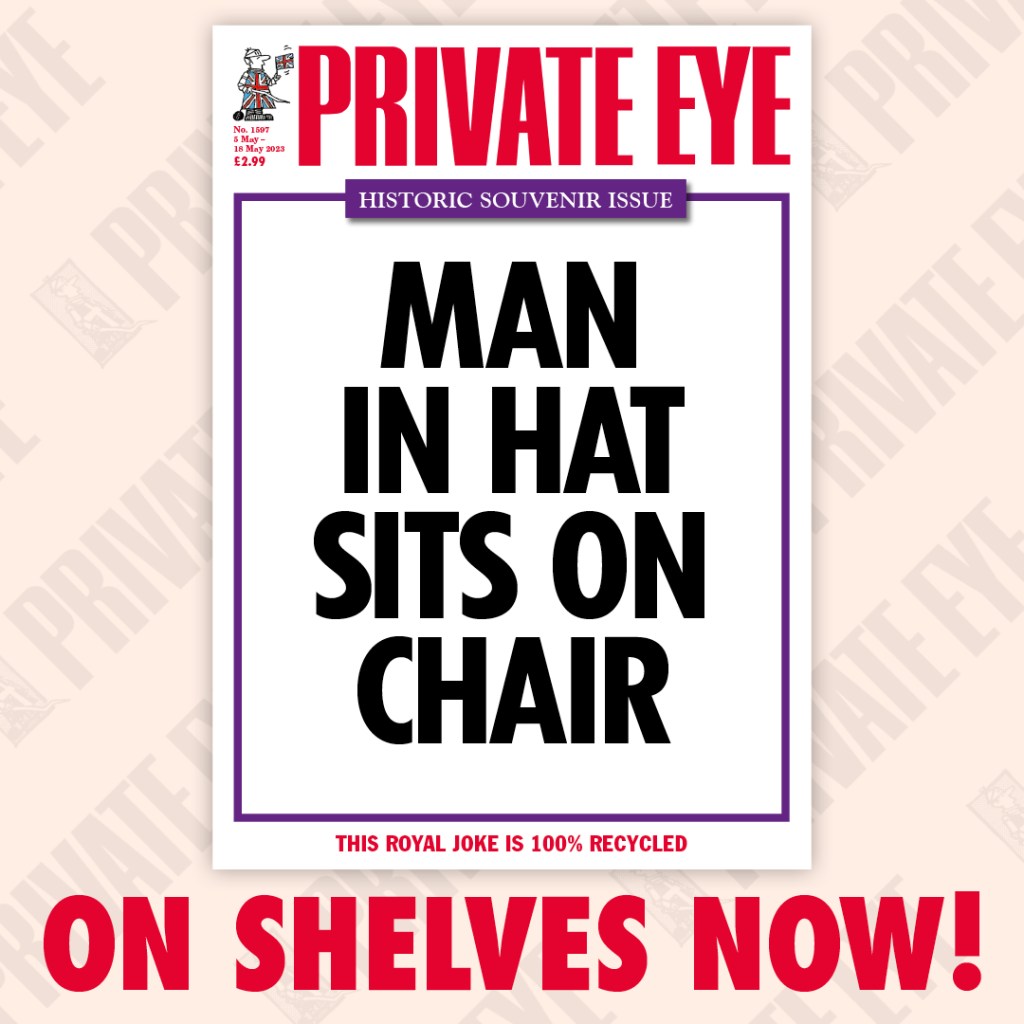
Private Eye front cover, 5 May 2023 edition. Taken from the official Private Eye Twitter account.
I didn’t think too hard about what political event to explore, and off the back of the King’s Coronation a week before, I was pretty inspired by the possibilities it could hold. I was especially inspired by the Private Eye cover for that week, which simply said ‘Man in hat sits on chair’. It felt like a wonderful way to use both text and visual dynamics to achieve a humourous outcome.
I don’t usually find mind maps helpful, but for this exercise, it felt like the obvious choice in order to thoroughly explore possible imagery I could use in my collage. I made sure to consider more abstract connections, as well as the more obvious ones.
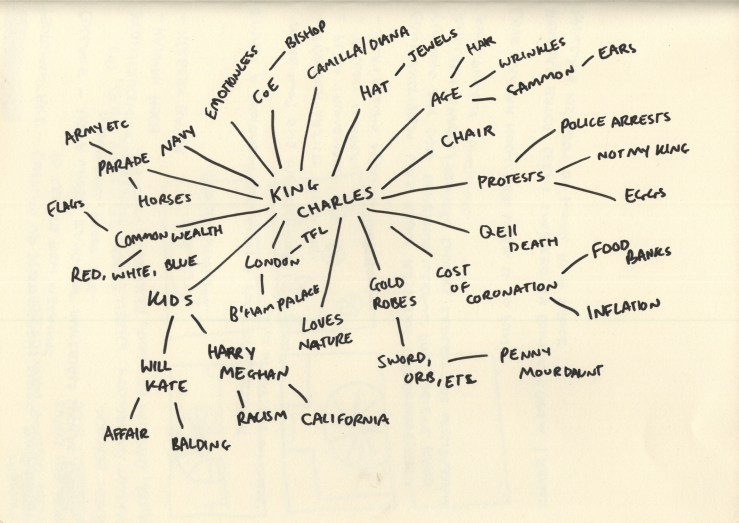
I selected a few of the concepts from the mindmap to use as a basis for my collage: swapping the crown and thrown for a random hat and chair, having the King grinning, giving the metropolitan police crowns instead of hats, featuring Princess Diana somewhere or making Camilla look very sad, and emphasising the King’s ears. I then turned to Google to begin finding imagery to use.
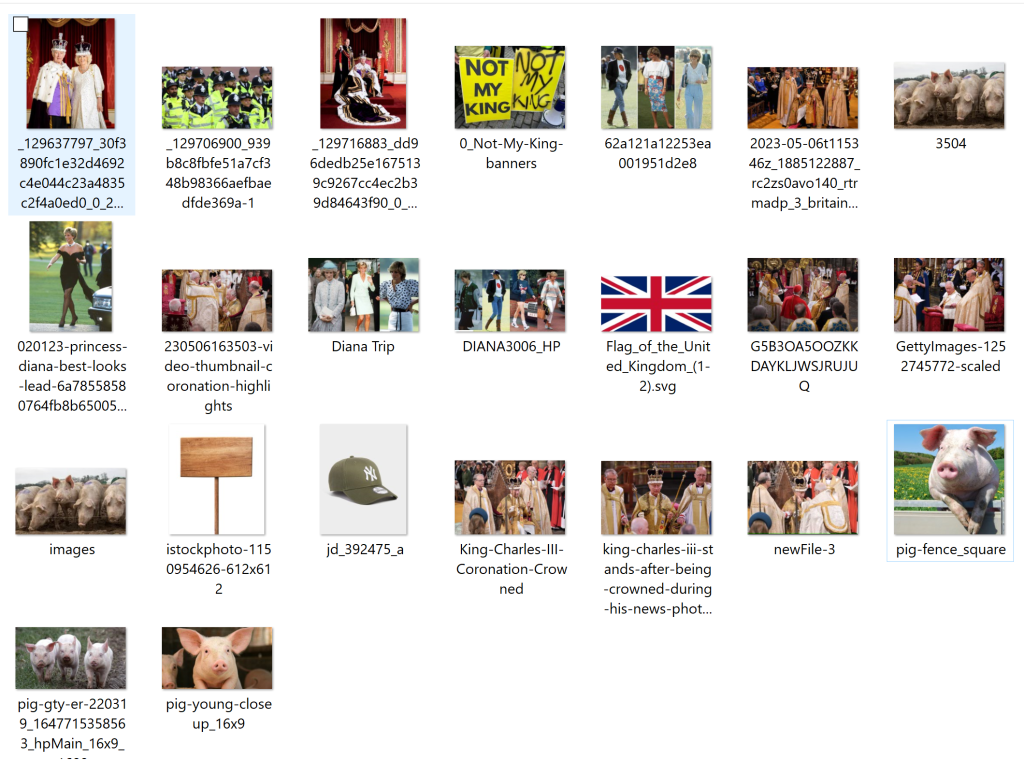
Imagery downloaded to potentially use in my photomontage.
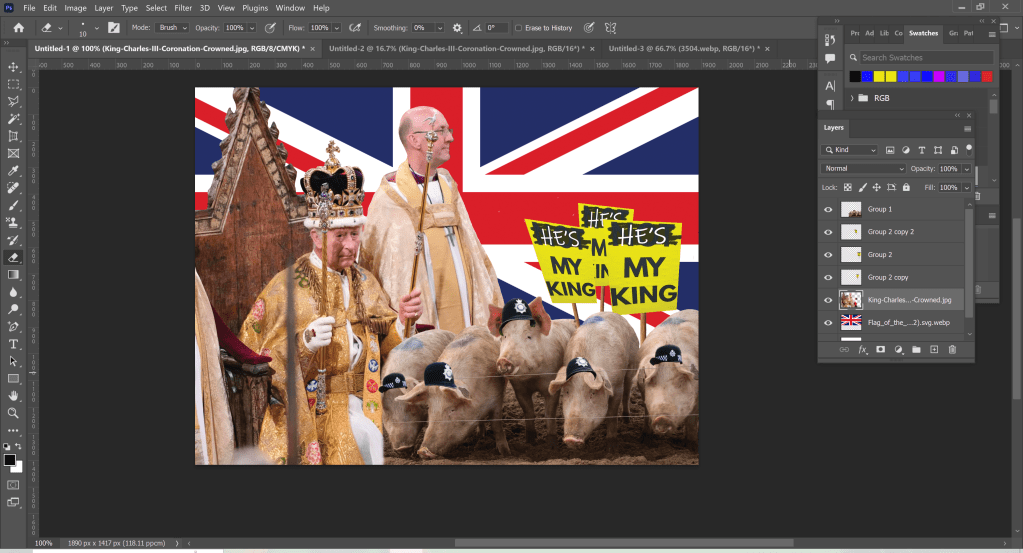
Once I felt I had a good range of images to experiment with, I began dissecting everything and fitting it together in Photoshop. I’m still not quite in the habit of documenting my work when not using Procreate, as I’m so used to the automatic screen record function, but I did manage to take a few screenshots.
I started by adding a picture of the King on his throne, with some pigs wearing metropolitan police hats. I then edited the ‘Not My King’ placards that were confiscated by the police on the day of the coronation to say ‘He’s My King’, and arranged them in the background. I threw a Union Jack in as a backdrop, just to fill the space and see what it looked like.
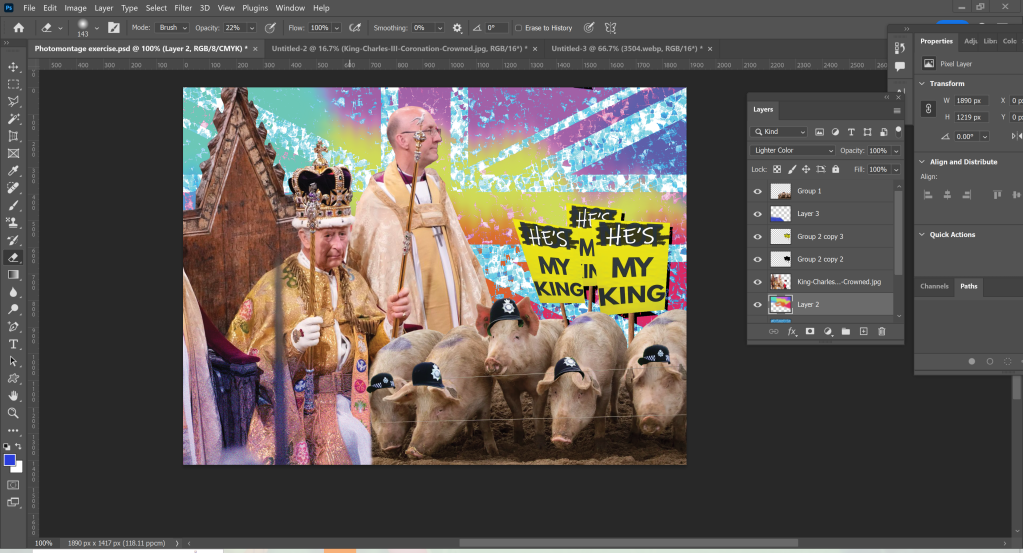
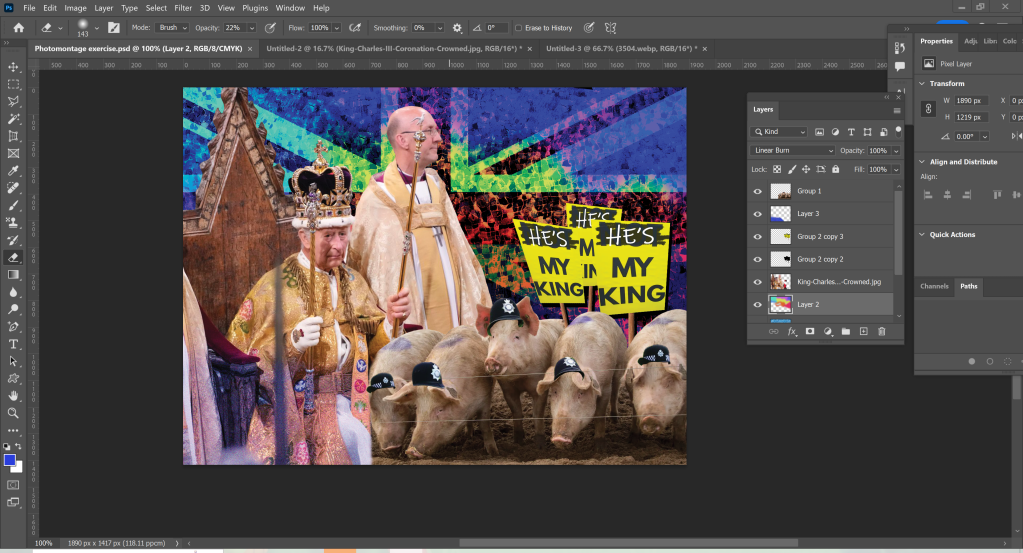
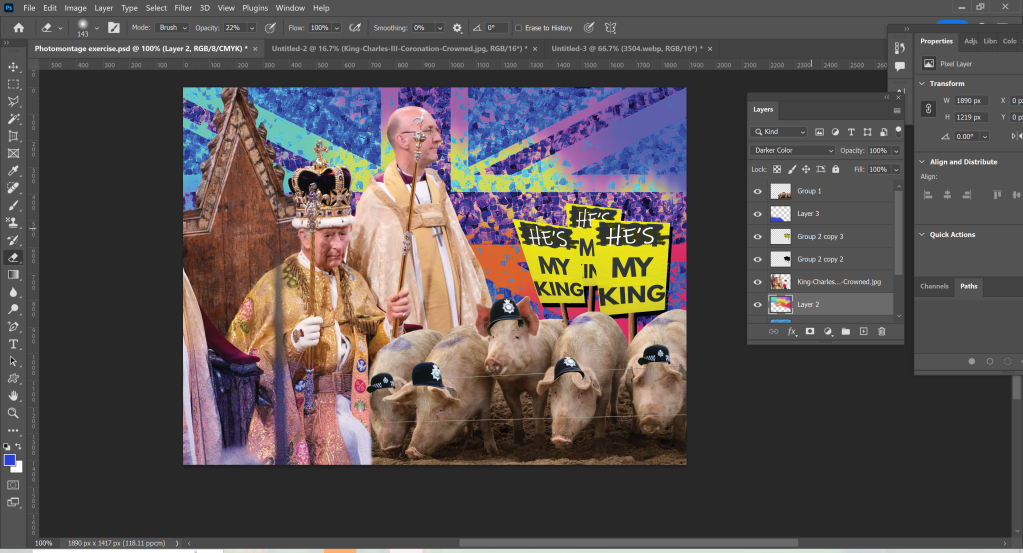
I felt the union jack was too basic and kind of jarringly placed, so I played around with some blend modes and texture layers. I added a water pattern and some spots of colours, warped everything, and then experimented with how to stack and blend each layer. I had a few different choices and chatted with a friend about which was strongest. We both agreed the third one was best, and I continued with this one.
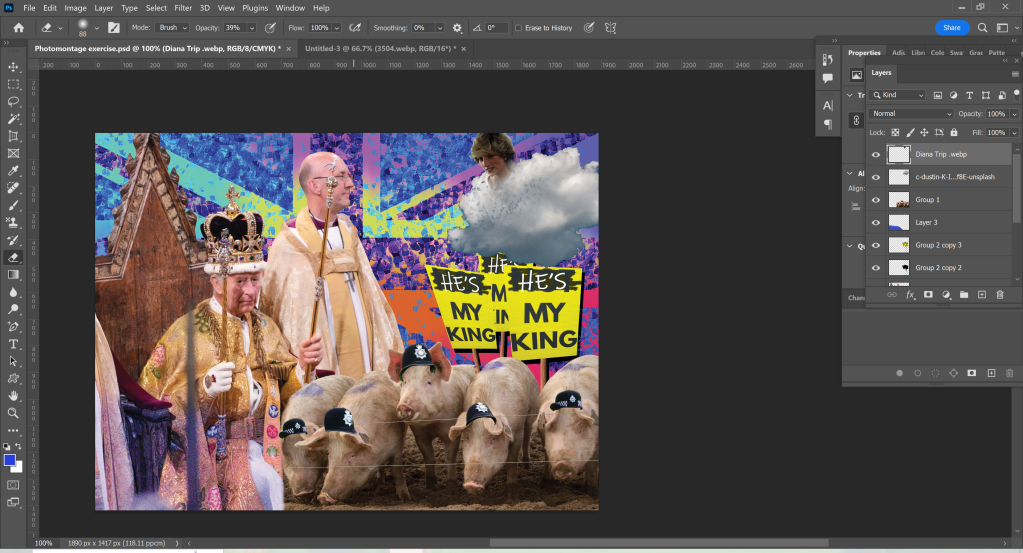
Originally I envisioned Princess Diana’s head popping out of a cloud with angel wings behind her, looking down on the coronation in progress, but I couldn’t quite figure out how to get it to work. My friend suggested I try having her face in the sun, like the Tellytubbies sun, and I loved the idea. I tried out a few different sun graphics as the background before settling for the one I chose and then added a glow using a couple of layers of Gaussian blur in different colours.
Finally, I added some noise to the image, smoothed out the harsh lines between different layers to make the transition between pictures a little easier on the eye, and enhanced the already existing graffiti on the throne with a ‘Will Woz Here’.
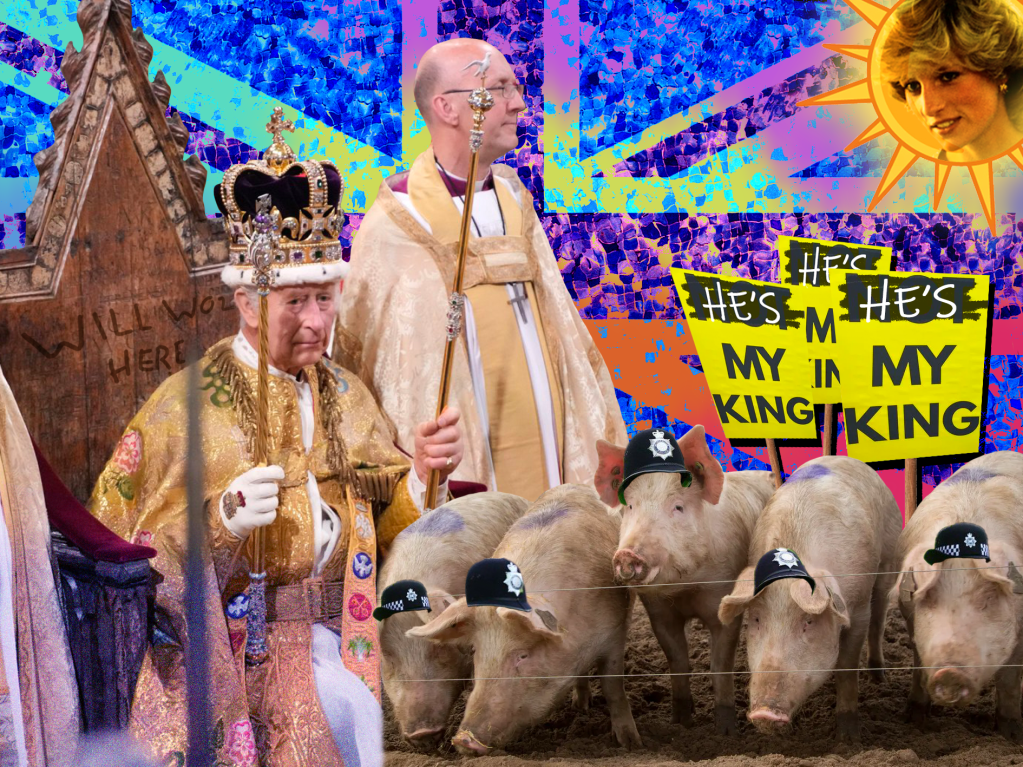
Once I was finished with my collage, I sent it to a few friends and family members to get their thoughts. The reception was very good, with several people saying it looked just like something they’d see on Facebook or on a parody news page. This made me feel like I had successfully fulfilled the brief! I definitely was aiming for over-the-top political satire, rather than subtle humour. It was a lot of fun just playing and seeing what I came up with, rather than trying to design something ‘perfect’.
The original image of King Charles being crowned is sombre, with very little emotion shown from any of the people involved. The backdrop of Westminster Abbey, along with the regal outfits worn (and of course the Crown itself), provide a sense of historical elegance. In contrast, the bright and garish edited Union Jack as a backdrop is reminiscent of council estate street parties and World Cup finals. The addition of Diana, poking fun at the drama between the King and his former wife, and the play on ‘cops are pigs’, further this working-class perception of the Monarchy and wider British systems.
I really enjoyed this exercise. It reminded me of the silly memes I would put together of inside jokes in my friend groups as a teenager. I also love a bit of political satire, so being able to explore this in my work was fun!
 Learning Log